

Pack These 6 Carry On Menopause Travel Essentials for Women Over 40
Pack for temperature control first, symptom flexibility second: a portable fan, cooling towel, breathable layers, electrolyte packets, and all medication in your carry-on with a doctor’s note. The single habit that changes the trip more than any gadget is protecting your sleep environment. Keep your room cool and dark, and keep your meds within arm’s reach at all times. The checklist, sleep hacks, and dosing guidance below cover the rest.
TL;DR:
- Always carry medications and HRT in original containers with a doctor’s note, packing extra doses in your carry-on to account for delays or lost luggage.
- Set your hotel room thermostat low upon check-in, use breathable bedding, and establish a bedtime routine with dim lights and melatonin to improve sleep quality.
- Choose moisture-wicking, loose fabrics like cotton and bamboo, and carry portable cooling tools such as a rechargeable fan and gel towels to manage hot flashes quickly.
- Pack electrolyte packets, hydration powders, and small protein snacks to maintain hydration and blood sugar stability during long travel days.
- Limit strenuous activity before bed, schedule regular rest days, and get morning light exposure to reduce jet lag and prevent menopause symptom spikes on the road.
Table of Contents
- Your Menopause Travel Essentials Packing Checklist
- How Do You Set Up a Hotel Room for Better Sleep?
- What Clothing and Tools Actually Stop a Hot Flash Faster?
- Packing and Managing Medications and HRT While Traveling
- Hydration, Food, and Energy on Travel Days
- How Should You Pace an Itinerary to Avoid Symptom Spikes?
- Managing Bathroom Access and Hygiene While Traveling
- Does Travel Insurance Cover Menopause-Related Health Needs?
- Dietary Planning to Support Menopause Symptoms on the Road
- What Exercise Works Best for Menopause Symptoms While Traveling?
- NUKA’s Take on Travel-Ready Menopause Support
- Travel-Ready Products Worth Adding to Your Kit
- Sources
- FAQ
Your Menopause Travel Essentials Packing Checklist
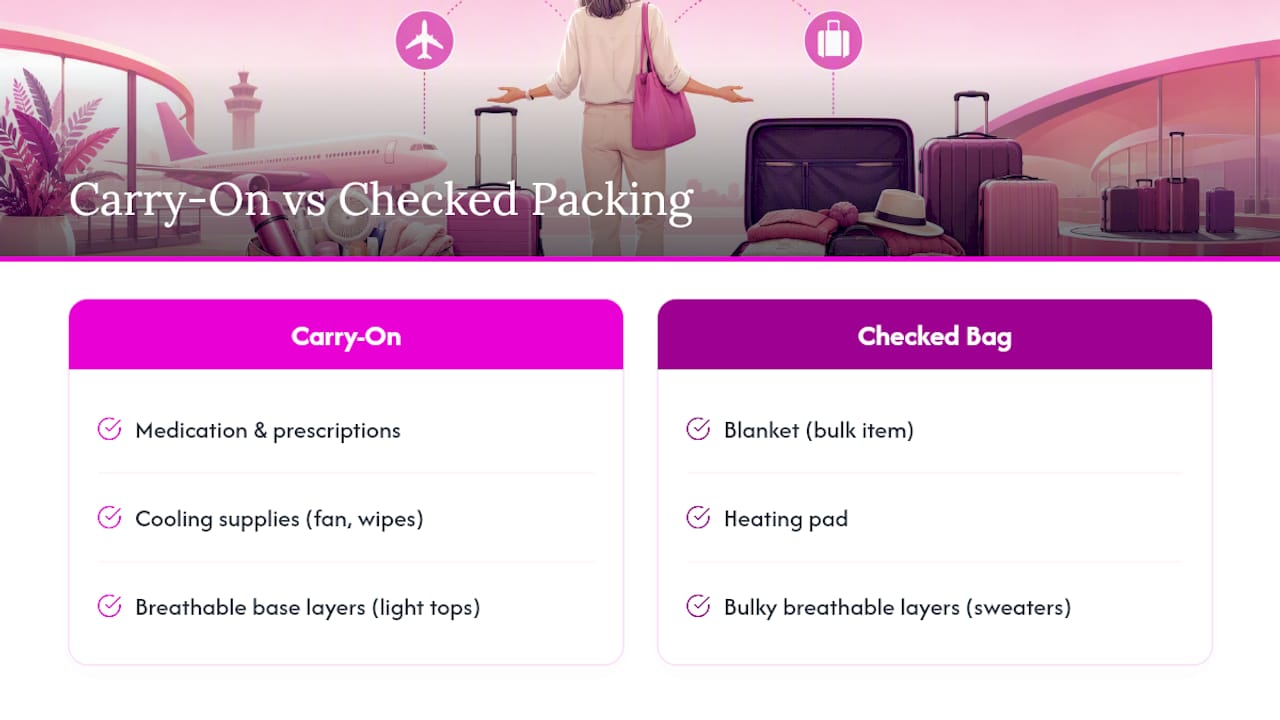
Menopause travel essentials break into two categories: what needs to survive a lost bag, and what can ride in checked luggage without consequence. That distinction should drive your entire packing order.
Carry-on essentials (the non-negotiables)
Anything that would derail your trip if it went missing for 24 hours belongs on your body or in your carry-on. That means:
- Medications and HRT, in original labeled containers, plus a doctor’s note listing dosages
- A small USB rechargeable fan (the 4 to 6 inch size fits most bags and lasts through a full flight)
- A cooling towel or gel-based cooling pack for instant relief during a flash
- One full change of clothes, ideally moisture-wicking, in case of a night-sweat emergency
- Electrolyte packets for the flight and the first day of adjusting to a new climate
- A compact sleep kit: earplugs, an eye mask, and a travel-size pillow spray or scent you associate with sleep
Checked-bag essentials
Once the survival items are secured, the checked bag can carry the bulk. Pack layered, breathable pieces rather than one heavy jacket. A packable blanket, a small heating pad for joint or muscle aches, and two or three extra outfits in moisture-wicking fabric give you flexibility without adding real weight. Compression socks matter more than people expect. Long flights combined with hormonal fluid shifts can worsen leg swelling, and a $10 pair of socks solves a problem that ruins the first day of a trip.
Don’t skip personal care. A broad-spectrum sunscreen with zinc oxide or titanium dioxide handles the increased skin sensitivity many women notice during this stage, and a fragrance-free moisturizer prevents the dryness that hotel air conditioning tends to accelerate. Anti-chafing shorts under dresses or skirts are a small addition that prevents a genuinely miserable day of walking.
Pro Tip: Build a single labeled pouch, a “menopause survival kit,” with your fan, cooling towel, electrolytes, and a spare day’s worth of medication. If your checked bag disappears, this pouch travels with you and covers at least the initial period completely.
Label every medication bottle clearly, even the over-the-counter ones. Airport security and hotel staff move faster when they can read what something is at a glance, and you avoid the awkward delay of explaining loose pills in a plastic bag. Pack one or two extra doses of anything critical beyond what your itinerary requires. Flights get delayed, connections get missed, and carrying extra medication as a buffer is standard advice worth following.
How Do You Set Up a Hotel Room for Better Sleep?
Room temperature is the single biggest lever for how well you sleep during menopause, more than mattress type, noise, or jet lag itself. Cooler rooms reduce the frequency and intensity of night sweats, and a practical checklist from Women in Balance recommends targeting a cool temperature for sleep, generally cooler than many hotels default to.
1. Ask the right questions before you book
Call ahead or check listings for three things: whether windows open, whether the thermostat goes low enough (some hotel units cap at 68°F), and whether you can request a room away from elevators or ice machines. If a mini fridge isn’t mentioned, ask. You’ll want it for cooling towels and any medication that benefits from a cooler storage spot.
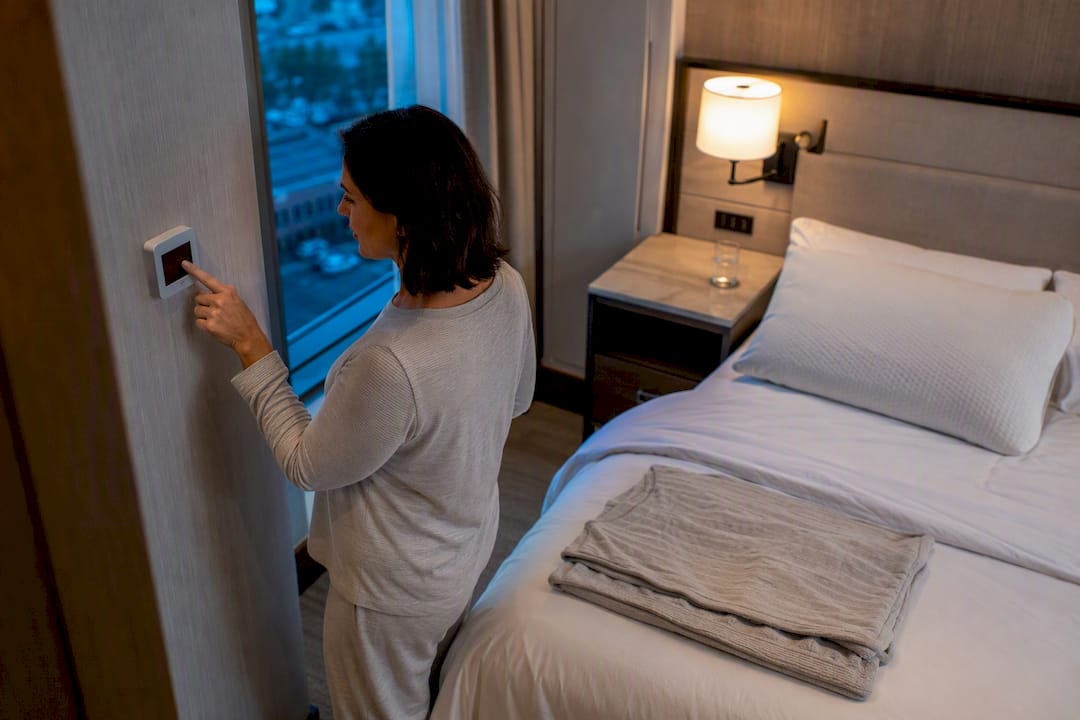
2. Set up the room the moment you check in
Turn the thermostat down immediately, even if you won’t sleep for hours. Rooms take time to cool, and starting late means you’re still adjusting the temperature at 11 PM. Bring your own pillowcase, ideally silk or a breathable eucalyptus fabric, since hotel bedding runs warmer than what you’re used to at home. A thin packable blanket lets you control your own layer instead of fighting a heavy comforter.
3. Build the same wind-down routine you use at home
Eat dinner earlier than you might on vacation, since a late heavy meal raises core body temperature right when you’re trying to lower it. White noise, whether from an app or a hotel fan on low, masks unfamiliar hallway sounds that would otherwise fragment your sleep.
Pro Tip: If a hotel room runs warm no matter what you do, point your portable fan at the mattress rather than your face. Airflow under the sheets does more to prevent night sweats than a breeze on your skin.
Melatonin can help you fall asleep faster in an unfamiliar bed, but keep it to a short course for the first few nights only. Long-term nightly use isn’t necessary for a one or two-week trip and can leave you groggier than the jet lag itself.
What Clothing and Tools Actually Stop a Hot Flash Faster?
Fabric choice matters more on travel days than almost any other packing decision. Cotton, bamboo blends, and technical moisture-wicking fabrics pull heat away from your skin faster than synthetics like polyester, which trap warmth and can intensify a flash rather than cool it, according to guidance on cooling fabrics from Ubie Health. Loose layering beats a single heavy garment every time, since you can shed one piece the moment a flash starts instead of overheating for twenty minutes waiting for a chance to change.
Three tools consistently show up in menopause travel gear recommendations because they solve the problem in under 60 seconds:
- A rechargeable USB fan with two or three speed settings, small enough to clip to a bag strap
- A gel cooling towel, wetted and snapped to activate, kept in a resealable bag in your purse
- Reusable cool packs stored in a hotel fridge overnight and carried in an insulated pouch during the day
Behavioral triggers deserve equal attention. Alcohol and heavy caffeine intake are commonly linked to more frequent and intense hot flashes, and pairing either with food and extra water reduces the spike, according to a travel writer’s account of managing perimenopause on the road for Fodor’s. Spicy food carries the same risk on travel days when you’re already managing heat, crowds, and unfamiliar bathrooms.
For discreet public cooling, keep the cooling towel folded flat in an outside bag pocket so you can press it to the back of your neck without unpacking anything. A folded paper fan works nearly as well as the electric version and draws zero attention in a museum line or restaurant.
Packing and Managing Medications and HRT While Traveling
Medication logistics can make or break a trip, and the rules are simple once you know them. Keep every medication in its original, labeled container, and carry a doctor’s note listing your prescriptions, especially for HRT patches, gels, or pills that airport security might question.
- Pack roughly 50% more medication than your trip requires, in case of delays or extended layovers
- Keep all medications in your carry-on, not in checked luggage, to avoid exposure to temperature swings and the risk of lost bags
- Use a small insulated pouch for anything temperature-sensitive; direct sun or a hot car can degrade certain hormone formulations within hours
- Set phone alarms for dosing times, adjusted for each new time zone, rather than relying on memory during a busy itinerary
- Keep a written medication card (name, dose, prescribing doctor) separate from your pill container in case one gets lost
If medication is lost or delayed, most pharmacies in the United States can fill an emergency short-term supply with a photo of the label and a call to your prescribing doctor. Know the nearest pharmacy or clinic at your destination before you need one, not after.
Hydration, Food, and Energy on Travel Days
Dehydration makes almost every menopause symptom worse, from hot flashes to headaches to fatigue, and airplane cabins accelerate fluid loss faster than most people realize. Carry electrolyte packets rather than relying on hotel coffee or airport smoothies, and choose low-sugar or no-sugar versions when you can, since sugar spikes can trigger their own energy crash a few hours later.
- Drink water on a schedule during flights, not just when thirsty, since cabin air dulls thirst signals
- Eat smaller, more frequent meals instead of one large dinner, which raises core temperature right before bed
- Pack hydrating snacks like cucumber slices, orange segments, or a small container of yogurt for long transit days
- Moderate alcohol and caffeine, and pair both with food and extra water rather than cutting them out entirely
- Keep a protein-forward snack on hand for flight delays, since low blood sugar tends to worsen mood and hot flash frequency
A meal-planning guide for frequent travelers from Wild Foodz offers a useful framework for structuring meals around energy stability rather than convenience, which matters even more when hormonal shifts are already affecting your blood sugar response.
How Should You Pace an Itinerary to Avoid Symptom Spikes?
Overpacked itineraries are one of the most common triggers for a bad travel week, not the flight itself. A few pacing rules make a measurable difference:
- Cap structured activity to around 6 hours a day. Anything beyond that tends to compound fatigue rather than build momentum.
- Schedule one full rest day every 4 to 6 days. Unstructured downtime lowers exhaustion-related symptom spikes more than an extra hour of sleep does.
- Pre-shift your sleep schedule two or three days before a major time-zone change, moving bedtime 30 minutes earlier or later each night.
- Get outside within the first hour of arrival. Morning light exposure resets your circadian clock faster than staying indoors adjusting to jet lag on your own schedule.
- Use a short melatonin course, 1 to 3 mg, for the first two or three nights only, paired with the light exposure above.
Travel-related anxiety and symptom spikes are common enough among peri- and post-menopausal women that they show up repeatedly in reporting on menopause and travel from the Boston Globe, tied specifically to long flights and disrupted sleep. Seat selection matters more than people think: an aisle seat near the front lets you move without disturbing anyone, which matters if you need frequent bathroom breaks or a walk to reset.
Pro Tip: After a long or stressful travel day, spend ten minutes doing nothing screen-related before bed. A quick reset, slow breathing or a short walk, lowers cortisol and prevents the late-night flash that tends to hit right as you’re falling asleep.
Managing Bathroom Access and Hygiene While Traveling
Frequent urination and vaginal dryness are two of the least discussed menopause symptoms, and both get harder to manage away from home. Scout bathroom locations before you need them, particularly on long transit days, museum visits, or road trips with limited stops. Aisle seating on planes and trains cuts down on the awkward shuffle past strangers when you need to move quickly.
Pack a small hygiene kit separate from your main toiletries: flushable wipes, a travel-size water-based lubricant if dryness is an issue, and a spare pair of underwear tucked into your carry-on rather than your checked bag. Breathable cotton underwear reduces irritation on hot, sweaty days more than synthetic blends.
If frequent urination is disrupting sleep, reduce fluid intake in the two hours before bed but keep hydration steady throughout the day rather than cutting it overall. Dehydration makes hot flashes worse, so the fix is timing, not restriction. For dryness that affects comfort during long flights or car rides, a light, unscented moisturizer applied before you dress for the day helps more than trying to treat irritation after it starts.
Does Travel Insurance Cover Menopause-Related Health Needs?
Standard travel insurance policies vary widely on what counts as a pre-existing condition, and menopause itself typically isn’t treated as one. Coverage gaps show up more often around related conditions, like cardiovascular issues, osteoporosis, or medication needs tied to HRT, so read the pre-existing condition clause closely before you buy.
Look for a policy that covers emergency prescription replacement, since losing HRT patches or hormone medication abroad can be both expensive and hard to resolve quickly in an unfamiliar pharmacy system. Confirm the policy covers medical evacuation and treatment for cardiovascular events, since risk factors shift during this stage of life for many women. If you’re on a stable HRT regimen, keep a copy of your prescription and dosage history with your insurance documents, not just in your medical bag. It speeds up claims and emergency refills considerably if something goes wrong far from home.
Dietary Planning to Support Menopause Symptoms on the Road
Meal planning while traveling isn’t about restriction. It’s about protecting the two things travel disrupts most: blood sugar stability and sleep quality. Skipping meals to sightsee, then overeating at dinner, is a pattern that reliably worsens hot flashes and next-day fatigue.
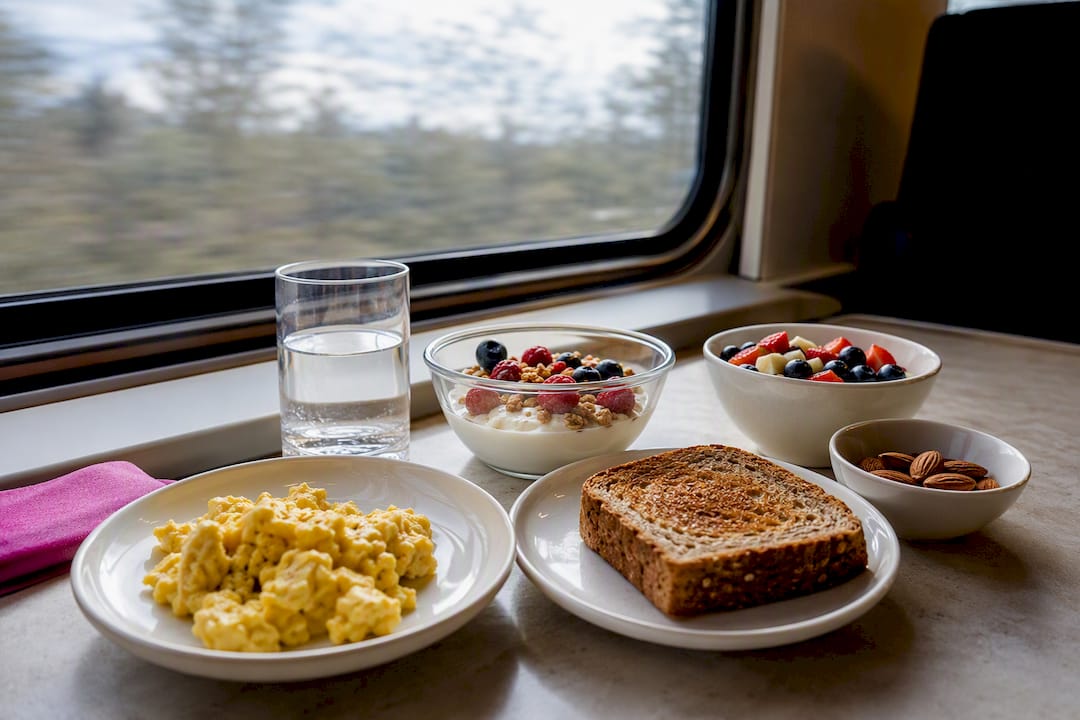
Build meals around protein and fiber first, since both slow the blood sugar spikes that can trigger flashes and energy crashes a few hours later. A hotel breakfast heavy on refined carbs and low on protein sets up a rough midmorning; adding eggs, yogurt, or nuts to that plate changes the trajectory of your whole day. Where menus are unpredictable, like street food tours or long train rides, pack a protein bar or a small container of nuts as backup rather than relying on whatever’s available when hunger hits.
Spicy food, heavy sauces, and very hot beverages are worth moderating on days packed with activity, since they add another heat source your body is already working to manage. That doesn’t mean skipping the local cuisine you traveled for. It means pacing it, maybe saving the spiciest dish for a rest day rather than a 12,000-step sightseeing day.
What Exercise Works Best for Menopause Symptoms While Traveling?
Movement helps regulate mood, sleep, and even hot flash frequency during menopause, but travel schedules often swing between two extremes: total inactivity on flight days and overexertion on sightseeing days. Neither serves you well.
Aim for consistent, moderate movement instead. A 20 to 30 minute walk each morning does more for energy and mood stability than one exhausting hike followed by two days of recovery. Many hotels now have basic fitness rooms; even 15 minutes of bodyweight strength work, squats, lunges, wall pushups, helps counter the muscle and bone density loss that accelerates during this stage of life.
Avoid intense exercise in the two or three hours before bed, since it raises core temperature right when you’re trying to cool down for sleep. If you’re prone to joint stiffness or achiness, a short stretching routine after a long flight or car ride helps more than skipping movement altogether out of fatigue. Swimming, if a pool is available, is particularly good for travel days, since it combines low-impact movement with a built-in cooling effect.
NUKA’s Take on Travel-Ready Menopause Support
Some health and wellness brands have designed compact oral strips that do not require water or measuring and avoid bulky packaging, addressing a common logistics challenge when traveling with supplements during menopause. This convenience can help maintain consistent dosing across time zones without adding complexity. For deeper reading on the sleep and anxiety issues covered here, NUKA’s blog post on menopause jet lag digs further into why travel disrupts sleep specifically during this stage of life.
— NUKA
Travel-Ready Products Worth Adding to Your Kit
Nukalove makes the supplement side of your kit lighter, literally, with oral strips and powders that dissolve without water and take up almost no space in a carry-on. If you tend to crash midafternoon while sightseeing, Energy Strips are built for exactly that slump. Restless hotel nights are where Oral Sleep Strips come in, dissolving fast without adding another pill bottle to your medication pouch. For the hydration piece covered above, Hydration Powder mixes into a water bottle in seconds, no blender or shaker needed. Focus Strips round out the kit for travel days that demand mental sharpness, like navigating a layover or a rental car in an unfamiliar city.
None of these replace HRT or a prescribed medication, and if you’re on hormone therapy or managing a health condition, talk to your clinician before adding any new supplement to your routine. When you’re ready to build your own travel kit, the full product lineup is on the Nukalove shop.
Sources
For deeper reading beyond this guide, the Women in Balance travel checklist, the Boston Globe’s reporting on menopause and travel, and the PMC review on menopause sleep physiology offer solid clinical and practical grounding for the advice above.
This article is general information, not a substitute for advice from a qualified doctor. Consult a qualified healthcare professional about your own circumstances before acting on anything here.
- Peri-menopause and menopause can make travel more challenging — The Boston Globe
- Menopause-friendly travel ideas: a practical checklist for sleep, temperature, and stress — Women In Balance
- Hot flashes and cooling fabrics — Ubie Health
FAQ
Is weight gain a common symptom of perimenopause?
Yes, weight gain, especially around the midsection, is commonly reported during perimenopause due to shifting hormone levels and metabolism changes. Regular movement and protein-forward meals, as outlined in the exercise and diet sections above, help manage it during travel specifically.
How can I stop a hot flash fast while traveling?
Reach for a cooling towel or portable fan first, since cold direct contact interrupts a flash faster than waiting it out. Stepping into shade, loosening a layer, and sipping cold water at the same time speeds relief further.
What are the most important menopause travel essentials to pack?
The core kit includes medications with a doctor’s note, a portable fan, a cooling towel, electrolyte packets, breathable layered clothing, and a compact sleep kit with earplugs and an eye mask. Nukalove’s travel-friendly oral strips and hydration powders can round out that kit without adding bulk.
What’s the most forgotten item when packing for a trip?
Extra medication supply is the item travelers most often forget to double up on, followed closely by a phone charger and any temperature-sensitive prescriptions that need insulated storage. Building a labeled “survival pouch” ahead of time, as described in the packing checklist above, prevents both oversights.
Should I take melatonin for jet lag during menopause?
A short course of 1 to 3 mg for the first two or three nights after arrival, combined with morning light exposure, is a low-risk way to reset your sleep schedule. Nightly long-term use isn’t necessary for most trips and can leave you groggier than the jet lag itself.