

Pocket Oral Strips for Women With Menopause Heat Intolerance
Yes, declining estrogen is very likely the reason you’re suddenly the one cranking the AC while everyone else reaches for a sweater. It throws off the hypothalamus, your body’s internal thermostat, making you flip from comfortable to overheated with almost no warning. Start with the cooling tactics below, keep a quick symptom log, and talk to a clinician if it’s disrupting your sleep or your day.
TL;DR:
- Heat and humidity, spicy foods, alcohol, caffeine, stress, tight clothing, and exercise can all trigger or worsen hot flashes and night sweats during menopause.
- Tracking triggers and symptom details, such as duration and pre-episode activities, helps clinicians tailor effective treatment plans and identify underlying health issues.
- Rapid cooling methods like removing layers, using fans, cold compresses, and choosing moisture-wicking fabrics can quickly ease hot flashes, especially in public or during travel.
- Lifestyle adjustments including hydration, reducing triggers, and managing stress can decrease the frequency and severity of heat intolerance over time.
- Nonhormonal medications like low-dose paroxetine or fezolinetant offer medical alternatives when hormone therapy is unsuitable or contraindicated.
Table of Contents
- What Causes Heat Intolerance During Menopause?
- What Triggers Heat Intolerance, and What Should You Track?
- How Do You Cool Down Fast During a Hot Flash?
- Which Daily Habits Reduce Heat Sensitivity Over Time?
- When Should You See a Doctor About Heat Intolerance?
- Managing Heat Intolerance While Traveling or in Hot Climates
- Why Convenience Changes Whether Self-Care Actually Happens
- How Nukalove Supports On-the-Go Comfort
- Sources
What Causes Heat Intolerance During Menopause?
Your hypothalamus normally keeps your core temperature inside a narrow comfort zone, warming you up when you’re cold and cooling you down when you’re warm. Estrogen helps keep that zone wide and stable. As estrogen drops during perimenopause, that comfort zone narrows dramatically, and a shift of even a fraction of a degree can trigger a full-blown hot flash.
The mechanism traces back to a cluster of cells in the hypothalamus called KNDy neurons, which become overactive as estrogen declines and send faulty signals telling your body it’s overheating when it isn’t. Research reviewing this process found symptomatic women have a narrower threshold for heat loss than women without vasomotor symptoms, meaning their bodies trigger cooling responses like sweating and flushing at lower temperatures than they should.
Three related but distinct experiences fall under this umbrella:
- Heat intolerance is a general oversensitivity to warmth, whether from weather, exercise, or a warm room.
- Hot flashes are sudden, intense heat waves, often paired with flushing, sweating, and a racing heartbeat.
- Night sweats are hot flashes that hit while you’re asleep, often soaking through sheets.
These symptoms are strikingly common. Vasomotor symptoms affect up to 80% of women during the menopause transition, typically lasting a mean of 7 to 10 years, with about 5% of women experiencing them for more than a decade. Individual episodes usually last just one to five minutes, though roughly one in three women report more than ten episodes a day.
What Triggers Heat Intolerance, and What Should You Track?
Certain everyday exposures make an already sensitized thermostat worse. Recognizing your personal pattern is often the fastest path to fewer episodes.
- Heat and humidity, including hot rooms, warm showers, and summer weather.
- Spicy foods, which can trick your body into a heat response.
- Alcohol and caffeine, both of which raise heart rate and core temperature.
- Stress and anxiety, which activate the same nervous system pathways as physical heat.
- Tight or synthetic clothing, which traps body heat against the skin.
- Intense exercise, especially in warm environments.
Keep a simple log of when episodes happen, how long they last, what you were doing right before, and whether you noticed sweating, chills, or a racing pulse. This kind of tracking is exactly what clinicians recommend before a visit, since it speeds up diagnosis and treatment planning. If your heat sensitivity comes with unexplained weight changes, a racing heart at rest, fever, or started right after a new medication, mention it to a doctor. Those can point to thyroid issues, infection, or a drug side effect rather than menopause alone. Nukalove’s breakdown of common hot flash triggers is a useful place to dig deeper into your own patterns.
How Do You Cool Down Fast During a Hot Flash?
When a hot flash hits, speed matters more than perfection. Work through this sequence and most episodes ease within a few minutes.
- Stop what you’re doing and sit or stand still for a moment.
- Shed a layer immediately, jackets and cardigans first.
- Point a small fan or portable cooling device at your face and neck.
- Press a cold compress or damp cloth against your wrists, neck, or forehead.
- Sip cold water slowly rather than gulping it.
Fabric choice matters more than people expect. Swap synthetic fabrics for moisture-wicking cotton or bamboo blends, and dress in layers you can peel off in seconds rather than one heavy garment. At night, a cooling pillow, a fan angled at the bed, and breathable cotton sheets cut down on night sweats considerably.
Pro Tip: Keep a slim cooling towel and a fast-dissolving hydration strip in your bag. When a flash hits in a meeting or on a train, you can cool down and rehydrate without hunting for a water fountain or a bathroom.
Which Daily Habits Reduce Heat Sensitivity Over Time?
Immediate tactics handle the moment. These habits shift your baseline so episodes happen less often and hit less hard.
- Hydrate consistently, and consider a low-dose electrolyte strategy rather than forcing large volumes of water, since repeated sweating without proper mineral balance can worsen the cycle.
- Time your workouts for cooler parts of the day and avoid intense exercise right before bed.
- Cut back on alcohol, caffeine, and spicy food if your symptom log shows they’re triggers for you.
- Address smoking and excess weight, both of which are linked to more frequent and severe vasomotor symptoms.
- Try paced breathing or mindfulness, since evidence for these techniques is mixed but promising for some women, even though it’s not a guaranteed fix.
Nukalove’s guide to caffeine and menopause walks through how much is too much for symptom-sensitive women.
When Should You See a Doctor About Heat Intolerance?
Hormone therapy remains the most effective first-line option for eligible women, typically delivered as a pill, patch, gel, or spray, and it works by directly addressing the estrogen decline driving the hypothalamic changes. It isn’t right for everyone, though, particularly women with a history of certain cancers, blood clots, or liver disease.
For those who can’t or don’t want to use hormones, the FDA has approved two nonhormonal options specifically for this purpose: low-dose paroxetine and fezolinetant. Both work through different pathways than hormone therapy and give women a real medical alternative beyond lifestyle changes alone.
Before your appointment, bring these details with you:
- How many episodes you’re having per day or week.
- How long each one lasts and what triggered it.
- Whether night sweats are disrupting your sleep.
- Any other new symptoms like heart palpitations, weight changes, or mood shifts.
Practical measures like dressing in layers, cooling your sleep space, and avoiding known triggers are recommended by the National Institute on Aging as a first step, with medical treatment layered on when lifestyle changes aren’t enough. Seek prompt medical attention if you experience chest pain, a very rapid heartbeat, confusion, or a fever alongside your heat sensitivity. Those symptoms warrant ruling out something beyond menopause. Nukalove’s overview of quick relief and medical options covers this ground in more depth, and the roundup of nonhormonal alternatives is worth a look if hormone therapy isn’t the right fit for you.
Managing Heat Intolerance While Traveling or in Hot Climates
Heat intolerance doesn’t pause for vacations, flights, or summer weddings, and ambient heat can intensify an already sensitized thermostat faster than you’d expect. The CDC’s heat-safety guidance on hydration and recognizing heat illness applies directly here, especially when you’re out of your normal routine.
Pack a few essentials before any trip:
- A moisture-wicking base layer plus one dry garment to change into after a flash.
- A pocket-sized fan or cooling towel.
- Hydration strips or sachets that don’t require carrying bottles through security.
At work or on transit, step toward airflow, whether that’s a window, vent, or open door, and keep a spare top nearby so a sweat-soaked shirt doesn’t derail your day. Nukalove’s packing guide for hydration sachets covers exactly what fits in a carry-on without adding bulk.
Why Convenience Changes Whether Self-Care Actually Happens
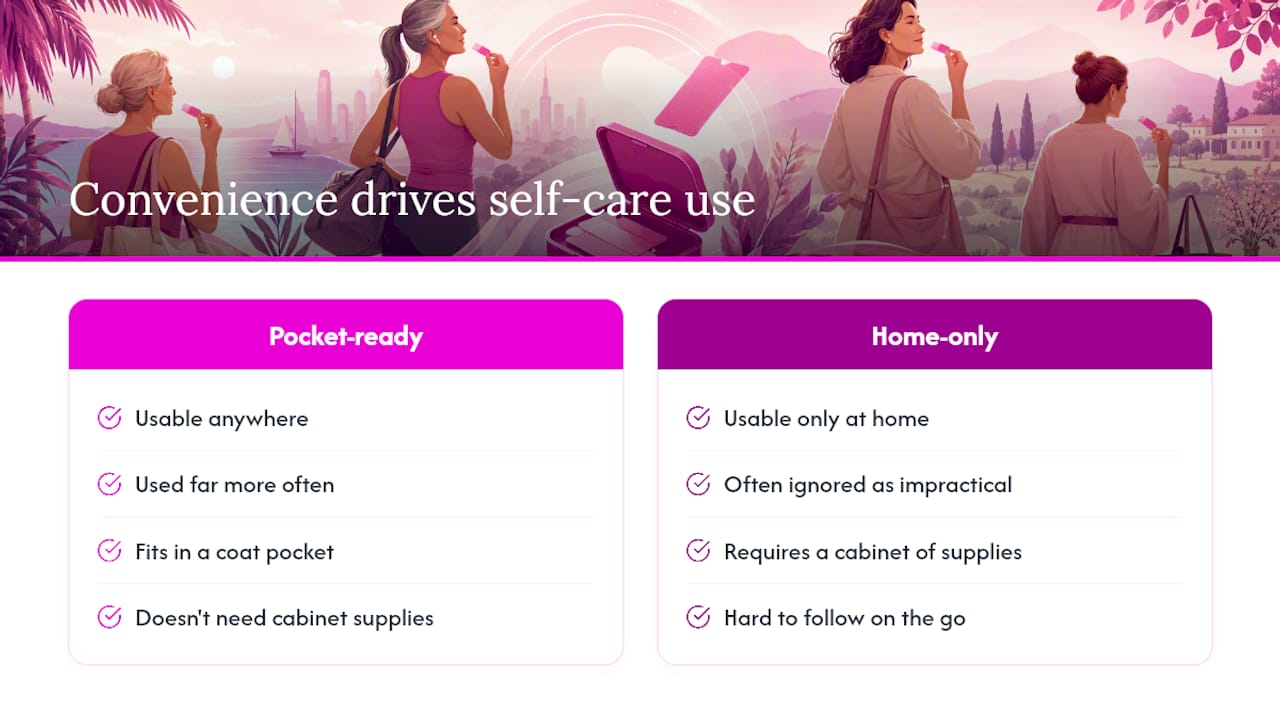
Most heat-management advice isn’t wrong, it’s just impractical to follow consistently. Telling a woman to “stay hydrated” while she’s stuck in an airport with no water bottle in sight is advice that sounds reasonable and gets ignored anyway.
The habits that actually reduce heat sensitivity over months, hydration, cooling, trigger avoidance, only work if you can do them anywhere, not just at your kitchen counter. That’s the entire case for travel-ready formats: a strip you can use on a train beats a routine you can only manage at home. Self-care that fits in a coat pocket gets used far more often than the version that requires a cabinet full of supplies. None of that replaces a conversation with a doctor when hormone therapy or a nonhormonal prescription is the better tool for your situation. It just means the days between appointments don’t have to be miserable.
— NUKA
How Nukalove Supports On-the-Go Comfort
Heat intolerance doesn’t check your calendar before it shows up, which is exactly why Nukalove builds hydration and comfort support into a format you can actually carry everywhere: a compact oral strip. No water needed, no mixing, no digging through a bag for a bottle when a flash hits mid meeting.
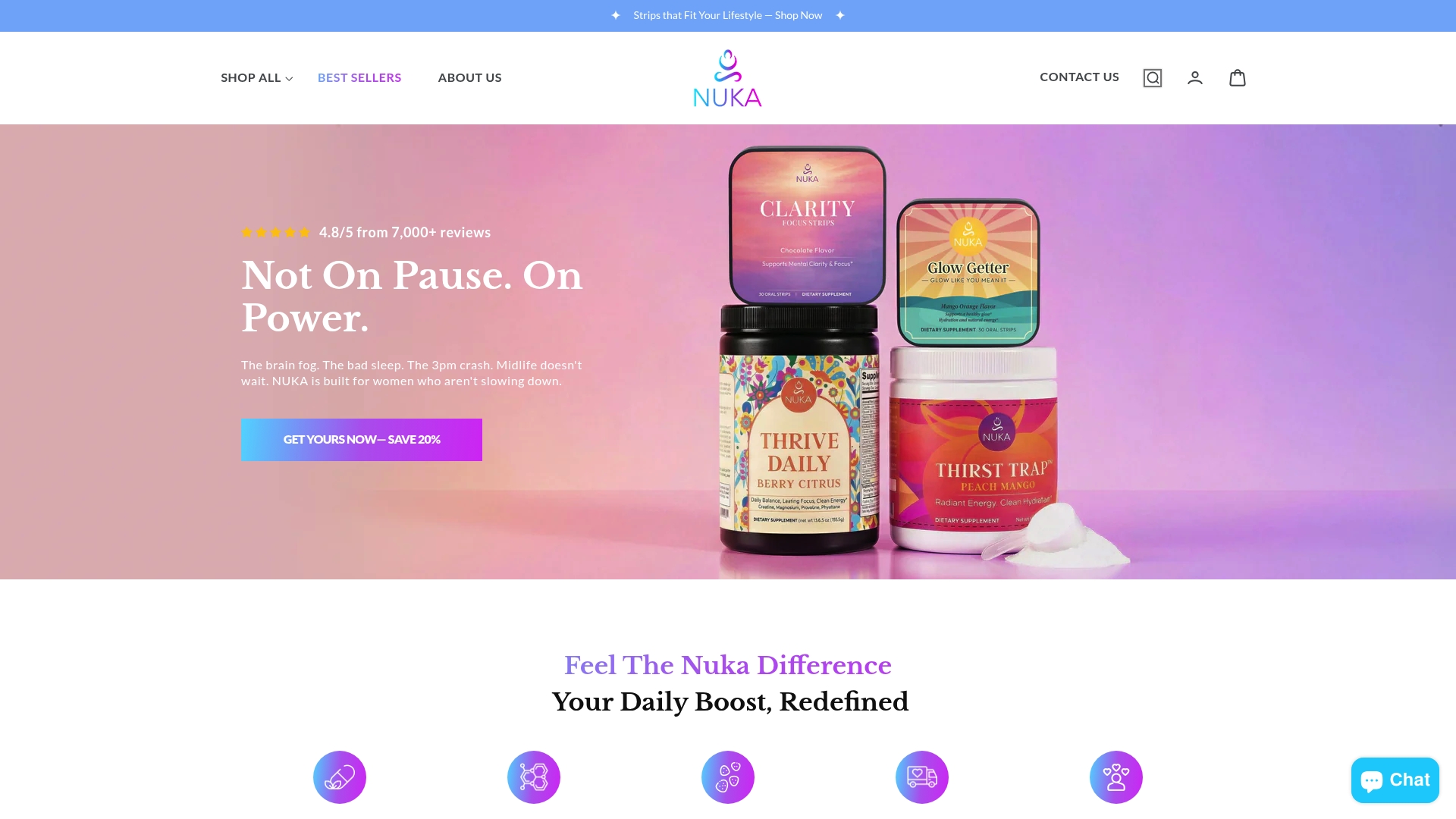
These strips are meant to be a hydration and comfort adjunct, not a substitute for hormone therapy or a prescription your clinician has recommended. Slip one in during a flight, before a hot commute, or right after a hot flash leaves you sweaty and depleted. The GLOW GETTER oral strip shows exactly what that fast-absorbing, travel-friendly format looks like in practice. If you’re ready to build a heat-intolerance toolkit that actually fits in your pocket, browse the full lineup at Nukalove and pick the format that matches how you actually move through your day.
Sources
- Hot flashes | The Menopause Society
- Effects of menopause on temperature regulation - PMC - NIH
- Hot flashes: What can I do? | NIA
- Hot flashes: Triggers, how long they last & treatments | Cleveland Clinic
- Protect yourself from the dangers of extreme heat | CDC