

What Really Triggers Hot Flashes During Menopause
Hot flashes happen because falling estrogen throws off your hypothalamus, the brain’s internal thermostat, making it overreact to tiny shifts in body heat. Once that thermostat gets twitchy, everyday habits can set it off. The highest-probability hot flash triggers include:
- Alcohol, especially red wine
- Spicy foods and capsaicin
- Hot drinks and hot food
- Caffeine
- Warm rooms, heavy blankets, or overdressing
- Stress and anxiety
- Smoking
Some women feel a flash within minutes of one glass of wine; others never connect the dots without tracking. Symptoms and triggers vary widely from woman to woman, so if flashes are frequent, disrupt sleep nightly, or start unusually early, talk with a health care provider.
Key Takeaways
Hot flashes stem from estrogen-driven changes in hypothalamic thermoregulation, and identifying your personal triggers through short tracking and elimination trials is the most reliable path to fewer, milder episodes.
| Point | Details |
|---|---|
| Know the mechanism | Falling estrogen disrupts the hypothalamus, making it overreact to small temperature and hormone shifts. |
| Start with alcohol | A two-week alcohol-free trial is the highest-yield first test for most women. |
| Rule out medical causes | Thyroid disease, cancer therapies, and certain medications can mimic or worsen hot flashes. |
| Track before you eliminate | A two-week log of food, clothing, stress, and sleep reveals patterns faster than guessing. |
| Use adjunctive support while traveling | Nukalove’s travel-ready strips, like GLOW GETTER, offer comfort support alongside medical and lifestyle strategies. |
A Comfort Option Worth Packing
Nukalove won’t replace a conversation with your doctor, but it fills a gap most menopause products ignore: something small enough for a purse or carry-on that supports you between the bigger decisions. Our oral strips are an adjunctive comfort option, not a medical treatment, designed for the moments when you need quick, portable support without water or a pill.
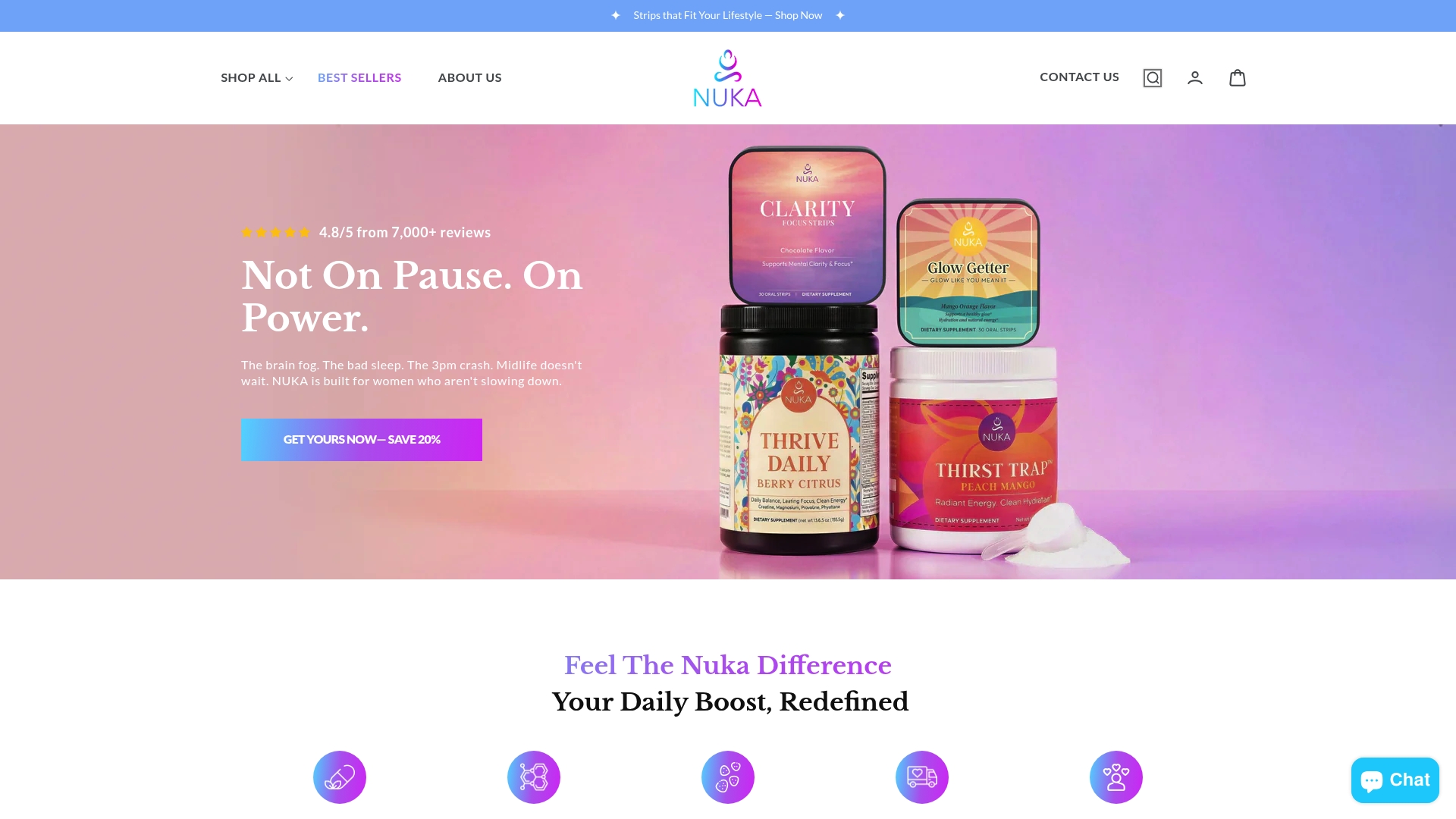
The RECLAIM YOUR DAY bundle pairs well with the tracking approach in this guide, giving you steady, portable support on days when energy and focus take a hit alongside symptoms. If skin and hair changes are part of your menopause experience too, GLOW GETTER is worth a look. Browse the full wellness collection and find the strip that fits your routine, whether you’re home or halfway through a flight.
This article is general information, not a substitute for advice from a qualified doctor. Consult a qualified healthcare professional about your own circumstances before acting on anything here.
Table of Contents
- Understanding Hot Flash Symptoms Before You Chase Triggers
- Common Lifestyle and Dietary Triggers Behind a Flush
- Medical Causes That Can Look Exactly Like Menopause
- How to Figure Out Your Own Hot Flash Triggers
- Fast Relief and Daily Habits That Lower Your Symptom Load
- When Hot Flashes Need a Doctor’s Attention
- Sources
Understanding Hot Flash Symptoms Before You Chase Triggers
A hot flash usually starts as sudden warmth across the face, neck, and chest, sometimes spreading further, often paired with visible flushing, sweating, and a chill once it passes. Some women also notice a racing heart or a jolt of anxiety right as it hits.
Most episodes are short. According to Mayo Clinic, an individual flash typically lasts under five minutes, though the overall pattern is anything but predictable. Flashes tend to cluster around the year before and after your final period, but they can persist for years afterward, with some research pointing to symptoms lasting up to 14 years post-menopause. Night sweats are simply hot flashes that happen while you sleep, and they’re often the first sign women notice, mostly because they wreck a night’s rest.
Common Lifestyle and Dietary Triggers Behind a Flush
Not every trigger carries equal weight. Some have strong, repeated evidence behind them; others affect only a subset of women. Here’s how they rank by how consistently they show up in research and clinical experience.
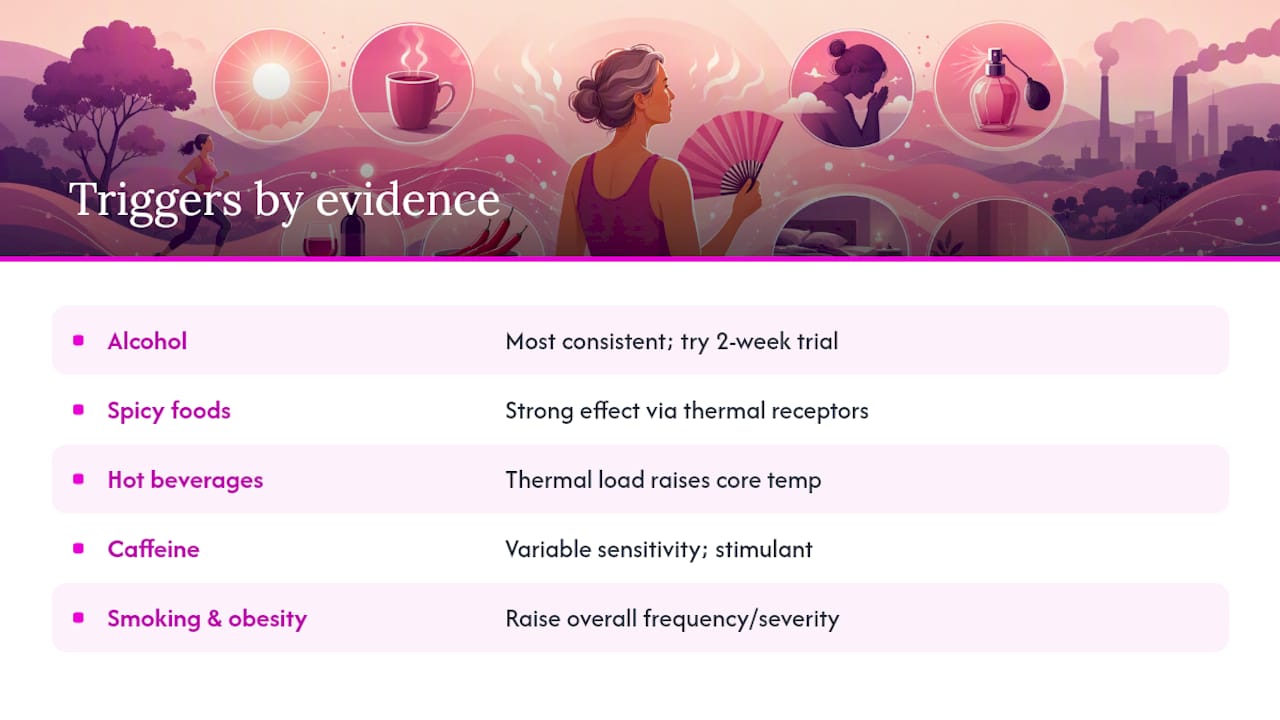
Alcohol has the most consistent, fast-acting effect of any dietary trigger. It dilates blood vessels near the skin’s surface, which your brain reads as a heat signal, and Consillar’s review of diet and hot flashes notes it as one of the highest-yield things to test first. A two-week alcohol-free trial is cheap, fast, and often revealing.

Spicy foods and capsaicin trigger the same thermal receptors your body uses to sense real heat, so a hot pepper can produce a flash that feels identical to one caused by a warm room.

Hot beverages and hot food work through simple thermal load. Coffee, tea, and soup raise your core temperature slightly, and for a hypothalamus already primed to overreact, that’s sometimes enough.
Caffeine acts as a central nervous system stimulant, but sensitivity varies enormously. Some women can drink espresso all day with no issue; others notice a flash within the hour. If you’re unsure where you fall, Nukalove’s guide on caffeine and menopause walks through timing adjustments worth trying before cutting it out entirely.
Warm environments, heavy clothing, and exercise all add to your body’s total heat load. None of these are things to avoid outright, since movement matters for long-term health, but layering strategically makes a real difference.
Smoking and obesity don’t trigger individual flashes so much as raise their overall frequency and severity, according to Breastcancer.
Blood sugar swings from high-sugar or refined-carb meals can mimic or worsen flash frequency for some women, likely tied to the same stress-hormone pathways involved in temperature regulation.
Medical Causes That Can Look Exactly Like Menopause
Not every hot flash is hormonal in the menopausal sense. Thyroid disease, particularly an overactive thyroid, can cause heat intolerance and flushing that feels indistinguishable from a typical hot flash. Certain cancer treatments, including tamoxifen and other endocrine therapies, are well documented to cause vasomotor symptoms as a side effect, not a coincidence.
Some prescription medications list flushing as a known effect, including certain antidepressants and blood pressure medications. A clinical review on vasomotor symptom physiology emphasizes screening for medication-induced flushing before assuming every episode is menopause related, according to an open-access review of vasomotor symptoms.
If flashes started suddenly, arrived well outside the typical perimenopausal age range, or come with unexplained weight change, rapid heartbeat, or fever, that’s worth a conversation with your provider rather than a dietary tweak.
How to Figure Out Your Own Hot Flash Triggers
Population lists are a starting point, not a diagnosis. Your own patterns matter more, and the NCBI Bookshelf review on vasomotor symptom management points to hormonal and neurotransmitter shifts that vary from woman to woman, which is exactly why tracking beats guessing.
- Keep a simple log for two weeks. Note the time of each flash, what you ate or drank, what you were wearing, room temperature, stress level, medications, and how you slept the night before.
- Test alcohol first. Cut it entirely for two weeks since it’s the single most consistent trigger for the largest share of women.
- Move to spicy foods and hot drinks next. Swap hot coffee for iced, skip the hot sauce for a few days, and watch for a pattern.
- Adjust caffeine timing last. Try moving your last cup earlier in the day before cutting it altogether.
- Look for dose-response. If two glasses of wine trigger more flashes than one, that’s your answer. Patterns, not single incidents, tell you what to actually avoid.
Pro Tip: Track your worst flash days against your calendar. Many women notice a spike tied to ovulation-adjacent hormone dips even well into perimenopause, which a food log alone won’t catch.
Fast Relief and Daily Habits That Lower Your Symptom Load
When a flash hits, a few moves shorten it. Slow, paced diaphragmatic breathing calms the nervous system response driving the flush, and Cedars-Sinai’s guidance on treating hot flashes backs breathing techniques and cooling strategies as genuinely useful in the moment.
- Sip cool water and step near a fan or open window.
- Shed a layer immediately rather than waiting it out.
- Press a cool, damp cloth to your neck or wrists.
Day to day, dress in layers you can peel off quickly, keep your bedroom cool at night, and stay ahead of hydration rather than catching up after a flash. Steady meals that avoid big blood sugar spikes help some women more than any single food swap. For managing the stress side of things, Mastering Conflict’s guide to natural stress management offers practical breathing and relaxation techniques worth building into a daily routine.
Pro Tip: Keep a small fan and a cooling towel in your bag, not just at your desk. Flashes don’t wait for convenient moments.
When Hot Flashes Need a Doctor’s Attention
See a provider if flashes are costing you sleep most nights, interfering with work or daily function, showing up many times a day, or if night sweats are frequent enough to soak through sheets. Sudden onset well before typical perimenopause age also warrants a look, since it can point to a thyroid issue or another cause entirely.
Treatment options range widely. Menopausal hormone therapy remains the most effective option for many women, though it carries individual risks that need weighing with a provider, as the NCBI Bookshelf review notes. Nonhormonal prescriptions like SSRIs, SNRIs, and gabapentin work through the same norepinephrine and serotonin pathways involved in the hot flash mechanism itself. Behavioral approaches and cognitive techniques help some women reduce severity without medication. None of this is one-size-fits-all. The Office on Women’s Health recommends tracking symptoms and bringing that record into the conversation with your provider.
A Note From Nuka on Living With Unpredictable Triggers
Some of the most surprising triggers aren’t food at all: cabin pressure on a plane, a stuffy conference room, a scratchy sweater. Traveling makes tracking harder but layering, pre-hydrating, and packing a cooling towel go a long way. Nukalove’s traveler’s playbook for hot flashes on planes covers the specifics.
— NUKA
Sources
- Breastcancer
- Hot flashes - Symptoms & causes (Mayo Clinic)
- Vasomotor symptoms and their management (NCBI Bookshelf)
- Menopause symptoms and relief (Office on Women’s Health)