

Best Adaptogens for Menopause: Evidence-Based Guide
Ashwagandha, rhodiola, and black cohosh have the strongest clinical backing among adaptogens for menopause symptoms, with maca and holy basil offering useful but more limited support. The critical caveat before you start any of them: supplement quality is wildly inconsistent across brands, and several of these herbs interact with HRT, tamoxifen, antidepressants, and thyroid medications in ways that matter.
Here is what each herb tends to help most:
- Ashwagandha: stress, anxiety, sleep quality, and hot flash frequency
- Rhodiola rosea: fatigue, brain fog, low mood, and cognitive performance
- Black cohosh: vasomotor symptoms (hot flashes, night sweats)
- Maca: libido, energy, and sexual function
- Holy basil/Tulsi: stress response, mild anxiety, blood sugar balance
Safety callout: Stop and consult your clinician before starting any adaptogen if you take HRT, tamoxifen, SSRIs/MAOIs, anticoagulants, or thyroid medication, or if you have a hormone-sensitive cancer, active liver disease, or are pregnant or breastfeeding. This is not a formality.
Key Takeaways
Ashwagandha and rhodiola have the strongest clinical trial support among adaptogens for perimenopause and menopause symptoms, but product quality and drug interactions determine whether any herb is safe and effective for you specifically.
| Point | Details |
|---|---|
| Strongest evidence herbs | Ashwagandha (stress, sleep, hormonal markers) and rhodiola (fatigue, mood, cognition) have the best RCT support. |
| Safety check first | Consult your clinician before starting if you take HRT, tamoxifen, antidepressants, or thyroid medication. |
| Dosing from trials | Ashwagandha: 300–600 mg/day; rhodiola: 100–600 mg/day standardized extract; cycle with breaks every 6–8 weeks. |
| Product quality is non-negotiable | Choose standardized extracts with third-party testing (USP, NSF) and request a batch-specific COA. |
| Nukalove oral strips | Nukalove’s strip format offers precise dosing and fast mucosal absorption, designed for women managing menopause on the go. |
Table of Contents
- Which adaptogens are most used in perimenopause and menopause?
- What does the clinical research actually show?
- How do adaptogens work during perimenopause and menopause?
- Safety, contraindications, and drug interactions to watch for
- How to pick a high-quality adaptogen product
- What dosing ranges did clinical trials actually use?
- Why delivery form and quality control matter for menopausal women
- When to stop self-treatment and consult a clinician
- The case for cautious optimism, not uncritical enthusiasm
- Nukalove oral strips: a travel-ready format for your adaptogen plan
- Sources
Which adaptogens are most used in perimenopause and menopause?
Each of the five herbs below has a distinct profile. Knowing which symptom cluster you want to target makes the choice considerably less confusing.
| Herb | Primary symptom benefits | Evidence level | Common forms |
|---|---|---|---|
| Ashwagandha (Withania somnifera) | Stress, anxiety, sleep, hot flashes, hormonal balance | Strong (RCT in perimenopausal women) | Capsule, powder, oral strip |
| Rhodiola rosea | Fatigue, brain fog, mood, cognitive function | Moderate (RCTs in stressed adults; combination RCT in menopause) | Capsule, tincture, tablet |
| Black cohosh (Actaea racemosa) | Hot flashes, night sweats, vasomotor symptoms | Moderate (mixed RCT results; stronger in combination) | Capsule, tincture, tablet |
| Maca (Lepidium meyenii) | Libido, energy, sexual function | Limited (small trials, observational data) | Powder, capsule |
| Holy basil/Tulsi (Ocimum tenuiflorum) | Stress, mild anxiety, blood sugar | Limited (small trials, traditional use) | Capsule, tincture, tea |
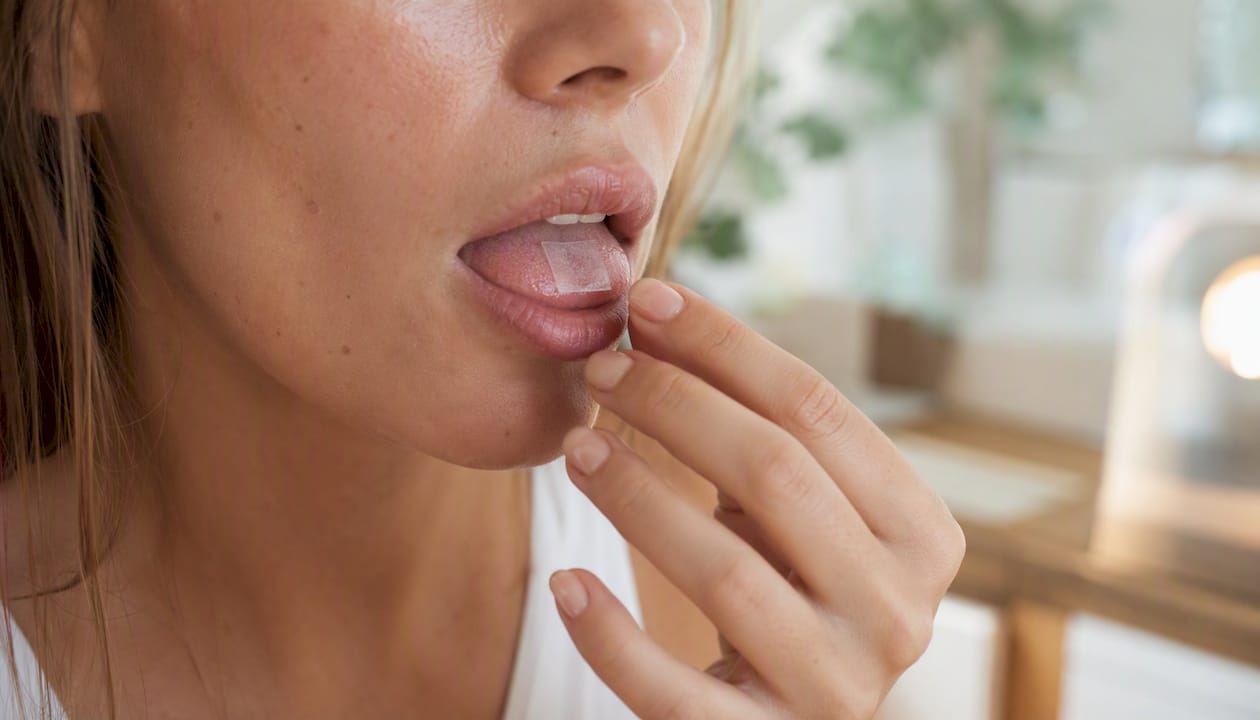
A few practical notes on forms: capsules and tinctures dominate the market, but oral strips dissolve directly on the mucosal lining, bypassing first-pass digestion and potentially improving absorption speed. That matters when you need something fast-acting at 3 AM during a night sweat episode, or when you are traveling and do not want to carry a pill organizer.
For women dealing with menopause brain fog, rhodiola is the most directly studied option. For sleep disruption, ashwagandha and holy basil are the more logical starting points.
What does the clinical research actually show?
The honest answer is: more than traditional use alone, less than pharmaceutical-grade evidence. Here is what the trials actually found.
Ashwagandha
The most directly relevant trial enrolled 100 perimenopausal women in a randomized, double-blind, placebo-controlled design. Participants took 300 mg of ashwagandha root extract twice daily for 8 weeks and showed statistically significant reductions in both the Menopause Rating Scale (MRS) and the Menopause-Specific Quality of Life (MENQoL) scores compared to placebo. Serum estradiol increased and FSH/LH decreased in the treatment group. That is a meaningful hormonal signal for an 8-week trial, though 91 completers is a small sample and the duration is short. Larger, longer studies are needed before drawing firm conclusions about long-term safety or optimal dosing.
A clinical summary from Medical News Today notes that small trials suggest benefits for hot flashes, anxiety, and sleep, but stresses that evidence remains limited and supplement quality varies widely.
Rhodiola rosea
Multiple clinical studies in stressed adults report improvements in fatigue, mental performance, and mood with rhodiola, typically at doses of 100–600 mg standardized to rosavins and salidroside. For menopause specifically, a randomized, double-blind, placebo-controlled trial of 220 women found that a fixed combination of black cohosh and rhodiola produced significantly greater improvements on the Kupperman Menopausal Index (KMI), MRS, and UQOL scores at both 6 and 12 weeks compared to black cohosh alone or placebo. The mood and quality-of-life domains showed the clearest benefit.
The trial registration for NCT03461380 documents the dosing arms in detail: the combination product used 413 mg/day of active ingredients (Cimicifuga EP-40 plus Rhodiola EPR-7), with endpoints covering hot flashes, night sweats, sleep, and mood indices. That level of design rigor is relatively rare in botanical research.
Black cohosh
Black cohosh has a longer research history than most herbs in this category, but the results are genuinely mixed. Some trials show meaningful vasomotor relief; others show effects close to placebo. The clearest signal comes from combination formulas, particularly with rhodiola, where quality-of-life and emotional domain benefits were more consistent. One review of black cohosh trials found that combination products produced more reliable outcomes than black cohosh alone across multiple symptom domains.
Maca
Small trials and observational studies report improvements in sexual desire, energy, and overall wellbeing with gelatinized maca at 1,500–3,000 mg daily in peri- and postmenopausal women. The evidence for vasomotor symptom relief specifically is thin. Maca’s strongest case is for libido and energy, not hot flashes.
Holy basil
Holy basil has a robust traditional use record for stress and anxiety, but randomized trial data in menopausal women specifically is sparse. The available small trials suggest modest cortisol-lowering and anxiolytic effects. It is a reasonable addition for stress support, not a primary intervention for vasomotor symptoms.
Where the evidence is strongest: mood, fatigue, and sleep (ashwagandha, rhodiola). Where it is thinnest: vasomotor symptoms for most herbs except black cohosh, and even there the data is mixed.
A review of adaptogen mechanisms and methodological limitations cautions that heterogeneous study designs, variable extract quality, and short trial durations make it difficult to draw firm conclusions across the category.
How do adaptogens work during perimenopause and menopause?
The physiological story starts with estrogen decline. As estrogen drops, the hypothalamic-pituitary-adrenal (HPA) axis, which governs the stress response, becomes dysregulated. The result is elevated or erratic cortisol, disrupted sleep architecture, mood instability, and worsened vasomotor symptoms. Adaptogens appear to intervene at several points in this cascade.
- HPA axis modulation: Ashwagandha and rhodiola both show evidence of reducing cortisol reactivity in stressed adults, which may blunt the amplified stress response that worsens hot flashes and sleep disruption during perimenopause.
- Neurotransmitter effects: Several adaptogens influence GABA, serotonin, and dopamine pathways. Ashwagandha’s withanolides have demonstrated GABAergic activity in preclinical models, which may explain its sleep and anxiety benefits. Rhodiola’s rosavins appear to inhibit monoamine oxidase (MAO), supporting serotonin and dopamine availability.
- Cellular energy: Rhodiola specifically supports mitochondrial energy production and reduces oxidative stress, which connects directly to the fatigue and brain fog that many women experience during the menopause transition.
- Neuroendocrine signaling: Some adaptogens may modulate hypothalamic sensitivity to hormonal feedback, though this mechanism is less well characterized in humans than in animal models.
The PMC review on adaptogen mechanisms synthesizes preclinical and clinical findings but is clear that mechanistic inference from animal studies does not automatically translate to human outcomes. The biological rationale is plausible and coherent; the human mechanistic data is still catching up.
Pro Tip: Stimulating adaptogens (rhodiola, maca) are best taken in the morning because they can interfere with sleep onset if taken in the afternoon or evening. Calming adaptogens (ashwagandha, holy basil) are better suited to evening or split morning/evening dosing. Matching the herb’s circadian profile to your dosing time is one of the simplest ways to improve results.
Safety, contraindications, and drug interactions to watch for
This section is where most online guides go thin. Do not skip it.
Absolute and relative contraindications
- Pregnancy and breastfeeding: None of the adaptogens covered here have adequate safety data for pregnancy. Avoid all of them.
- Hormone-sensitive cancers: Black cohosh, maca, and ashwagandha all have potential estrogenic or hormonal activity. Women with estrogen-receptor-positive breast cancer, uterine cancer, or ovarian cancer should not use these without oncology clearance.
- Active liver disease: Black cohosh carries a rare but documented risk of hepatotoxicity. Anyone with elevated liver enzymes or active liver disease should avoid it. Ashwagandha has also been associated with rare liver injury cases in the literature.
- Bipolar disorder: Stimulating adaptogens (rhodiola, maca) may trigger hypomanic or manic episodes in susceptible individuals.
- Uncontrolled autoimmune disease: Adaptogens with immune-modulating properties (ashwagandha in particular) may theoretically worsen autoimmune flares, though clinical evidence is limited.
Drug interactions to screen
- HRT: Herbs with estrogenic activity (black cohosh, maca) may have additive or unpredictable effects when combined with exogenous hormones.
- Tamoxifen and SERMs: Black cohosh’s interaction with tamoxifen is a genuine clinical concern; some evidence suggests it may affect tamoxifen metabolism via CYP2D6.
- Antidepressants (SSRIs/MAOIs): Rhodiola’s MAO-inhibiting activity creates a theoretical serotonin syndrome risk when combined with SSRIs or MAOIs. This is not a minor footnote.
- Anticoagulants: Some adaptogens may affect platelet aggregation or coagulation; disclose all supplements to your prescriber if you take warfarin or direct oral anticoagulants.
- Thyroid medication: Ashwagandha has been shown to increase thyroid hormone levels in some studies. If you take levothyroxine, monitor thyroid function after starting it.
- Diabetes medications: Ashwagandha and holy basil both have blood-glucose-lowering effects; combining them with insulin or oral hypoglycemics increases hypoglycemia risk.
Red flags requiring immediate action
Stop the supplement and contact your clinician if you develop jaundice or yellowing of the skin/eyes, new severe abdominal pain, palpitations or irregular heartbeat, or a sudden worsening of mood or agitation. These are not “adjustment symptoms.”
A regulatory and toxicology review notes that long-term safety data for most botanical adaptogens remain limited and recommends cautious, evidence-based use with post-market surveillance in mind.
How to pick a high-quality adaptogen product
Most of the risk in this category is not in the herb itself. It is in the product.
What a trustworthy label looks like
- Standardized extract: Rhodiola should specify rosavins (typically 3%) and salidroside (1%). Ashwagandha should list withanolide content (commonly 2.5–5%). A label that says only “rhodiola extract” without standardization tells you almost nothing.
- Botanical Latin name and plant part: Withania somnifera root is what the trials used. Rhodiola rosea root is the studied species. “Adaptogen blend” with no Latin names is a red flag.
- Dose per serving: You need to know how many milligrams of the standardized extract you are actually getting per dose.
- Third-party testing: Look for USP, NSF International, or ConsumerLab verification seals. These programs test for identity, potency, and contaminants.
- Batch-specific Certificate of Analysis (COA): Reputable brands publish or provide COAs showing pesticide, heavy metal, and identity testing results for each production batch.
Buyer-beware signals
- Proprietary blends that list ingredients without individual amounts
- Claims that the product “cures” or “treats” menopause (illegal under FDA rules for dietary supplements)
- No manufacturer contact information or physical address
- Unexplained fillers or excipients with no rationale
A peer-reviewed review of botanical supplement quality documents contamination risks including heavy metals and pesticides, adulteration with undisclosed ingredients, and inconsistent extract standardization across the market. The problem is not rare.
Pro Tip: Before buying, email the brand and ask for a batch-specific COA for the product you are considering. A company that cannot or will not provide one is telling you something important about their manufacturing standards.
For a broader look at perimenopause supplement quality and what to look for on labels, Nukalove’s guide covers the regulatory landscape in practical terms.
What dosing ranges did clinical trials actually use?
The table below reflects doses used in published trials and common over-the-counter ranges. These are starting points for a conversation with your clinician, not prescriptions.
A few practical points on regimens:
- Start at the lower end of the dose range for the first 2–4 weeks to assess tolerance.
- Cycling (taking breaks of 2–4 weeks after 6–8 weeks of use) is a common clinical recommendation, though formal evidence on optimal cycling protocols is limited.
- If you are considering long-term use beyond 3–6 months, discuss a liver function panel with your clinician, particularly if you use black cohosh or ashwagandha.
- Trial doses vary considerably across studies. The ashwagandha RCT used 300 mg twice daily; some OTC products deliver the same amount in a single capsule. Read the label carefully.
Dosage disclaimer: Always review dosing with a qualified clinician before starting, particularly if you take any prescription medications or have a chronic health condition. Long-term safety data for most adaptogens remain limited, and trial durations rarely exceed 12 weeks.
For women specifically looking at energy supplements for travel, the delivery format affects how quickly and predictably you absorb a dose, which matters when your schedule is unpredictable.
Why delivery form and quality control matter for menopausal women
Well-manufactured delivery formats improve two things that matter enormously in this population: adherence and dosing predictability. A supplement you actually take consistently, at a reliable dose, outperforms a theoretically superior product you forget or take inconsistently.
Oral strips offer specific advantages worth understanding:
- Mucosal absorption: Strips dissolve directly on the oral mucosa, bypassing first-pass liver metabolism. This can mean faster onset and more consistent blood levels compared to capsules that must survive gastric acid and intestinal absorption.
- Precise microdosing: Each strip delivers a fixed, pre-measured dose. No measuring powders, no counting capsules in the dark at 3 AM during a night sweat episode.
- Travel convenience: A strip format fits in a wallet or a small travel pouch. No pill organizer, no TSA questions about a bag full of supplement bottles.
- No water required: Relevant when you wake at night and do not want to fully rouse yourself by getting up for water.
The practical caveat: oral strips must be formulated with appropriate excipients for stability and mucosal compatibility. Check that the brand discloses its excipient list and that no ingredient conflicts with your known sensitivities or medications.
Pro Tip: If you take a calming adaptogen like ashwagandha for sleep, an oral strip format is particularly practical for nighttime use. You can keep it on your nightstand and dissolve it without turning on a light or leaving bed.

Nukalove designs its products specifically for women navigating menopause on the go. The oral strip format is not a gimmick; it addresses the real-world adherence problem that undermines most supplement regimens. For women managing sleep disruption without melatonin, a well-formulated calming strip taken at bedtime is a practical option worth considering.
When to stop self-treatment and consult a clinician
Adaptogens are appropriate as a complementary strategy for mild to moderate symptoms. They are not appropriate as a substitute for medical evaluation when certain thresholds are crossed.
Escalate to your clinician if you experience any of the following:
- New or worsening heavy or irregular uterine bleeding
- Signs of liver injury: jaundice, dark urine, right upper abdominal pain, unexplained fatigue with nausea
- New chest pain, palpitations, or irregular heartbeat after starting a supplement
- Severe mood changes, new anxiety, or agitation that began after starting a stimulating adaptogen
- Symptoms that significantly interfere with daily functioning despite 8–12 weeks of adaptogens combined with lifestyle measures (sleep hygiene, regular exercise, dietary adjustments)
When you do see your clinician, bring these specific questions:
- Are any of my current medications likely to interact with ashwagandha, rhodiola, or black cohosh?
- Should I get a baseline liver panel before starting black cohosh long-term?
- Is HRT or another medical option more appropriate for my symptom severity?
- Can I document my supplement use in my medical record (brand, dose, duration)?
That last point is practical, not bureaucratic. Supplement-drug interactions are underreported partly because patients do not mention supplements and clinicians do not ask. Putting it in the record protects you.
The case for cautious optimism, not uncritical enthusiasm
The evidence for adaptogens in menopause is genuinely promising in several symptom domains, and it is genuinely limited in others. Ashwagandha’s 8-week RCT data is encouraging; it is also a single small trial. Rhodiola’s combination trial with black cohosh showed real quality-of-life improvements in 220 women; that is not the same as a definitive answer.
What concerns me about how these herbs are marketed is the gap between “this small trial showed a statistically significant improvement on a symptom scale” and “this herb fixes menopause.” The first statement is defensible. The second is not, and the supplement industry leans hard on the second framing.
The women who tend to get the most out of adaptogens are the ones who use them as one layer of a broader strategy: consistent sleep hygiene, regular exercise (which has its own robust evidence for vasomotor symptom reduction), dietary adjustments, stress management, and clinician oversight. Adaptogens do not replace any of those, and they certainly do not replace HRT when HRT is indicated. What they can do, when the product quality is there and the herb matches the symptom profile, is provide a meaningful complementary benefit.
The delivery format matters more than most guides acknowledge. A well-formulated oral strip from a manufacturer with batch-level quality controls is a fundamentally different product from a bargain-bin capsule with no standardization data. Choosing the right herb is step one. Choosing a product that actually contains what the label says, at the dose the label claims, is step two, and it is where most people stop paying attention.
Nukalove oral strips: a travel-ready format for your adaptogen plan
Managing menopause symptoms while traveling, working, or simply living a full life means your supplement routine needs to keep up. Nukalove’s oral strips are designed specifically for women in perimenopause and menopause who want precise, fast-absorbing formats without the bulk of a pill organizer.
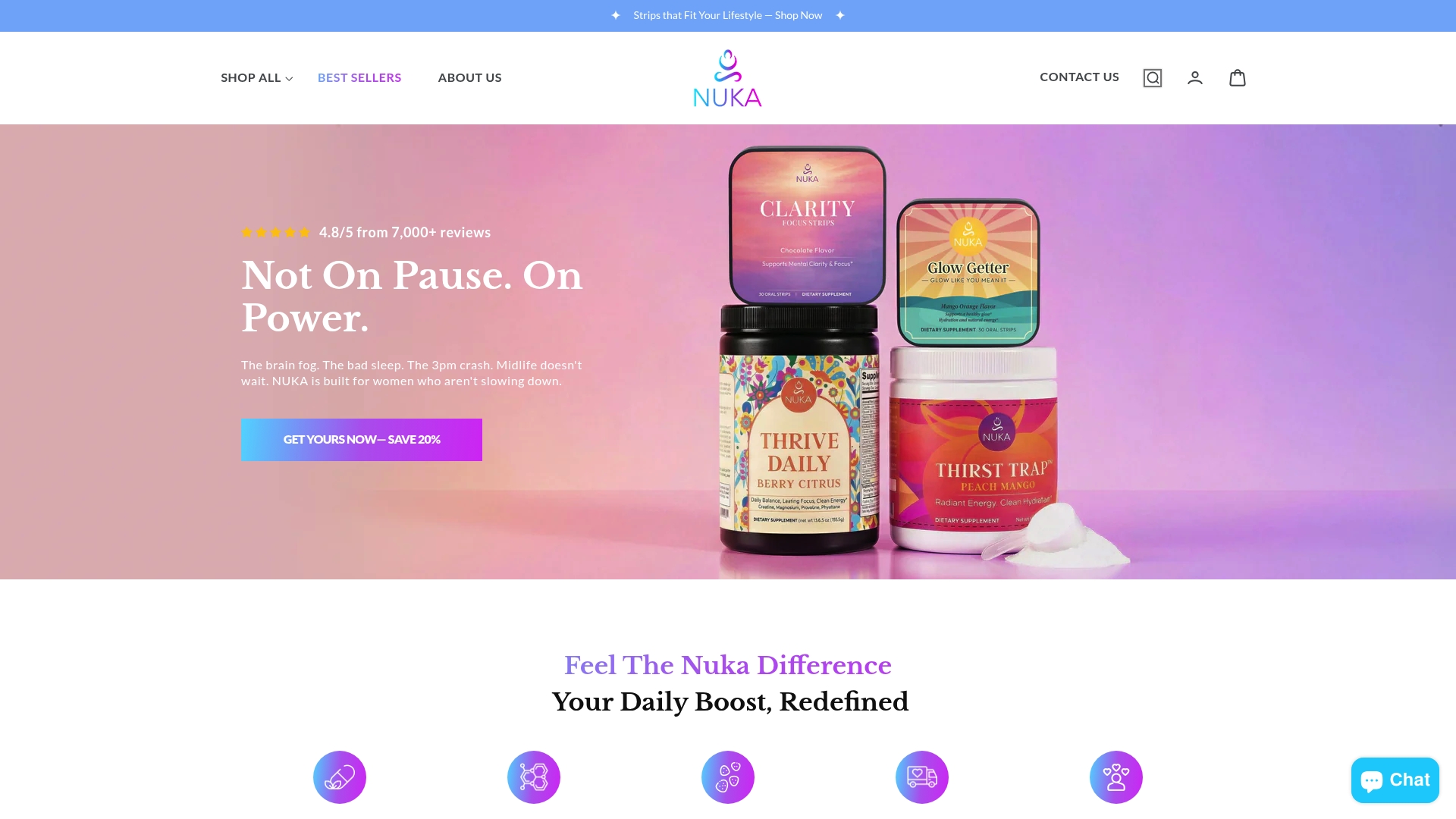
The strip format delivers a fixed dose directly through the oral mucosa, which means faster absorption and no guesswork about whether a capsule dissolved properly. For nighttime symptoms like hot flashes and sleep disruption, Nukalove’s Sleepy Strips offer a calming, easy-to-use option you can keep on your nightstand. For women focused on cognitive clarity, the Clarity focus strips are designed to address brain fog with the same convenient format.
Every Nukalove product is built with quality controls that match what this guide recommends: disclosed ingredients, precise dosing per strip, and a manufacturing process designed for consistency. As always, review any new supplement with your clinician before starting, particularly if you take prescription medications.
Browse the full range at Nukalove and find the format that fits your routine.
Sources
The sources below are the primary references used to build this guide. Before applying any finding to your own situation, check the study population, dose, and duration, since results from a specific trial do not automatically generalize to your age, health status, or symptom profile.
- Effect of an ashwagandha (Withania Somnifera) root extract on climacteric symptoms in women during perimenopause: A randomized, double-blind, placebo-controlled study
- Rhodiola rosea L. for Relief of Menopausal Symptoms: A Randomized, Double-Blind, Placebo-Controlled Study
- A randomized, double-blind study of Menopause Relief EP-40 (Cimicifuga EP-40 + Rhodiola EPR-7) versus black cohosh and placebo (NCT03461380)
- Ashwagandha for menopause: Benefits, risks, and safety
- Ncbi
- Ncbi
- Pubmed
This article is general information, not a substitute for advice from a qualified doctor. Consult a qualified healthcare professional about your own circumstances before acting on anything here.