

Sleep Supplements Without Melatonin for Menopause
Yes, effective sleep supplements without melatonin exist, and they work well for menopausal women. The most travel-friendly options are magnesium, L-theanine, glycine, and calming botanicals like passionflower and chamomile. If you want one immediate recommendation: try a single-dose oral strip or gummy containing magnesium and L-theanine tonight.
Top melatonin-free options at a glance:
- Magnesium glycinate — muscle relaxation, nervous system calm
- L-theanine — reduces nighttime awakenings without morning grogginess
- Glycine — lowers core body temperature, supports circadian rhythm
- Valerian root — mixed evidence, but widely used for sleep onset
- Passionflower and chamomile blends — calming botanicals with ritual benefit
Table of Contents
- How non-melatonin sleep supplements actually work
- The best non-melatonin sleep supports for menopausal women
- Safety checklist for menopausal women
- How bedtime routines make these supplements work better
- Choosing travel-friendly formats for sleep on the go
- Key takeaways
- Why Nukalove builds melatonin-free sleep aids for menopausal women
- Nukalove’s melatonin-free sleep options
- Sources and further reading
How non-melatonin sleep supplements actually work
These supplements support your body’s transition into rest. They are not sedatives. That distinction matters because menopausal women often deal with disrupted sleep from hot flashes, night sweats, and elevated cortisol, not simply a melatonin deficit.
The main mechanisms: magnesium supports muscle relaxation and calms nervous system activity; L-theanine promotes alpha-wave brain activity that eases the shift toward sleep; glycine lowers core body temperature, which is a natural sleep trigger; GABA-modulating herbs like valerian reduce neural excitability. A 2024 literature review found that combining calming nutrients such as magnesium with L-theanine may be preferred by people avoiding sedatives, because the synergy reduces the risk of a next-day hangover.
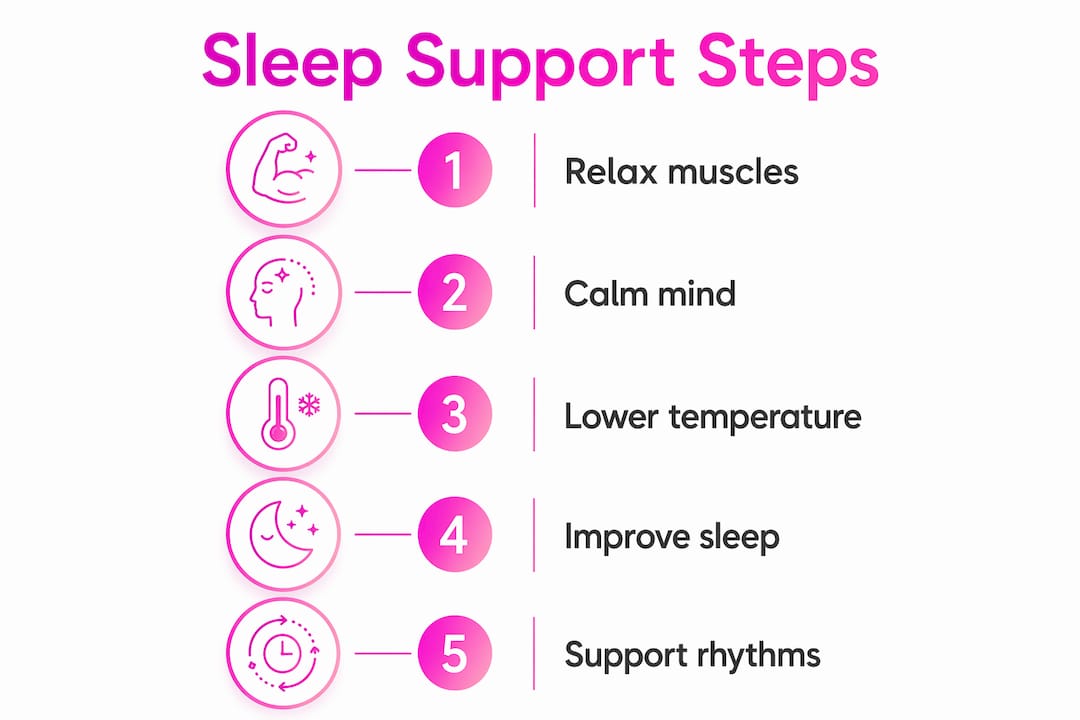
Evidence strength varies. Magnesium and L-theanine have moderate clinical support. Valerian shows mixed results. Many botanicals have limited formal evidence but real anecdotal backing.
The best non-melatonin sleep supports for menopausal women
1. Magnesium glycinate
Magnesium supports muscle relaxation and calm neurological activity. Glycinate is the most bioavailable form and the least likely to cause digestive upset. Typical dose: taken before bed. Evidence: moderate. Avoid pairing with certain antibiotics or blood pressure medications without checking with your doctor first.

2. L-theanine
An amino acid found naturally in green tea. Research shows it may reduce nighttime awakenings and improve sleep quality without causing daytime sleepiness. Combining it with magnesium may enhance both effects. Typical dose: at bedtime. Evidence: moderate. Generally well tolerated.
3. Glycine
Glycine works by lowering core body temperature and supporting circadian rhythm. Studies have used a small dose taken 30–60 minutes before bed. For menopausal women already dealing with temperature dysregulation, this mechanism is particularly relevant. Evidence: moderate for insomnia symptoms. Mild and well tolerated at studied doses.
4. Valerian root
Valerian is one of the most studied herbal sleep aids. Some trials show improved sleep onset and quality; others show no significant effect. In a small percentage of people, it causes paradoxical stimulation. There are rare reports of liver risk with long-term use. Typical dose: taken 30–60 minutes before bed. Evidence: mixed. Do not use alongside other sedatives or if you have liver disease.
5. Passionflower and chamomile blends
These botanicals work primarily through mild GABA modulation and the psychological power of ritual. The evidence base is limited, but the safety profile is strong. Chamomile tea 30 minutes before bed is a low-risk starting point. Evidence: limited. Chamomile may interact with blood thinners at high doses.
6. GABA (as a standalone supplement)
GABA supplements are widely marketed for sleep, but the science on whether oral GABA crosses the blood-brain barrier in meaningful amounts is still unsettled. Use it only as a secondary addition, not a primary strategy. Evidence: limited. Generally safe at typical doses.
7. Calming adaptogens
Ashwagandha (KSM-66 is the most studied form) helps regulate nighttime stress responses and ease mental tension. It is not a direct sleep aid but can reduce the cortisol elevation that keeps menopausal women wired at night. Evidence: moderate for stress reduction, limited specifically for sleep. Avoid if you take thyroid medications without medical guidance.
Pro Tip: Tart cherry products naturally contain melatonin. If you are specifically avoiding melatonin, check labels carefully before buying any fruit-derived sleep supplement.
Dose and timing summary: Take short-acting options (L-theanine, glycine, chamomile) 30–45 minutes before your target bedtime. Magnesium can be taken 60 minutes out. Avoid long-acting valerian if you need to be sharp early in the morning, and always start at the lower end of any dose range.
Safety checklist for menopausal women
Always check with your clinician before starting any supplement if you take hormone therapy, antidepressants, blood thinners, or sedatives, or if you have liver disease.
| Drug/Condition Class | Supplement to Watch | Caution Level |
|---|---|---|
| Hormone therapy (HT/HRT) | Valerian, ashwagandha | Moderate — possible hormonal interaction |
| SSRIs / SNRIs | L-theanine, valerian, GABA | Moderate — additive CNS effects possible |
| Blood thinners (warfarin) | Chamomile, valerian | High — may potentiate anticoagulant effect |
| Sedatives / benzodiazepines | Any herbal sleep aid | High — compounding sedation risk |
| Liver disease | Valerian | High — rare hepatotoxicity reports |
OTC antihistamine sleep aids like diphenhydramine carry their own risks: tolerance builds quickly and daytime drowsiness is common. They are not a better alternative.
Questions to bring to your next appointment:
- Does anything I currently take interact with magnesium, L-theanine, or valerian?
- Is there a dose adjustment I should consider given my hormone therapy?
- Are there liver function concerns I should monitor if I try valerian long-term?
Stop and call your doctor if you experience: jaundice, heart palpitations, severe dizziness, or unusual fatigue after starting any supplement.
Supplements are not FDA-regulated as medicines, and quality varies widely between manufacturers. Stick with one trusted brand and look for third-party testing.
This article is general information, not medical advice. Confirm any supplement choice with your clinician, especially if you are on hormone therapy or other prescriptions.
How bedtime routines make these supplements work better
Supplements are supportive tools, not standalone fixes. Clinical guidance consistently places sleep hygiene first. A consistent routine amplifies whatever supplement you choose.
A simple wind-down routine for menopausal women:
- 90 minutes before bed: Dim lights and put screens away. Blue light suppresses your body’s natural melatonin production.
- 60 minutes before bed: Take your supplement (magnesium, glycine, or your chosen blend). Lower your bedroom thermostat to 65–68°F to reduce night-sweat-driven awakenings.
- 30 minutes before bed: Warm herbal tea, a consistent scent like lavender, or your oral sleep strip. This is where ritual does real work.
- At bedtime: Keep the room dark and cool. Use a light blanket you can kick off easily.
“Expecting to fall back asleep instantly after waking in the night increases anxiety and actually prolongs wakefulness. It can take up to 30 minutes to drift back off — that is normal.” — Johns Hopkins Medicine
To avoid morning grogginess, choose short-acting ingredients (L-theanine, glycine, chamomile) over long-acting ones (high-dose valerian) and test your timing over 7–10 nights before adjusting.
Choosing travel-friendly formats for sleep on the go
Single-dose, non-liquid formats are the most practical for travel. They clear TSA carry-on rules, require no measuring, and hold up in warm hotel rooms.
| Format | Portability | Dose Accuracy | Onset Speed | TSA Friendly |
|---|---|---|---|---|
| Oral strips | Excellent | High | Fast (sublingual) | Yes |
| Single-dose gummies | Very good | High | Moderate | Yes |
| Sachet powders | Good | High | Moderate | Yes (travel-friendly) |
| Capsules (loose bottle) | Moderate | High | Moderate | Yes |
Travel packing checklist for a night away:
- 1–2 single-dose strips or gummies (pre-portioned, no bottle needed)
- Cooling cloth or small personal fan for night sweats
- Sleep mask and earplugs
- Clear labeling on any supplement pouch for hotel security
For time-zone changes, skip melatonin entirely and rely on light exposure plus your consistent bedtime ritual. A glycine or L-theanine supplement 30 minutes before your new local bedtime helps signal sleep without locking you into a hormonal cycle. Night sweats are often worse in warm hotel rooms, so temperature control matters as much as the supplement itself. Sleep quality is also closely linked to weight management, which is a real concern during menopause.
Key takeaways
Magnesium and L-theanine are the most evidence-backed melatonin-free sleep supports for menopausal women, and single-dose oral strips or gummies are the most practical format for consistent use at home and while traveling.
| Point | Details |
|---|---|
| Start with magnesium + L-theanine | This combination has the strongest evidence and the lowest risk of morning grogginess. |
| Time your dose right | Take short-acting options 30–45 minutes before bed; magnesium can go 60 minutes out. |
| Pair with sleep hygiene | Cool room, dim lights, and a consistent ritual amplify any supplement you choose. |
| Check for interactions | Always review with your clinician if you take hormone therapy, antidepressants, or blood thinners. |
| Nukalove Sleepy Strips | Travel-ready oral strips with no melatonin, designed for menopausal women who want fast, portable sleep support. |
Why Nukalove builds melatonin-free sleep aids for menopausal women
Menopausal sleep disruption is not a simple melatonin deficit. It is a combination of temperature dysregulation, hormonal shifts, elevated cortisol, and the cumulative stress of midlife. A supplement that just dumps melatonin into your system does not address any of that. Nukalove’s approach starts from that reality.
Oral strips dissolve fast, require no water, and fit in a clutch or carry-on. That matters for adherence. If your sleep support is buried in a checked bag or requires a full glass of water at 2 AM, you will skip it. The format is the feature.
Nukalove is women-owned and operated, built specifically for women in all stages of menopause. Every product in the line, from Sleepy Strips to the ZZZ Team bundle, is designed around portability, non-hormonal formulations, and the real-life demands of women who travel, work, and need to function the next morning.
Nukalove’s melatonin-free sleep options
Nukalove makes it easy to start tonight without a complicated regimen.
Sleepy Strips are fast-dissolving oral strips with no melatonin. Place one on your tongue 20–30 minutes before bed. They are TSA-friendly, require no water, and are compact enough to keep in a nightstand or travel bag.
Blissful Sleep Gummies are a single-dose gummy option for women who prefer a chewable format. Take one 30 minutes before your target bedtime.
Deep ZZZS oral sleep strips are coming soon for women who want deeper-rest support. Join the waitlist to be notified at launch.
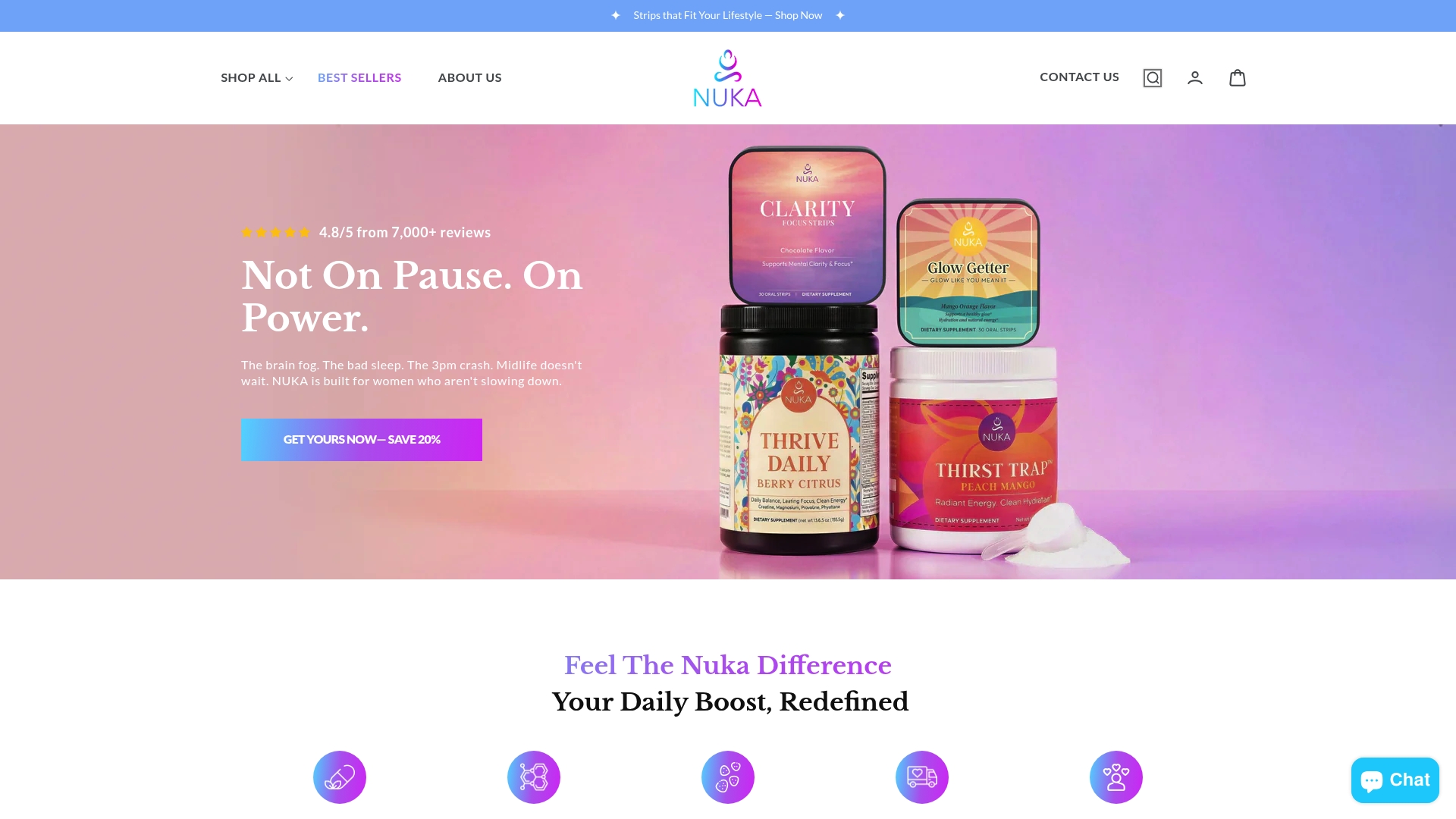
If you want to try the full menopausal wellness approach, the No Pause Power Pack bundles sleep and supporting products in one order. Single purchases and subscriptions are both available at nukalove.com.
Sources and further reading
The claims in this article draw on peer-reviewed research, clinical guidance, and institutional health resources. Supplements are not FDA-approved medicines, and formulation quality varies across brands. Bring any sources or notes from this article to your next clinical appointment if you have questions about interactions or dosing.
| Source | Topic covered |
|---|---|
| PMC 2024 Literature Review | Evidence strength for botanicals and synergistic supplement approaches |
| Sleep Foundation — Natural Sleep Aids | L-theanine, glycine, supplement quality and regulation |
| Mayo Clinic — OTC Sleep Aids | Antihistamine risks and OTC sleep aid guidance |
| Henry Ford Health — Dr. Philip C. Cheng | Ritual effect, non-hormonal sleep support for menopausal women |
| Johns Hopkins Medicine | Normal nighttime awakening patterns and sleep hygiene |
| Healthline — Sleep Aids | Sleep hygiene as foundational support |