

Gluten Free Electrolyte Packets: Safe Picks for Travel
Yes, gluten free electrolyte packets exist and are widely available in the U.S. For most people with gluten sensitivity, a labeled gluten-free powder is workable. For celiac disease, the bar is higher: you want a third-party certified product or a manufacturer willing to share batch-level lab data. Nukalove’s THIRST TRAP hydration powder is the travel-ready, labeled gluten-free option this article recommends, built for women who need something compact, clean, and carry-on ready.
Before you buy anything, run through these quick checks:
- Does the packet say “gluten-free” on the label, or does it carry a third-party seal like GFCO?
- Is there a full allergen statement (not just a marketing claim)?
- Does the ingredient list include anything that could hide gluten: maltodextrin, natural flavors, barley derivatives?
- Can the manufacturer provide a Certificate of Analysis (COA) on request?
If you have celiac, all four boxes need to check out. If you have general gluten sensitivity, the first two usually get you there.
Table of Contents
- What does “gluten-free” actually mean on a U.S. electrolyte packet?
- Which ingredients in electrolyte powders can hide gluten?
- What to compare on the nutrition label before you buy
- How can people with celiac disease verify a packet is safe?
- How to use electrolyte packets safely and when to go higher sodium
- The travel-friendly gluten-free option Nukalove recommends
- Key Takeaways
- What Nukalove believes about gluten-free safety
- THIRST TRAP is built for women who travel and need clean hydration
- Authoritative sources and how to request a COA
What does “gluten-free” actually mean on a U.S. electrolyte packet?
“Gluten-free” on a U.S. food or supplement label means the manufacturer is asserting that gluten is below a specific threshold, but the strength of that claim depends entirely on who is making it and whether anyone verified it.
The FDA’s gluten-free labeling guidance sets a benchmark of fewer than 20 parts per million (ppm) for foods that carry the claim. That threshold is the internationally recognized standard for what most people with celiac disease can tolerate. The catch: dietary supplements are regulated differently from conventional foods, and enforcement of the claim on supplement labels is less rigorous. A powder marketed as a supplement may carry “gluten-free” on the front panel without the same scrutiny applied to a food product.
Certified gluten-free vs. manufacturer label: A plain “gluten-free” claim is self-reported. A third-party seal from an organization like the Gluten-Free Certification Organization (GFCO) means an independent auditor has reviewed sourcing, manufacturing controls, and testing protocols. For people with celiac, that distinction matters more than the font size of the claim.
Pro Tip: On U.S. packaging, the allergen statement usually appears directly below the ingredient list or in a “Contains” line. Look for “Processed in a facility that also processes wheat” or “May contain wheat” — those phrases signal shared-equipment risk even when the product itself is labeled gluten-free.
Which ingredients in electrolyte powders can hide gluten?
The mineral electrolytes themselves, sodium, potassium, magnesium, and calcium, are inherently gluten-free. The risk lives in the additives, carriers, and flavoring agents that turn those minerals into a drinkable powder.
Watch for these specifically:
- Maltodextrin: Commonly corn-derived in the U.S., but the source is not always disclosed. Wheat-derived maltodextrin exists and can retain gluten peptides. The Celiac Disease Foundation recommends confirming the source directly with the manufacturer if the label does not specify.
- Natural flavors: A catch-all term that can legally include barley-derived compounds. No way to know without asking.
- Barley derivatives or barley malt extract: Sometimes used as a sweetener or flavor enhancer. Barley contains gluten.
- Wheat starch: Occasionally used as a carrier or anti-caking agent.
- Anti-caking agents and flow agents: Silica is fine; some starch-based agents are not.
- Shared-equipment or shared-facility warnings: Even a clean ingredient list can carry cross-contact risk if the production line also handles wheat.
If you are unsure about any ingredient, a short email to the manufacturer gets you the answer faster than you might expect. Ask: “Is your maltodextrin corn-derived? Do you produce on shared equipment with wheat, barley, or rye? Can you provide a COA for the current batch?” Most reputable brands respond within a business day.

What to compare on the nutrition label before you buy
Prioritize sodium first, then potassium, magnesium, and calcium. Sugar content and sweetener type determine whether the formula works for your diet and your stomach.
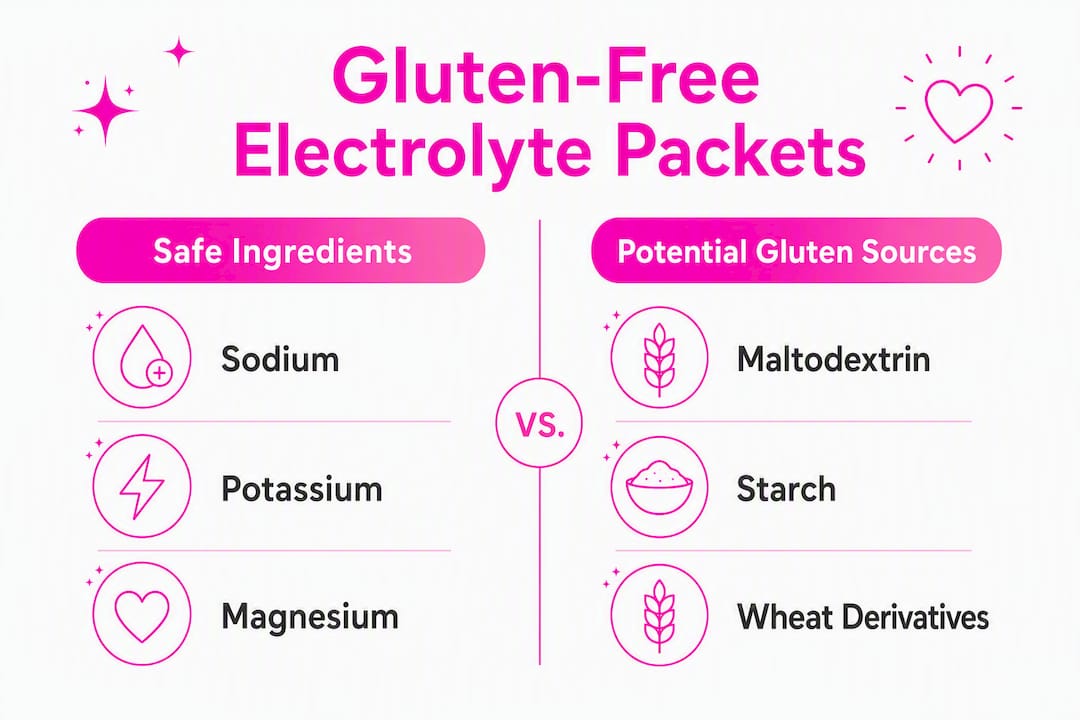
Sodium accounts for roughly 90% of electrolytes lost in sweat, which is why it anchors every serious hydration formula. Potassium, magnesium, and calcium follow in smaller amounts. A packet that skimps on sodium and loads up on magnesium is optimized for something other than sweat replacement.
On the sugar question: a small amount of glucose can actually speed absorption. The mechanism is sodium-glucose co-transport, where sodium and glucose enter cells together through the same channel, pulling water with them. Clinical rehydration formulas use this principle to accelerate fluid uptake during illness. If you are on a keto or low-carb diet, sugar-free formulations sweetened with stevia skip the glucose entirely and still deliver the electrolyte payload.
| Label value | What to look for per serving |
|---|---|
| Sodium | a range suitable for higher sweat loss to daily use |
| Potassium | an amount covering typical electrolyte needs |
| Magnesium | an amount covering typical electrolyte needs |
| Calcium | varies often minimal in single-serve packets |
| Sugar | ranges from none in keto/low-carb to a small amount aiding absorption during illness or exercise |
| Calories | typically low for most single-serve packets |
A packet that lists sodium in milligrams rather than as a percentage of daily value gives you more useful information for comparison. If the label only shows %DV, do the math: 100% DV for sodium is 2,300 mg.
How can people with celiac disease verify a packet is safe?
Start with the label, then go deeper. A “gluten-free” claim alone is not enough for celiac disease.
- Check for a third-party certification seal. GFCO is the most recognized in the U.S. NSF Certified Gluten-Free is another. If the seal is present, the product has been audited beyond the manufacturer’s own word.
- Read the full allergen statement. Look below the ingredient list for any “Contains” or “May contain” language referencing wheat, barley, or rye.
- Scan every ingredient. Flag maltodextrin (confirm source), natural flavors (ask for specifics), and any starch-based carrier.
- Request a COA. A Certificate of Analysis shows lab-tested gluten residue for a specific batch. Email or call the manufacturer and ask: “Can you provide a COA for lot number [X] showing gluten testing results?” Reputable brands keep these on file.
- Start with a small serving. Even a verified product can cause a reaction in highly sensitive individuals. Try half a packet in a full glass of water first.
Pro Tip: Save your receipt, photograph the lot number on the packet, and note the date if you suspect a reaction. Manufacturers can trace cross-contact events to specific production runs when you have that information. It also helps if you need to report an issue to the FDA.
How to use electrolyte packets safely and when to go higher sodium
Follow the serving instructions on the label. That is the baseline. Where you adjust is sodium level, and the right call depends on what your body is actually doing.
Electrolyte needs vary significantly by individual. A woman running in summer heat for 90 minutes loses far more sodium than someone sipping water at a desk. Here is a practical breakdown:
- Everyday hydration: A lower-sodium packet (300–500 mg per serving) mixed into 16 oz of water works for general daily top-up, especially if you eat a reasonably salted diet.
- Exercise or heat exposure: Go higher, 500–1,000 mg sodium, and consider a formula with some potassium and magnesium to cover the broader sweat profile.
- Illness or diarrhea: A glucose-containing rehydration formula is more effective here because the sodium-glucose co-transport mechanism accelerates fluid absorption.
- Menopause-related hydration: Hormonal shifts during perimenopause and menopause can affect fluid retention and thirst signals. Electrolytes can help when water alone isn’t enough, particularly during hot flashes or night sweats.
Storage and travel tips: Single-serve packets are shelf-stable and do not require refrigeration. Keep them away from humidity and direct heat. A small zip pouch in your carry-on holds a week’s worth without adding meaningful weight. Most packets stay good for 12–24 months from production, but check the best-by date printed on the box.

The travel-friendly gluten-free option Nukalove recommends
Nukalove’s THIRST TRAP hydration powder is the publisher’s recommended pick for women who need a labeled gluten-free, single-serve electrolyte packet that actually fits in a purse or carry-on. It was designed with travel convenience and ingredient transparency as the starting point, not an afterthought.
What makes it the right fit for this audience:
- Single-serve format with no measuring, no bulk tub, no mess at airport security
- Clear ingredient and allergen statements on the label
- Designed for women navigating menopause, where hydration needs can shift quickly and unpredictably
- Compact enough to toss in a gym bag, travel pouch, or desk drawer
Beyond THIRST TRAP, the broader market offers a few other categories worth knowing about:
- Whole-food electrolyte powders: Organic, minimally processed options that appeal to clean-label shoppers. Natural ingredients still require gluten verification for celiac consumers, so check the allergen statement regardless of how clean the branding looks.
- Unflavored minimal-ingredient powders: Dairy-free, vegan, keto-friendly formulations with very short ingredient lists. Useful for people who react to flavoring agents or want to add electrolytes to an existing drink.
- Sugar-free clinical-style packets: Zero sugar, stevia-sweetened, positioned for keto and low-carb diets. Check that the stevia source is disclosed and that no barley-derived sweeteners appear.
Single-serve packets are sold at most major U.S. retailers, online marketplaces, and directly through brand websites. Cost per serving typically runs lower when bought in bulk boxes versus individual packets. For THIRST TRAP specifically, the brand site is the most direct path to current pricing and bundle options.
Key Takeaways
Gluten free electrolyte packets are safe for most people with gluten sensitivity when they carry a third-party certification seal and a clean allergen statement, but celiac disease requires the extra step of requesting a COA.
| Point | Details |
|---|---|
| Label vs. certification | A plain “gluten-free” claim is self-reported; a GFCO or NSF seal means independent auditing of sourcing and manufacturing. |
| Ingredients to flag | Check maltodextrin source, natural flavors, and any shared-equipment warnings before buying. |
| Sodium comes first | Sodium is the primary electrolyte lost in sweat; prioritize it on the label, then potassium and magnesium. |
| COA is your safety net | For celiac disease, request a Certificate of Analysis from the manufacturer to confirm batch-level gluten testing. |
| Nukalove THIRST TRAP | A labeled gluten-free, single-serve hydration powder designed for travel and women’s wellness needs. |
What Nukalove believes about gluten-free safety
The conventional wisdom in the supplement industry is that slapping “gluten-free” on a label is enough. It is not, and anyone who has navigated celiac disease already knows that. What the label tells you is that the manufacturer made a claim. What it does not tell you is whether that claim was tested, whether the production line was cleaned between runs, or whether the maltodextrin came from corn or wheat.
Nukalove’s position is that transparency is not optional for a health brand serving women with real dietary needs. That means clear allergen statements, ingredient sourcing you can ask about, and a customer support team that will actually answer a COA request rather than redirect you to a generic FAQ. The THIRST TRAP product page reflects that approach, and so does the broader Nukalove wellness collection.
The other thing worth saying: “natural” is not a synonym for “safe” when you have celiac. Organic whole-food powders, herbal blends, and minimally processed formulas all carry the same cross-contact risk as any other product if the facility handles wheat. The certification seal exists for exactly this reason. Look for it, ask for the COA, and do not let clean branding substitute for actual verification.
THIRST TRAP is built for women who travel and need clean hydration
Most electrolyte powders are designed for athletes in a gym. THIRST TRAP was built for women who are managing their health on the move, whether that is a work trip, a weekend away, or just a day where the hot flash hits at 2 PM and water is not cutting it.
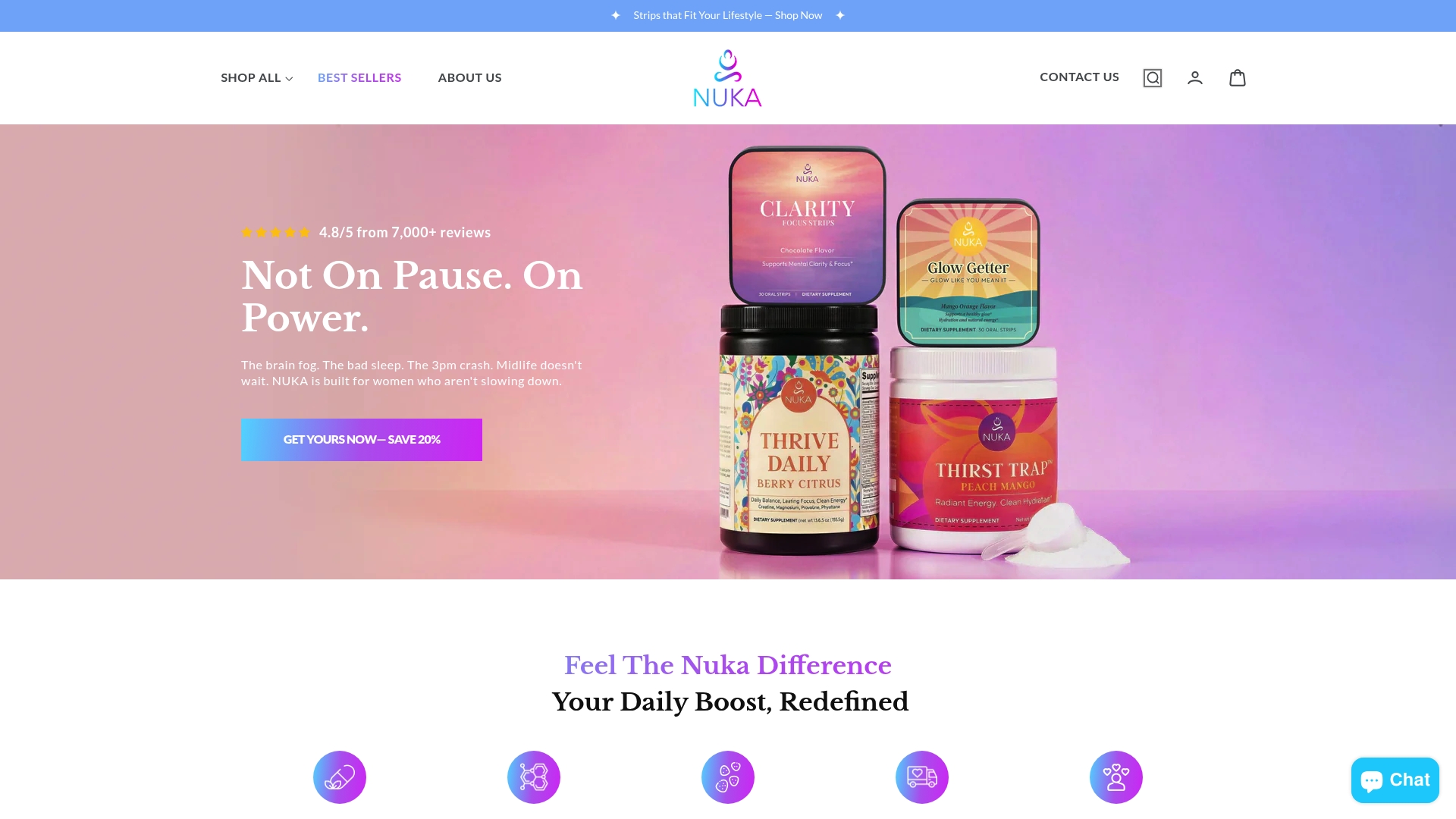
It fits in your carry-on. The label is clear. The allergen statement is there. And if you want to dig into the full Nukalove wellness lineup beyond hydration, the brand’s oral strips cover sleep, focus, energy, and skin from the same travel-ready format.
Shop THIRST TRAP on the Nukalove site and check current bundle pricing.
Authoritative sources and how to request a COA
The most reliable references for gluten-free labeling in the U.S. are primary regulatory and certification bodies:
- FDA Gluten-Free Labeling of Foods: The governing guidance on the less than 20 ppm threshold and what manufacturers must substantiate to use the claim.
- Celiac Disease Foundation: Practical ingredient guidance, including warnings about maltodextrin sourcing and natural flavors, plus a directory of certified products.
A Certificate of Analysis is a lab report showing tested gluten residue for a specific production batch. To request one, email the manufacturer with your lot number (printed on the packet or box) and ask for “gluten testing results for this batch.” Most brands that invest in third-party certification keep COAs on file and will share them within a few business days. If a company refuses or cannot produce one, that tells you something.
For Nukalove products, customer support is reachable through the brand site for ingredient questions and COA requests.