

Best Jet Lag Supplements for Menopausal Women (2026)
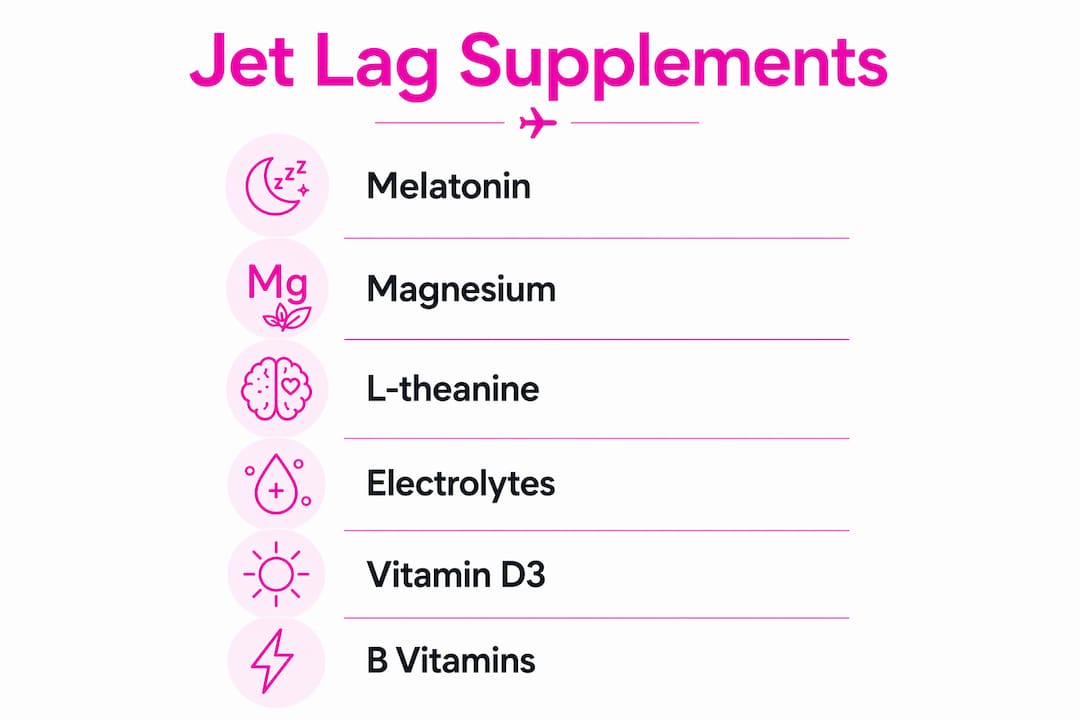
Menopausal women need more from a jet lag supplement than a standard melatonin pill. The best jet lag supplements for this stage of life address the full picture: disrupted sleep, hot flashes, brain fog, and a circadian system already under pressure from hormonal shifts. The four supplements with the strongest case are melatonin at low dose taken at destination bedtime, magnesium glycinate before sleep, L-theanine during travel, and electrolytes throughout the flight and after landing. Vitamin D3 taken in the morning at your destination rounds out the core protocol.
Here is what that looks like in practice:
- Melatonin at low dose resets the body clock without the grogginess of higher doses
- Magnesium glycinate before sleep supports muscle relaxation and reduces the sleep disruptions that menopause amplifies
- L-theanine calms the nervous system during travel without sedation, so you stay functional
- Electrolytes counter the dehydration that cabin air causes and support the adrenal and metabolic processes that travel taxes
- Vitamin D3 in the morning at your destination supports circadian signaling and immune function
Mayo Clinic recommends melatonin and hydration as the two most evidence-backed interventions for jet lag. Dr. Edwards (BBC, 2025) adds an important caution: over-supplementing minerals like magnesium and zinc can reach toxic levels, so staying within clinical dose ranges matters.
Table of Contents
- The best jet lag supplements and what they actually do
- How timing and format change everything
- Combining supplements with lifestyle for faster recovery
- Why women-focused, travel-ready supplements make a real difference
- Nukalove is built for exactly this
- Key Takeaways
The best jet lag supplements and what they actually do
1. Melatonin resets your body clock
Melatonin is the most studied supplement for jet lag, and the research consistently favors low doses. A 2021 systematic review found that melatonin reduced self-reported jet lag across multiple studies. For menopausal women, whose natural melatonin production already declines with age, a 0.5–1 mg dose taken 30 minutes before sleep at the destination can make a meaningful difference. Higher doses (above 5 mg) do not improve outcomes and increase the risk of next-day grogginess.
2. Magnesium glycinate supports sleep and eases muscle tension
Magnesium glycinate promotes relaxation and reduces the muscle tension that builds during long flights. For menopausal women, it does double duty: magnesium also helps moderate hot flashes and supports the deeper sleep stages that hormonal changes tend to erode. The glycinate form is gentler on the digestive system than magnesium oxide, which matters when your gut is already stressed by travel.
3. L-theanine calms without knocking you out
L-theanine is a non-protein amino acid found in tea leaves. It promotes calm and reduces anxiety without causing sedation, which makes it genuinely useful during the travel day itself, not just at bedtime. It pairs well with magnesium glycinate for an evening wind-down, and it takes the edge off the low-grade stress that airports, delays, and time-zone confusion create. For menopausal women managing mood fluctuations, that calming effect is more than a nice bonus.
4. Electrolytes counter flight dehydration
Cabin air is extremely dry, and dehydration compounds every jet lag symptom. Electrolytes throughout the flight support the adrenal and metabolic processes that travel taxes, and restoring fluid and mineral balance is one of the fastest ways to feel stable in a new time zone. Powders that dissolve in water are the most practical format for travel. Nukalove’s hydration powder is formulated specifically for this purpose and fits easily in a carry-on.

5. Vitamin D3 supports circadian and immune function
Vitamin D plays a role in sleep regulation, and research links vitamin D deficiency with higher risk of sleep disorders. Taking 2,000–4,000 IU vitamin D3 in the morning at your destination reinforces the circadian signal that daylight provides, which is especially useful when you land somewhere with limited sun exposure. Menopausal women are already at higher risk for vitamin D insufficiency, making this a practical addition to a travel protocol.
6. B vitamins address travel fatigue
A 2019 study found that magnesium-melatonin-vitamin B complex supplementation helped treat insomnia regardless of cause, and a 2020 review linked B vitamin deficiency directly to fatigue. B6 and B12 are the most relevant for jet lag: B12 in particular can enhance the circadian system’s sensitivity to light, which supports faster adaptation. The evidence is not as strong as it is for melatonin, but for menopausal women already managing energy dips, B vitamins fill a real gap.
How timing and format change everything
When you take a supplement matters as much as what you take. For eastward travel, take melatonin at destination bedtime; for westward travel, take it in the morning to delay your internal clock. Getting this backward can deepen jet lag rather than relieve it.
- Eastward travel: melatonin at destination bedtime, 30 minutes before sleep
- Westward travel: melatonin in the morning at the destination
- Vitamin D3: 2,000–4,000 IU in the morning at the destination, regardless of direction
- Magnesium glycinate and L-theanine: evening, 30–60 minutes before sleep
- Electrolytes: start the day before the flight, continue throughout, and maintain for 24–48 hours after landing
- Avoid caffeine after midday at your destination to protect nighttime sleep quality
Format is the other variable most travelers ignore. Large capsules and tablets require digestion, which slows absorption and adds burden to a gut already stressed by travel. Oral strips dissolve sublingually in seconds, bypassing the digestive tract entirely. Powders dissolve in water and absorb quickly while also contributing to hydration. For menopausal women, whose digestive sensitivity often increases, these formats are not just convenient. They are genuinely more effective.
Pro Tip: Pair your evening melatonin strip with 10–15 minutes of dim light or darkness at destination bedtime. Light exposure is the most powerful circadian signal your body has, and supplements work faster when you reinforce them behaviorally. Nukalove’s Sleepy Strips are designed for exactly this kind of quick, no-fuss pre-sleep routine.
Combining supplements with lifestyle for faster recovery
Supplements do the heavy lifting, but a few behavioral adjustments close the gap. Wellness routines that create consistent habits make supplement protocols stick, especially when travel disrupts your normal schedule.
- Light exposure: get outside in natural light at the destination as early as possible; it is the single most powerful circadian reset tool
- Hydration protocol: start hydrating the day before the flight, not on the plane
- Sleep hygiene: keep the room cool and dark; menopausal hot flashes worsen in warm environments, which compounds sleep disruption
- Avoid over-supplementing: Dr. Edwards (BBC, 2025) is direct on this point: magnesium and zinc can reach toxic levels above certain doses, and more is not better
- Consistency over 8–12 weeks: dosage consistency over 8–12 weeks yields meaningful improvements for sleep quality, not just acute jet lag relief
- Moderate alcohol: alcohol fragments sleep architecture and worsens hot flashes, making jet lag recovery significantly harder
For menopausal women, managing hot flashes during travel is its own challenge. Magnesium and adequate hydration both reduce their frequency and intensity, which is one reason the combination protocol above works better than melatonin alone. Natural stress relief approaches like L-theanine and magnesium also reduce the cortisol spikes that travel stress triggers, which directly interfere with sleep.
Why women-focused, travel-ready supplements make a real difference
Generic jet lag supplements are formulated for the average traveler, which means they are formulated for no one in particular. Menopausal women face a specific combination of challenges: declining melatonin production, disrupted sleep architecture, metabolic sensitivity, digestive changes, and brain fog that standard doses and pill formats do not address well.
Nukalove is a women-owned brand built specifically around menopausal wellness. Every product is designed to be compact, fast-absorbing, and easy to use without water or preparation. The oral strip format dissolves in seconds and delivers active ingredients sublingually, which means faster onset and no digestive burden.
Key products for jet lag and travel:
- Sleepy Strips: magnesium glycinate in oral strip form for pre-sleep relaxation and recovery
- ZZZ Team Bundle: combines sleep support products for a complete nighttime protocol
- Clarity Focus Strips: address the brain fog and cognitive dip that menopause and time-zone shifts both cause
- Blissful Sleep Gummies: a gummy format delivering magnesium glycinate for those who prefer it
- No Pause Power Pack: a four-product bundle covering energy, sleep, focus, and hydration in one travel-ready kit
Third-party testing and research-backed formulations are part of how Nukalove builds trust with women who have already tried generic supplements and found them lacking.
Nukalove is built for exactly this
Jet lag hits menopausal women harder than most travel guides acknowledge. You are managing a circadian system already under hormonal pressure, and you need supplements that work fast, travel easily, and do not add digestive stress to an already taxed system.
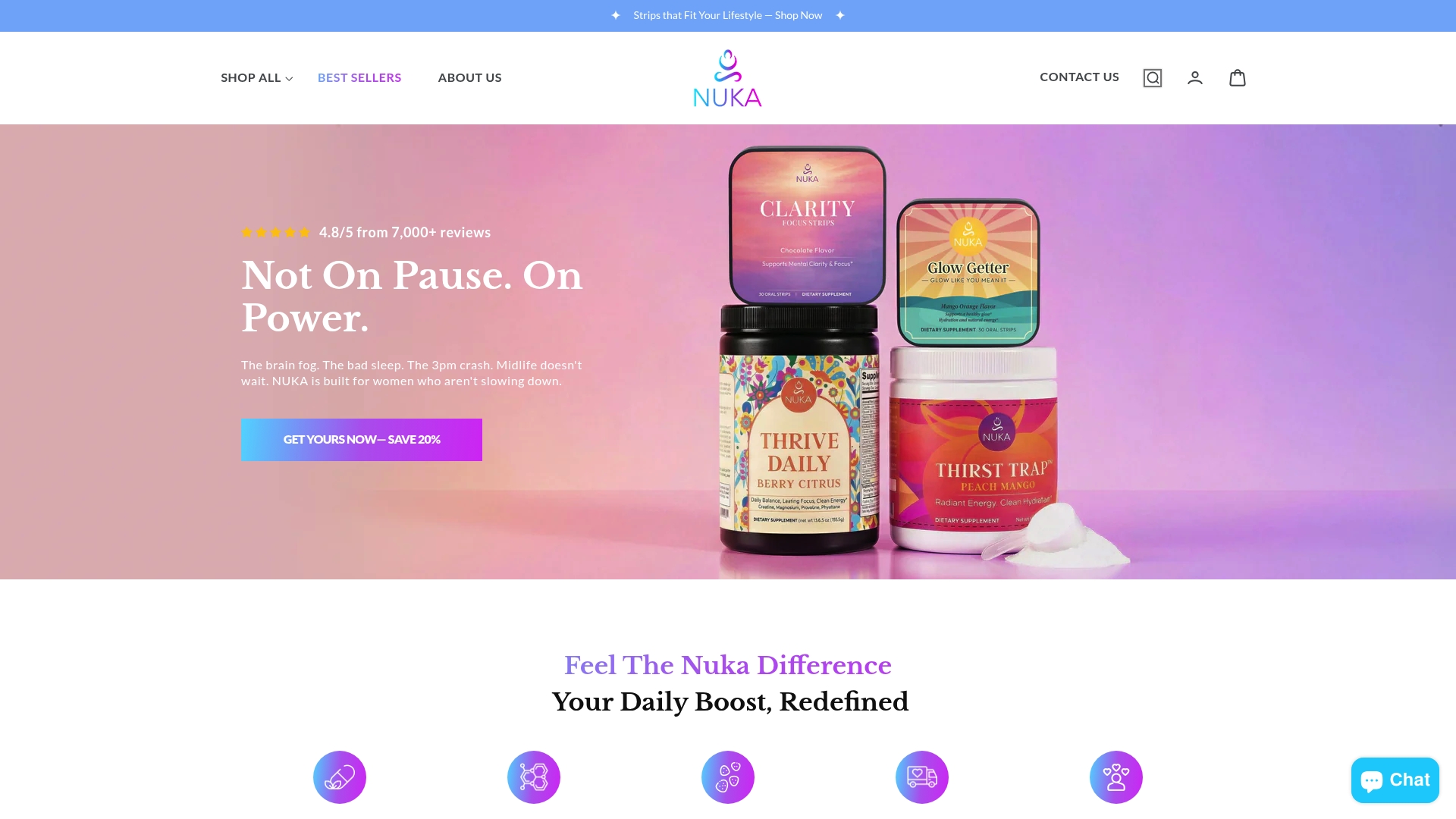
Nukalove’s wellness collection was designed by women, for women at every stage of menopause. The oral strips fit in a pocket, dissolve in seconds, and deliver the magnesium glycinate, sleep support, and focus ingredients your body needs when crossing time zones. The No Pause Power Pack bundles sleep, energy, focus, and hydration into one compact kit that goes wherever you go. Browse the full collection at Nukalove and find the combination that fits your travel routine.
Key Takeaways
The most effective jet lag protocol for menopausal women combines low-dose melatonin, magnesium glycinate, L-theanine, and electrolytes in rapid-absorption formats timed precisely to the destination time zone.
| Point | Details |
|---|---|
| Melatonin dose and timing | Take 0.5–1 mg at destination bedtime (eastward) or morning (westward) for effective circadian reset. Dosage consistency over 8–12 weeks yields meaningful improvements. |
| Magnesium glycinate | — |
| Format matters for menopause | Oral strips and powders absorb faster and reduce digestive burden compared to standard capsules. |
| Avoid over-supplementing | Magnesium and zinc can reach toxic levels; stay within clinical dose ranges as Dr. Edwards advises. |
| Nukalove travel protocol | The No Pause Power Pack bundles sleep, focus, energy, and hydration in one compact, travel-ready kit. |