

Every 2–3 Hours on Long Flights: Electrolyte Timing for Midlife Women
Pre-load electrolytes well before departure if you can plan ahead, or shortly before boarding if you can’t. Sip a serving regularly during the flight instead of chugging water alone, then take a full dose soon after landing. Skip this if you’re healthy, hydrated, and flying for a short duration. Check with a clinician first if you have kidney disease or a heart condition affecting fluid balance.
TL;DR:
- Electrolyte intake should be scheduled 24 to 48 hours before planned travel or 2 to 3 hours prior if timing is tight, especially for long flights.
- During flights, drink electrolytes every 2 to 3 hours on long journeys and within one to two hours after landing, adjusting based on crossing time zones.
- The ideal electrolyte dose ranges from 300 to 700 milligrams of sodium per serving, with potassium and magnesium added if muscle cramps are a concern.
- Use airport-friendly formats like oral strips or tablets, and fill an empty bottle at a water fountain to minimize liquid restrictions.
- Limit alcohol and caffeine during flights, sip electrolytes steadily, and stand or stretch regularly to maintain circulation and optimize hydration efforts.
Table of Contents
- Electrolyte Timing for Travel: Your Schedule at a Glance
- Who Actually Needs This Routine?
- How Much Should You Actually Take?
- Packing Electrolytes That Actually Work at the Airport
- What to Do Once You’re in the Air
- Getting Your Timing Right After You Land
- Why Travel-Ready Formats Matter More for Midlife Women
- Where Nukalove Fits Your Travel Routine
- Sources
Electrolyte Timing for Travel: Your Schedule at a Glance
The right electrolyte schedule depends on how much lead time you have and how long you’re in the air. Here’s the breakdown by phase.
Pre-flight loading:
- 24 to 48 hours out: the ideal window if your trip is planned. This gives your body time to build fluid reserves before dry cabin air starts pulling moisture out of you.
- 2 to 3 hours before departure: the fallback for same-day prep. Take a full serving with a normal-size glass of water.
- 60 to 90 minutes pre-boarding: the last-call option if you’re rushing through security with no time to spare.
Dietitians specifically recommend electrolytes before and after long-haul flights, since dehydration risk climbs the longer you’re airborne.
In-flight cadence depends on flight length:
- Short flights (under 3 hours): one serving before boarding is often enough, plus water as needed.
- Medium flights (3 to 6 hours): one serving pre-flight, one mid-flight.
- Long flights (over 6 hours): a serving every 2 to 3 hours, paired with steady water intake rather than large gulps.
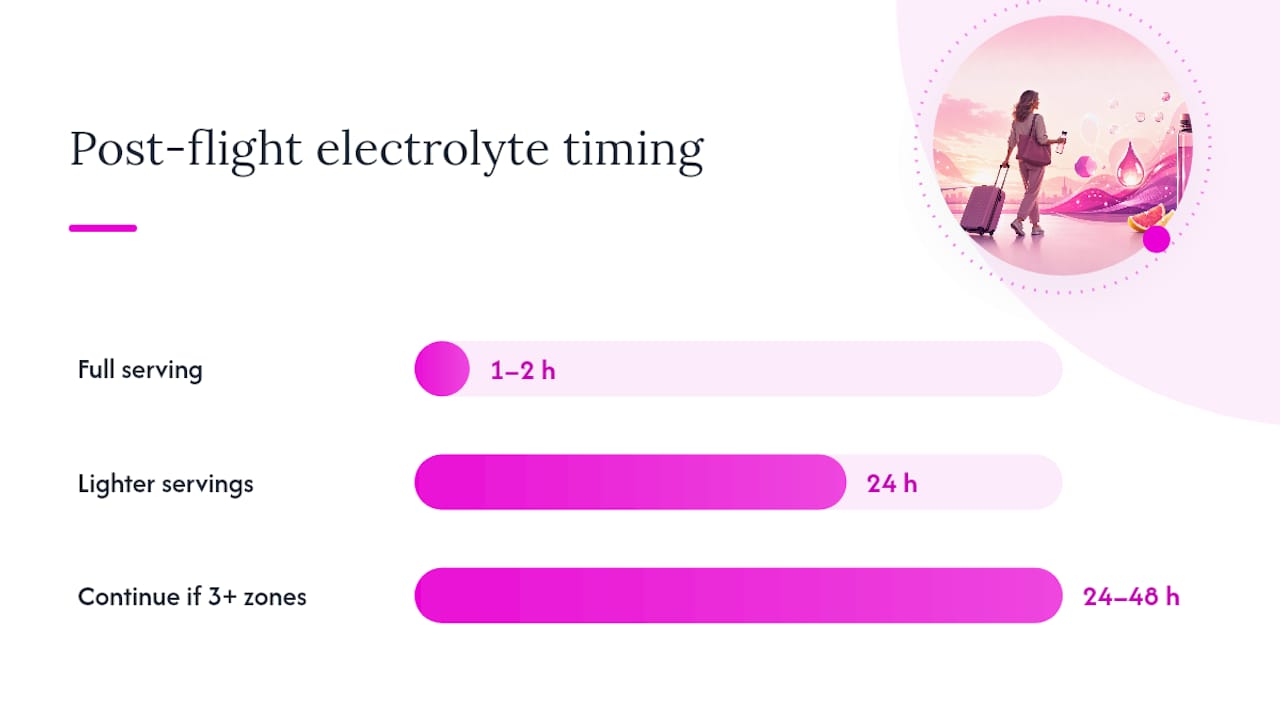
Post-landing: take a full serving within one to two hours of touchdown, then continue light dosing through the next 24 to 48 hours if you crossed several time zones.
Pro Tip: Set a phone alarm for your in-flight servings. Cabin pressure dulls thirst signals, so you won’t feel thirsty even when you’re losing fluid fast.
Who Actually Needs This Routine?
Not every traveler needs a strict timing plan. If you’re taking a short, low-stress hop and eating and drinking normally, plain water usually covers it, according to Harvard’s Nutrition Source. Electrolyte timing matters most for specific situations:
- Following keto, low-carb, or intermittent fasting protocols, which flush sodium faster than normal diets
- Taking GLP-1 medications, which can increase dehydration risk through reduced fluid intake
- Heavy sweaters or anyone flying into a hot, humid climate
- Recovering from recent vomiting or diarrhea, which strips electrolytes fast
- Planning strenuous activity (hiking, a wedding dance floor, a work sprint) right after landing
If you have kidney disease or a heart condition that affects fluid regulation, talk to your doctor before adding electrolytes to your routine. More isn’t automatically better for these conditions.
How Much Should You Actually Take?
Sodium does the heavy lifting here. It’s the mineral that helps your body hold onto fluid instead of flushing it straight through, which is exactly why electrolyte drinks tend to outperform plain water for rehydration after real fluid loss. Travel servings typically land somewhere in the 300 to 700 milligram range per dose, though your ideal number depends on how much you’re sweating and how restrictive your diet is.
Potassium and magnesium matter too, especially if you’re dealing with leg cramps, poor sleep, or general recovery from a long trip. Prioritize these two if cramping or muscle tension is your main complaint rather than straight-up thirst.
Here’s the pairing rule that trips people up: electrolytes and water aren’t interchangeable, and drinking too much plain water can actually dilute the sodium you need. Sport-travel physiology guidance recommends steady, moderate fluid intake during flights, roughly 15 to 20 mL per hour, rather than downing a full bottle in one sitting.
- Mix one electrolyte serving with 8 to 16 ounces of water, not more.
- Sip that mix over 20 to 30 minutes instead of drinking it fast.
- Space servings out rather than doubling up if you missed one.
Pro Tip: If your urine runs pale yellow and frequent, you’re likely getting enough. Dark yellow and infrequent means it’s time for another serving, not just more water.
Packing Electrolytes That Actually Work at the Airport
Format matters more than people think. Powder sticks work fine but require water and a container. Effervescent tablets fizz and need a full cup, which isn’t always practical mid-security-line. Oral strips dissolve on the tongue with zero water needed, which makes them the most airport-friendly option when you’re moving fast between gates.
TSA allows powders and tablets in carry-ons without volume restrictions, since they’re not liquids. Bring an empty reusable bottle through security, then fill it at a water fountain before boarding. That solves the “no liquids past security” problem for anyone using powders or tablets.
- Choose low-sugar or sugar-free formats to avoid the energy crash that follows a sugary drink mix.
- Pack strips or tablets over powder packets if you’re tight on bag space.
- Keep a couple of extra servings in your personal item in case of delays.
Travel-health guides also recommend packing an empty bottle strategy specifically for this reason. If you want more on gluten-free travel options, Nukalove’s guide to gluten free electrolyte packets covers safe picks in more detail.
What to Do Once You’re in the Air
Your in-flight habits either support your electrolyte timing or undo it entirely.
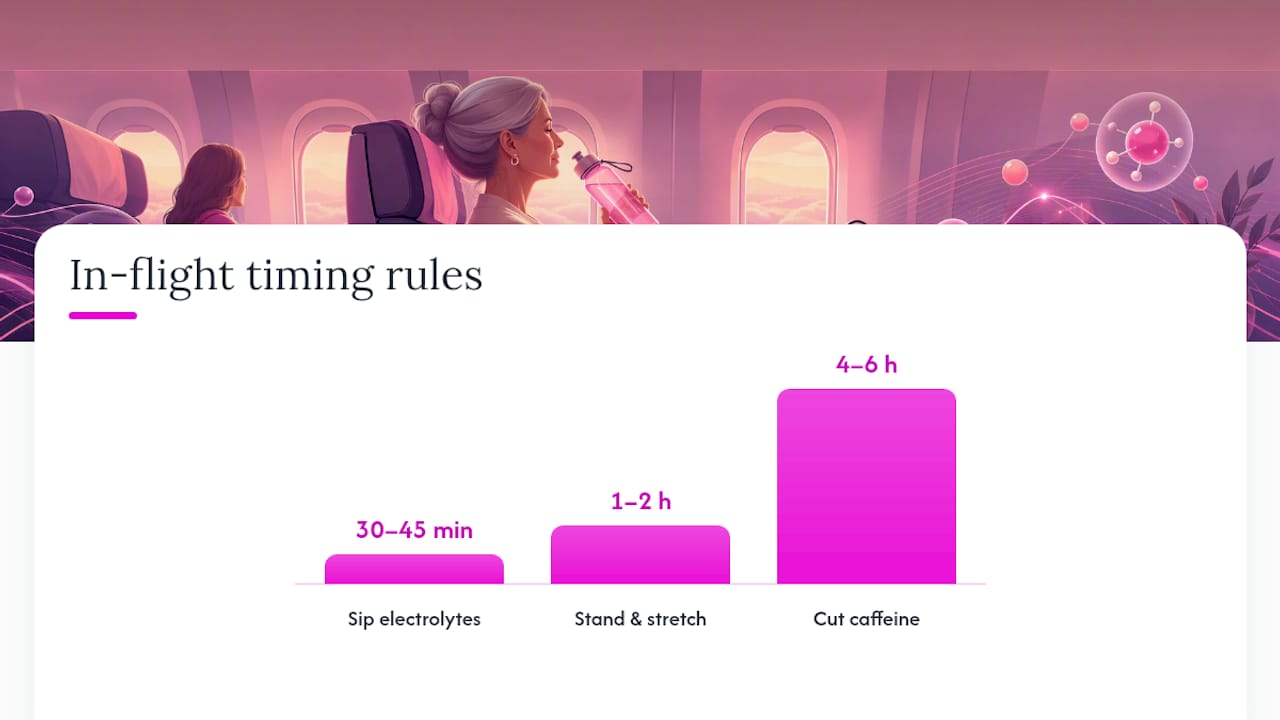
- Sip your electrolyte mix every 30 to 45 minutes in small amounts rather than drinking a full serving all at once.
- Cut caffeine at least four to six hours before you plan to sleep, whether that’s on the plane or after landing.
- Skip or limit alcohol. It worsens dehydration and disrupts the sleep you need to adjust to a new time zone.
- Stand and stretch every hour or two to keep circulation moving and reduce fluid pooling in your legs.
Small, steady sips beat bathroom-emptying gulps, since a full bladder mid-flight followed by a big water chug tends to flush out minerals along with the excess fluid.
Pro Tip: Order water when the drink cart comes by, but bring your own electrolyte strip or tablet. Cabin water alone won’t replace what dry air pulls from you.
Getting Your Timing Right After You Land
The first one to two hours after touchdown matter more than people realize. Take a full electrolyte serving during that window, then continue with lighter servings through the next 24 to 48 hours if you crossed three or more time zones.
For jet lag specifically, keep your eating and electrolyte schedule on your departure time zone for the first day, then shift gradually toward local time. This pairs your hydration routine with your body’s circadian adjustment instead of fighting it.
Watch these signs to know if you still need more:
- Urine color still dark despite drinking water
- Persistent headache that doesn’t resolve with rest
- Low energy that feels different from normal jet lag fatigue
If those symptoms stick around past 48 hours, it’s less about electrolytes and more about seeing a doctor, particularly if you have an underlying condition like needing to weigh electrolytes against plain water in your regular routine.
Why Travel-Ready Formats Matter More for Midlife Women
Nukalove builds products around real travel constraints, not lab-ideal conditions. Compact, low-sugar oral strips matter most when you’re managing hot flashes at 30,000 feet, trying to protect fragile flight sleep, or timing supplements around medication schedules. A strip that dissolves without water solves a problem a powder packet never will.
— NUKA
Where Nukalove Fits Your Travel Routine
Nukalove’s oral strips exist for exactly the schedule laid out above: pre-load, sip through the flight, replete on landing, no water bottle required. Compared to mixing powder packets in a cramped airplane bathroom, a strip that dissolves on your tongue in seconds is the practical choice when you’re juggling a boarding pass, a carry-on, and a middle seat.

Powders still make sense for home use or longer stretches where you’re mixing a full glass anyway, but strips win for anything mid-transit. If hot flashes and disrupted sleep are part of your travel reality, pair your hydration routine with something built for that, like Deep Zzzs oral sleep strips for the flight home. For a broader look at travel-day strategy beyond hydration, this holiday travel survival guide covers the logistics side well. Browse the full lineup at Nukalove and pack your next trip with something that actually fits in your pocket.
Sources
This article draws on guidance from the Harvard T.H. Chan Nutrition Source, Northwestern Medicine, SELF, Springer sports medicine research, and Scripps Health.
This article is general information, not a substitute for advice from a qualified doctor. Consult a qualified healthcare professional about your own circumstances before acting on anything here.
- Do I need electrolyte drinks? • The Nutrition Source
- Do electrolytes really boost hydration? • Northwestern Medicine
- When to drink electrolytes for max benefits, according to RDs | SELF
- Sports medicine travel/hydration guidance (Springer, 2026)