

TSA Rules for Supplements: What Travelers Must Know
Yes, TSA allows vitamins and dietary supplements in both carry-on and checked bags. The rules depend entirely on form: solids travel without quantity limits, liquids fall under the 3-1-1 rule, and powders over 12 oz / 350 mL trigger extra screening.
Here’s the short version before you pack:
- Solid supplements (tablets, capsules, gummies, chewables): allowed in carry-on and checked bags, no quantity limit
- Liquid supplements (tinctures, liquid vitamins, soft gels in liquid suspension): subject to the TSA liquid limit per container in carry-on; larger bottles go in checked luggage
- Powder supplements (protein, collagen, greens powders): containers above the TSA threshold must be placed in a separate bin and may face additional screening
- Oral strips and thin dissolvables: treated as solids, no quantity limit
- Final call belongs to the TSA officer at the checkpoint, regardless of what any guide says
Key Takeaways
TSA permits solid supplements without quantity limits, requires liquids to follow the 3-1-1 rule (with a medical exemption for declared items), and applies a 12 oz / 350 mL screening threshold to powders, with the TSA officer holding final authority at every checkpoint.
| Point | Details |
|---|---|
| Solids travel freely | Tablets, capsules, and gummies are allowed in carry-on and checked bags with no quantity limit. |
| Liquids follow 3-1-1 | Each liquid supplement container must be 3.4 oz or less for carry-on; medically necessary liquids are exempt if declared. |
| Powders have a 12 oz threshold | Powder containers over 12 oz / 350 mL require separate screening and may be denied cabin access if unresolved. |
| Original packaging helps | Labeled bottles answer officer questions faster and reduce friction at both TSA and international customs. |
| Check destination rules | Melatonin, kava, and certain CBD supplements may be restricted at your destination regardless of TSA clearance. |
Table of Contents
- What does TSA officially say about supplements and vitamins?
- How TSA treats each supplement form
- How should you package and label supplements for security?
- What are the powder-specific rules for carry-on and international flights?
- What actually happens at the security checkpoint with supplements?
- How can you avoid confiscation or delays when packing supplements?
- What should you do if TSA refuses or confiscates a supplement?
- Official TSA pages and resources worth bookmarking
- The Nukalove perspective on travel-ready supplements
- Sources
What does TSA officially say about supplements and vitamins?
The TSA’s own “What Can I Bring?” database is the clearest starting point. The Tsa confirms that dietary supplements in solid form, including tablets, capsules, and gummies, are permitted in both carry-on and checked luggage without quantity restrictions. They are not subject to the 3.4-ounce container limit or the quart-sized bag requirement that governs liquids.
The Vitamins page mirrors this, listing vitamins as allowed in both bag types, and adds the important caveat that the final decision rests with the TSA officer at the checkpoint. That phrase matters. Even a fully compliant item can be pulled for additional screening if it triggers an alarm, appears tampered with, or raises a security concern.
For liquid supplements, the 3-1-1 rule applies: each container must be 3.4 oz (100 mL) or less, and all containers must fit in a single quart-sized clear bag. Medically necessary liquids are exempt from this limit but must be declared at the start of screening and may be subject to additional inspection.
The powder policy has a separate origin. TSA implemented enhanced screening for powder-like substances on inbound international flights in 2018, and the Protein or Energy Powders page now applies a 12 oz / 350 mL threshold to domestic carry-on screening as well.
How TSA treats each supplement form
Not all supplements screen the same way. The form your supplement comes in determines which rule applies and how much friction you’ll face at the checkpoint.
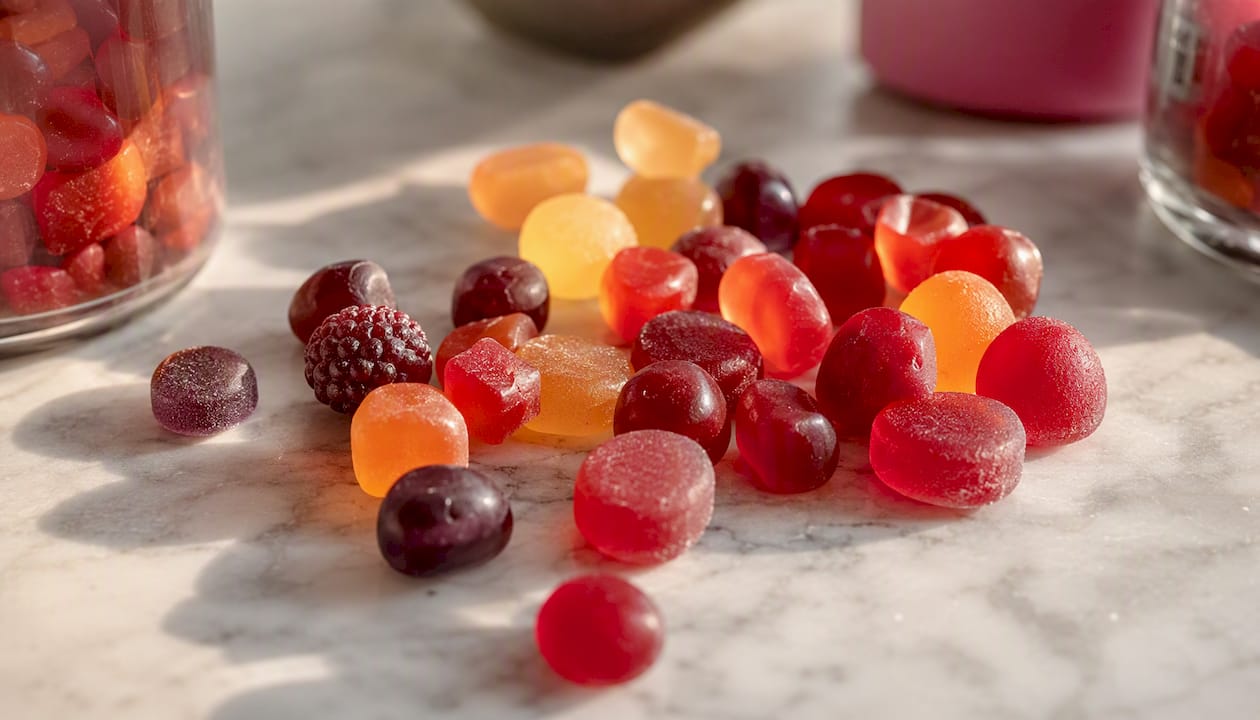
Solid tablets, capsules, gummies, and chewables
These are the easiest to travel with. TSA permits solid supplements in carry-on and checked bags with no quantity limit. A full 90-count bottle of magnesium, a bag of gummy vitamins, or a month’s worth of capsules all clear without the liquid or powder rules applying. Officers may still open a container if it looks unusual on the X-ray, but that’s uncommon for standard pill bottles.
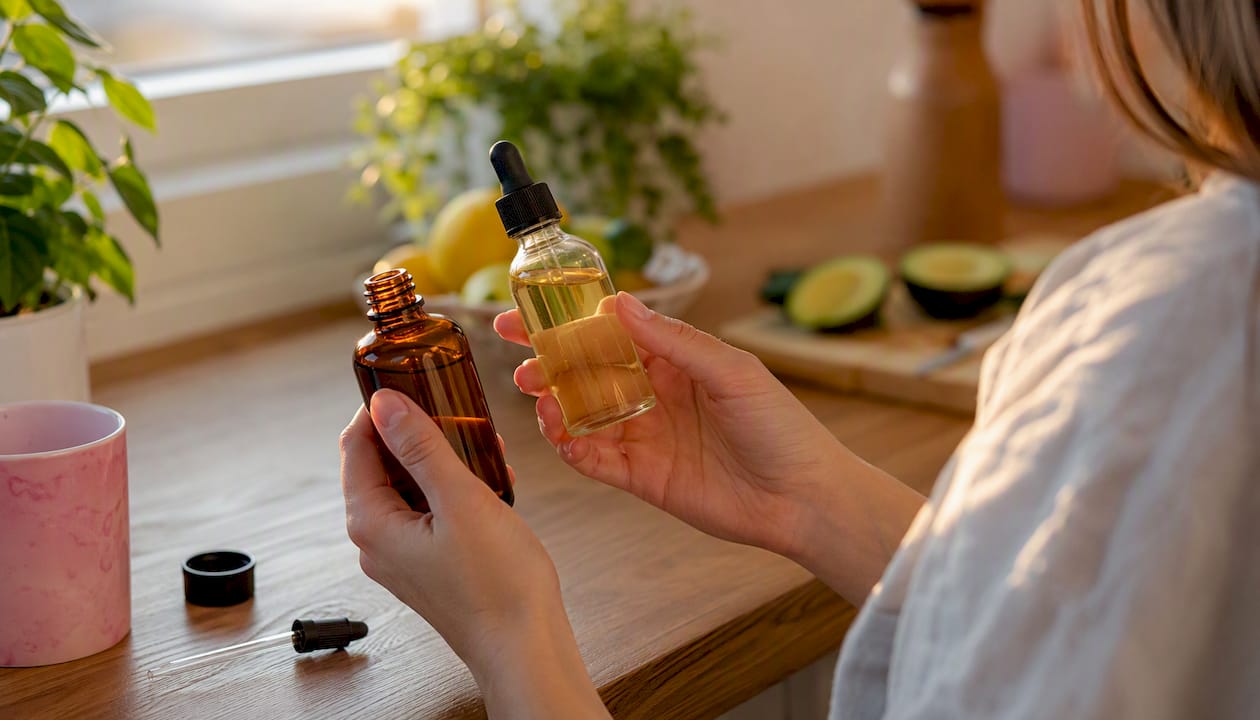
Liquid supplements, tinctures, and soft gels in liquid suspension
Liquid vitamins, herbal tinctures, and any supplement in a liquid base must follow the 3-1-1 rule. Each container is capped at 3.4 oz (100 mL) for carry-on, and all your liquid containers combined must fit in one quart-sized clear bag. If you travel with a larger bottle, it goes in checked luggage. If your liquid supplement is medically necessary, declare it at the screening lane before your bag goes through. Officers will screen it separately, and you can request a visual inspection instead of X-ray if you prefer.
Powder supplements
Powders are where most travelers run into trouble. Containers at or under 12 oz / 350 mL pass through the standard X-ray lane. Anything larger must be pulled out of your bag, placed in a separate bin, and screened independently. If the powder can’t be resolved at the checkpoint, it may be denied cabin access entirely. For inbound international flights to the U.S., central-checkpoint screening can include field tests, and the outcome is the same: unresolved powder stays behind.
Oral strips and thin dissolvables
Oral supplement strips, like those Nukalove makes for energy, sleep, and focus, are treated as solids. No liquid rules, no powder thresholds. Keep them in their original packaging or a clearly labeled pouch and they’ll move through security without a second look. This is one of the practical reasons the strip format works so well for travel.
| Supplement Form | Carry-On Rules | Checked Bag Rules | Screening Notes |
|---|---|---|---|
| Tablets / Capsules / Gummies | Allowed, no quantity limit | Allowed, no quantity limit | May be opened if X-ray is unclear |
| Liquid vitamins / Tinctures | 3.4 oz (100 mL) max per container, quart bag | Allowed in larger sizes | Medically necessary: declare and screen separately |
| Powders (protein, collagen, greens) | Allowed under 12 oz / 350 mL; over that, separate bin required | Allowed in any size | Over 12 oz may be denied if unresolved |
| Oral strips / Dissolvables | Allowed, no quantity limit | Allowed, no quantity limit | Treated as solids; original packaging recommended |
Pro Tip: Pre-portion large powder tubs into single-serving packets before you fly. Packets under 12 oz clear the standard lane without extra screening, and they’re easier to pack anyway.
How should you package and label supplements for security?
Packaging is where most avoidable delays happen. TSA does not require supplements to be in their original prescription bottles, but keeping original labeled containers is the single easiest way to answer an officer’s questions fast. A bottle with a clear ingredient list, brand name, and dosage tells the officer exactly what they’re looking at.
Pill organizers are fine for domestic travel. For international trips, carry at least one original bottle or a printed ingredient list to show customs officers at your destination. Some countries flag supplements with unfamiliar names, and a clear label cuts through that confusion quickly.
What to keep in your carry-on:
- Daily doses in original bottles or a clearly labeled organizer
- Liquid supplements at or under 3.4 oz in your quart-sized bag
- Powder packets under 12 oz in a sealed, labeled bag
- Any medically necessary supplements with documentation
What to move to checked luggage:
- Large powder tubs over 12 oz / 350 mL
- Liquid supplements in bottles larger than 3.4 oz
- Bulk supply for long trips (keep a short-term supply in carry-on)
For unusual supplements, such as herbal formulas, adaptogens, or anything with an unfamiliar ingredient name, carry a printed ingredient list or the manufacturer’s product label. TSA travel tips specifically advise labeling medications clearly and noting that passengers may request a visual inspection instead of X-ray for any medication item.
Pro Tip: Take a photo of every supplement label before you leave home. Store the photos in a dedicated album on your phone. If a customs officer or TSA agent asks about an ingredient, you can pull it up in seconds without digging through your bag.
What are the powder-specific rules for carry-on and international flights?
The 12 oz / 350 mL threshold is the number to know. Powder supplements at or below that amount go through the standard X-ray lane with no extra steps. Above it, the container comes out of your bag, goes into a separate bin, and gets screened on its own. If the screening equipment can’t resolve what’s in the container, the powder may be denied cabin access.
For travelers flying into the U.S. from abroad, the stakes are slightly higher. On inbound international flights, central-checkpoint screening for powders over 350 mL can include field testing. If the test is inconclusive, the powder doesn’t board. TSA’s FAQ on powder policy recommends placing non-essential powders in checked baggage to avoid this outcome entirely.
| Rule | Threshold | Screening Action | Recommended Action |
|---|---|---|---|
| Domestic carry-on powder limit | 12 oz / 350 mL | Over limit: separate bin, additional screening | Keep carry-on portions under 12 oz |
| Inbound international flights | 12 oz / 350 mL | Over limit: central checkpoint screening, possible field test | Pack large tubs in checked luggage |
| Unresolved powder | Any size | Denied cabin access | Pre-portion into single-serve packets |
Pro Tip: If you rely on a daily protein or collagen powder, buy single-serve packets for your carry-on and ship or check the bulk tub. The packets are under 12 oz by design and skip the extra screening entirely.
What actually happens at the security checkpoint with supplements?
Knowing the rules is one thing. Knowing what to expect when you’re standing in line with a bag full of supplements is another.
- Remove large powder containers (over 12 oz) from your bag before placing it on the belt. Put them in a separate bin, just like a laptop.
- Place your quart-sized liquids bag on the belt separately if you have liquid supplements.
- Declare medically necessary liquids to the officer before your bag goes through. Say it clearly: “I have a medically necessary liquid supplement over 3.4 ounces.”
- Wait for the officer’s direction if your bag is flagged. They may ask you to open a container, identify a substance, or step aside for a bag check.
- Answer questions directly. Officers typically ask what a substance is, whether it’s in its original packaging, and what it’s used for. Short, clear answers move things along.
- Request a visual inspection if you prefer your medication or supplement not go through X-ray. Make the request before the item enters the machine.
The TSA officer’s final decision governs the outcome. Options include: item cleared, additional inspection, secondary bag check, or disposal. If an officer is uncertain about a powder or liquid, they may call for a supervisor or run a field test. Staying calm and cooperative is the fastest path through.
How can you avoid confiscation or delays when packing supplements?
Most supplement problems at security are preventable with a few decisions made the night before you fly.
Split your supply. Keep a short-term supply (enough for your trip plus a day or two) in your carry-on and pack the bulk in checked luggage. If your checked bag is delayed, you’re not stranded without your supplements. If your carry-on gets flagged, you haven’t lost everything.
Portion powders before you leave. Single-serve packets under 12 oz clear the standard lane. A 2-pound tub of protein powder does not. Pre-portioning takes five minutes and eliminates the most common powder-related delay.
Keep original bottles when you can. A labeled bottle answers most officer questions before they’re asked. If you use a pill organizer, tuck one original bottle in your bag as a reference.
Research your destination before you go. TSA is only part of the equation. Melatonin, kava, certain CBD formulations, and some herbal supplements are restricted or outright illegal in several countries. Check the customs authority website for your destination, not just TSA rules. The bigger risk for international travelers is often customs at the other end, not the U.S. security checkpoint.
Melatonin, kava, and CBD-based supplements can be restricted or illegal at certain international destinations — always check destination customs rules before you pack them, not just TSA guidelines.
For longer trips, the best travel supplement options often come down to format as much as formula. Compact formats that don’t require measuring or mixing are the easiest to keep within carry-on rules.
Pro Tip: For trips longer than a week, pack your carry-on supply in a clearly labeled travel pouch and your checked supply in the original containers. If customs asks at your destination, the original packaging is your fastest answer.
What should you do if TSA refuses or confiscates a supplement?
It happens. An officer flags a powder, a liquid is over the limit, or an unusual supplement raises a question that can’t be resolved at the checkpoint. Here’s how to handle it.
If a supplement is denied at the checkpoint, you have options: ask for the reason, request a supervisor, and contact AskTSA afterward with documentation. Disposal is not always the only outcome.
At the checkpoint:
- Ask the officer calmly why the item is being denied. You’re entitled to an explanation.
- Request the checkpoint supervisor if you believe the denial is incorrect or you want a second opinion.
- Take a photo of the item and note the checkpoint location, time, and flight number. This documentation matters if you follow up later.
- You may be offered the option to return the item to your car, hand it to someone not traveling, or place it in a checked bag if time allows.
After the checkpoint:
Contact AskTSA with the checkpoint location, a description of the item, photos of the label and packaging, and your flight details. AskTSA can clarify whether the denial was consistent with policy and, in some cases, escalate the matter internally.
If the supplement was medically necessary and the denial caused a health issue, contact your airline and document the incident in writing. For formal complaints, TSA’s contact page accepts written submissions.
Pro Tip: Before any international trip, send yourself an email with photos of every supplement label and a copy of any relevant ingredient lists. If something is confiscated or questioned at customs on the return, you have a timestamped record ready to share.
Official TSA pages and resources worth bookmarking
Before you travel, save or screenshot these pages. TSA updates its guidance periodically, and checking the source directly takes 30 seconds.
- TSA Supplements page — confirms solid supplements are allowed in carry-on and checked bags without quantity limits
- TSA Vitamins page — lists vitamins as allowed and includes the final-decision officer note
- TSA Protein or Energy Powders page — details the 12 oz / 350 mL threshold and screening procedure
- TSA 3-1-1 Liquids Rule — full explanation of the liquid container limit and medical exemption
- TSA Travel Tips — covers labeling, visual inspection requests, and medically necessary liquid declarations
- TSA Powder Policy FAQ — explains the inbound international flight powder screening policy
- AskTSA contact portal — use this to ask about specific items before you fly or to follow up after a checkpoint issue
If you’re flying internationally, bookmark the customs authority page for your destination country as well. TSA clearance at departure does not guarantee entry at the other end.
The Nukalove perspective on travel-ready supplements
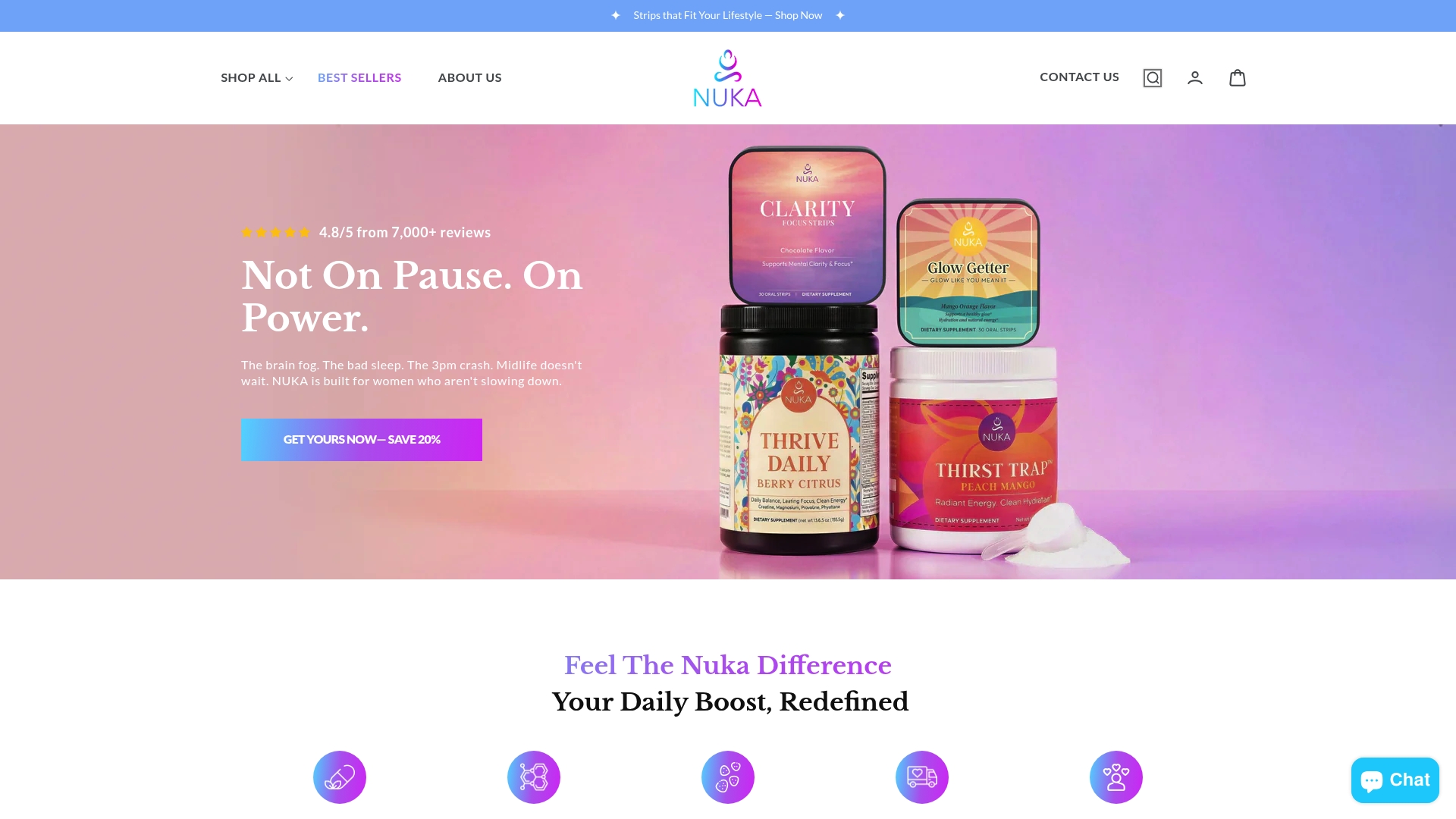
At Nukalove, we built our products around one reality: most supplement formats were not designed with travel in mind. A 2-pound powder tub, a glass tincture bottle, or a 60-count pill organizer all create friction at security, take up space, and add weight. That’s why our oral strips are the format we chose. They’re solid, compact, and require no measuring, no mixing, and no quart-sized bag. They clear security the same way a pack of gum does.
For women managing menopause symptoms while traveling, whether it’s brain fog on a red-eye, disrupted sleep across time zones, or skin that needs support during long-haul flights, the last thing you need is a supplement routine that creates airport stress. Our GLOW GETTER skin and hair strips and CLARITY focus strips are designed to fit in a pocket, not a checked bag. And if you’re navigating jet lag on top of everything else, our jet lag supplement guide for menopausal women covers what to keep in your carry-on for long-haul flights.
Pack smart. Keep your daily doses close. And if you’re ever unsure about a specific supplement, AskTSA before you fly.
Sources
- Supplements | Transportation Security Administration
- Vitamins | Transportation Security Administration - TSA
- Protein or Energy Powders | Transportation Security Administration
- Liquids, aerosols and gels (3-1-1) rule | Transportation Security Administration
- Travel Tips | Transportation Security Administration