

3 Travel Moves Midlife Women Use to Cut Menopause Travel Anxiety
Yes, hormonal shifts in perimenopause and menopause often intensify travel anxiety, and the mechanism is measurable, not imagined. Falling estrogen affects your nervous system’s stress response, and travel stacks its own triggers, sleep disruption, temperature swings, and unfamiliar surroundings, right on top of that sensitivity. Start with three moves: pack one reliable cooling tool, map out your medication timing before you leave, and practice one breathing technique until it’s automatic.
TL;DR:
- Women experiencing perimenopause or menopause should prioritize pre-trip planning, including confirming hotel cooling capacity and organizing medication schedules, to reduce anxiety.
- Carrying a portable fan, cooling towel, and layered sleepwear can effectively manage hot flashes and temperature-related discomfort during travel.
- Breathing techniques like box breathing and strategic layering during transit help interrupt acute anxiety and hot flash episodes.
- Adjusting sleep schedules before departures and using melatonin or magnesium can ease jet lag, but hormone therapy doses must remain consistent and discussed with a doctor.
- Those with persistent anxiety symptoms should consider mental health support, such as therapy or medication, rather than relying solely on packing strategies or coping mechanisms.
Table of Contents
- Why Travel Feels Different in Perimenopause and Menopause
- Building Your Pre-Trip Travel Kit and Planning Checklist
- In-Transit Tactics for Anxiety, Hot Flashes, and Motion Sickness
- Sleep, Jet Lag, and Managing Medications Across Time Zones
- Recognizing When You Need More Than a Packing List
- Why We Built Nukalove Around the Realities of Travel
- Packing Nukalove Into a Trip That Actually Works
- Sources
Why Travel Feels Different in Perimenopause and Menopause
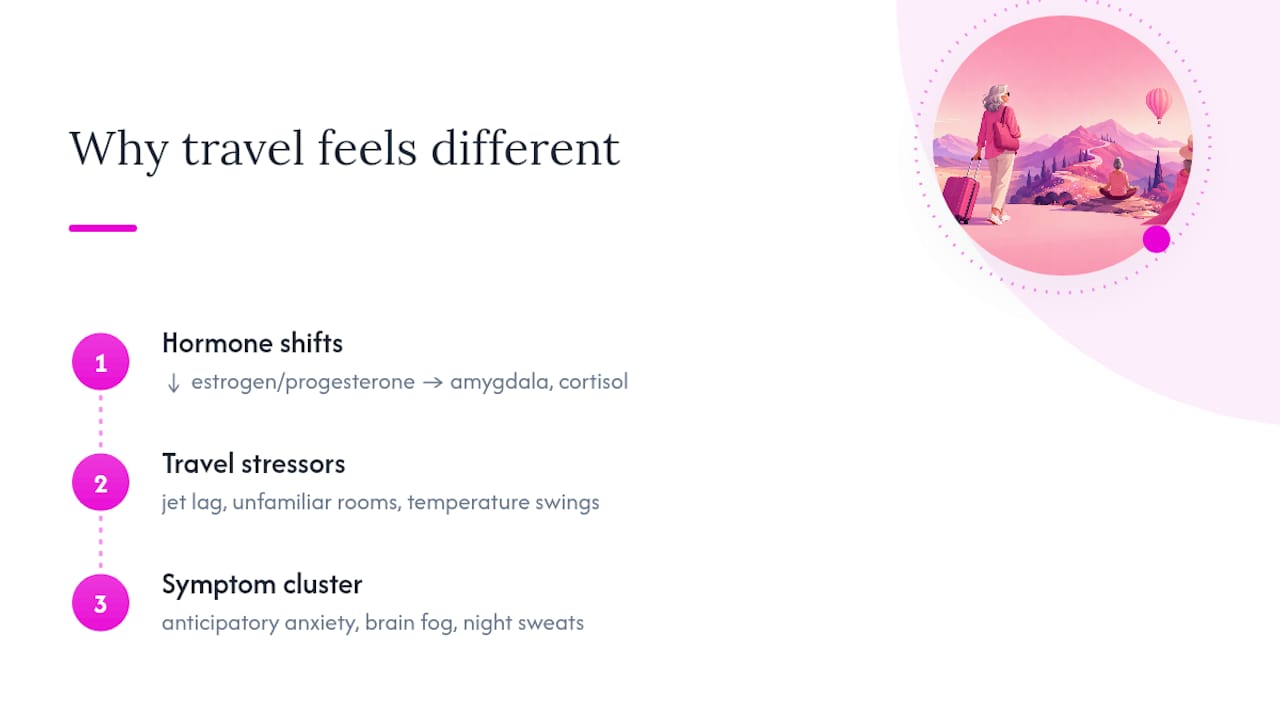
The anxiety isn’t in your head, at least not only. Estrogen and progesterone help regulate the amygdala’s threat response and your body’s cortisol rhythm. As those hormones decline, midlife women show higher rates of anxiety during perimenopause and menopause than they did in their 30s. That’s a documented clinical pattern, not a personality change.
Travel then piles on its own stressors. Time zone shifts scramble the sleep architecture that hormones already destabilize. Hotel beds and unfamiliar rooms remove the environmental cues your nervous system uses to feel safe. Temperature swings, especially in transit, can trigger hot flashes at the worst possible moment, like mid-flight or standing in a security line.
Estrogen also interacts with vestibular function, the inner ear system that governs balance. That means motion sensitivity and dizziness often intensify during perimenopause, making turbulence, winding roads, or subway sway feel worse than they used to.
Put those pieces together and you get a predictable symptom cluster: anticipatory anxiety before a trip even starts, brain fog that makes navigating airports harder, and night sweats that wreck the first two nights in a new bed.
Anxiety during perimenopause isn’t a character flaw or a sign you’re “not handling things well.” It’s a hormonal shift interacting with a genuinely disruptive environment. Naming the mechanism is the first step toward managing it.
Building Your Pre-Trip Travel Kit and Planning Checklist
The women who travel best through this stage of life aren’t the ones who feel calmest. They’re the ones who removed the most variables before departure. Planning ahead does more for anxiety than any single coping trick you use once you’re already stressed.
Start with where you’ll sleep. Call ahead and ask about the hotel’s minimum air-conditioning setting; some properties can’t go below 65°F, which is too warm for a hot-flash-prone sleeper. Request a non-adjoining room, ask if portable fans are available, and pack blackout curtains or an eye mask if you’re sensitive to unfamiliar light.
Medication logistics come next. Keep hormone therapy and any prescriptions in your carry-on, never checked luggage. Pack a few extra days’ supply in case of delays, and if you’re crossing several time zones, ask your provider how to adjust dosing timing rather than guessing.
Here’s a workable packing and planning order:
- Confirm your accommodation’s cooling capability and room placement before booking.
- Organize medications and HRT with a doctor’s note if you’re flying internationally.
- Pack a portable fan, a cooling towel, and layered sleepwear you can shed at 3 a.m.
- Add oral strips, earplugs, and hydration sachets to your carry-on for fast, no-water symptom support.
- Print confirmations and keep a paper copy of key documents in case your phone dies.
- Build a buffer day into your itinerary right after arrival, before anything is scheduled.
Pacing matters as much as packing. Cap structured activity to one major event a day for the first 48 hours. Book an aisle seat if flying, so you’re not trapped during a hot flash or a bathroom emergency. On road trips, plan restroom stops every 90 minutes rather than pushing through.
Pro Tip: Test your travel kit on a weekend trip close to home before a major vacation. You’ll find out what you forgot while the stakes are still low.
In-Transit Tactics for Anxiety, Hot Flashes, and Motion Sickness
Planning gets you to the airport. What happens once your heart starts racing in the security line is a different skill entirely.
Breathing techniques work because they interrupt the physiological panic loop directly, not just the thoughts around it. Cleveland Clinic’s guidance on travel anxiety points to box breathing and paced exhalation as effective, evidence-based tools for exactly this kind of acute spike. Try a 4-4-4 pattern: inhale for four counts, hold for four, exhale for four, repeat six times. It sounds too simple to work. It works anyway, because slow exhalation directly signals your vagus nerve to downshift the stress response.
For hot flashes mid-transit, strip a layer immediately rather than waiting it out. Point any available airflow at your neck and wrists, sip cool water instead of gulping it, and skip the in-flight wine, alcohol tends to intensify flashes and fragment whatever sleep you manage to get.
Motion sensitivity needs its own approach. Choose a window seat over the wing on planes, where motion is dampened, and a forward-facing seat on trains. If you have recurrent positional vertigo, ask your doctor about Epley maneuver exercises before you go; they’re simple repositioning moves that can head off dizziness episodes.
A few tools do most of the heavy lifting in transit:
- A pocket fan for immediate cooling during a flash
- Oral strips for fast, discreet symptom support without needing water
- A cooling towel you can wet at any restroom sink
- Earplugs and an eye mask for napping through layovers
Sleep, Jet Lag, and Managing Medications Across Time Zones
Jet lag hits differently once hormones stop regulating your sleep cycle as reliably as they used to. The fix starts before you leave, not after you land.
Shift your bedtime by 20 to 30 minutes a day for three days before departure, moving toward your destination’s schedule. Get outside in daylight as soon as you land; sunlight resets your circadian clock faster than almost anything else available to you.

For short-term jet lag, a lot of women find 1 to 3 mg of melatonin useful for the first night or two only, not as a nightly habit. Magnesium glycinate, typically 200 to 400 mg before bed, is another option some people use for sleep onset. Check both with your doctor first, especially if you’re on hormone therapy or another prescription; interactions are uncommon but worth ruling out.
If you’re on HRT, keep patches or pills in your carry-on at a stable temperature and don’t change your dosing schedule to match a new time zone without talking to your provider first. A quick telehealth message before you fly is often enough.
Hydration deserves more attention than it gets. Alcohol tends to worsen hot flashes and fragment sleep, and travel days already leave you dehydrated from cabin air and rushed schedules. Some women report that cutting alcohol entirely during a trip does more for sleep quality than any supplement they’ve tried.
Recognizing When You Need More Than a Packing List
Some anxiety responds to planning and breathing. Some doesn’t, and that’s worth naming plainly. If the thought of booking a trip triggers dread that lingers for days, or you’ve canceled travel more than once because of anxiety, that’s a signal for a treatment conversation, not a bigger packing list.
Cognitive behavioral therapy and structured exposure are well-supported approaches for travel-specific and flight-specific anxiety, often showing benefit within a handful of sessions. The CDC also recommends discussing your mental health history and current medications with a provider before international travel, and identifying medical resources at your destination in advance.
If you’re starting a new anxiety medication, trial it weeks before departure, never the week of. A telehealth check-in beforehand can catch problems while you still have time to adjust.
Why We Built Nukalove Around the Realities of Travel
We started Nukalove because most menopause products assume you’re standing in your own bathroom, not stuck in a middle seat with a dead phone charger. That gap between how symptoms actually show up and how products are packaged is where anxiety often gets worse, not better.
Nukalove is women owned, and every strip is built to survive a carry-on. For deeper protocols, our jet lag and sleep guide covers hotel vetting and time zone shifting in more detail than a single article can hold, and our energy and pacing guide walks through daytime fatigue management for multi-day trips.
— NUKA
Packing Nukalove Into a Trip That Actually Works
A travel kit is only as good as the products that survive baggage handling, TSA lines, and a hotel mini-fridge that may or may not work. This is exactly the gap oral strips close.
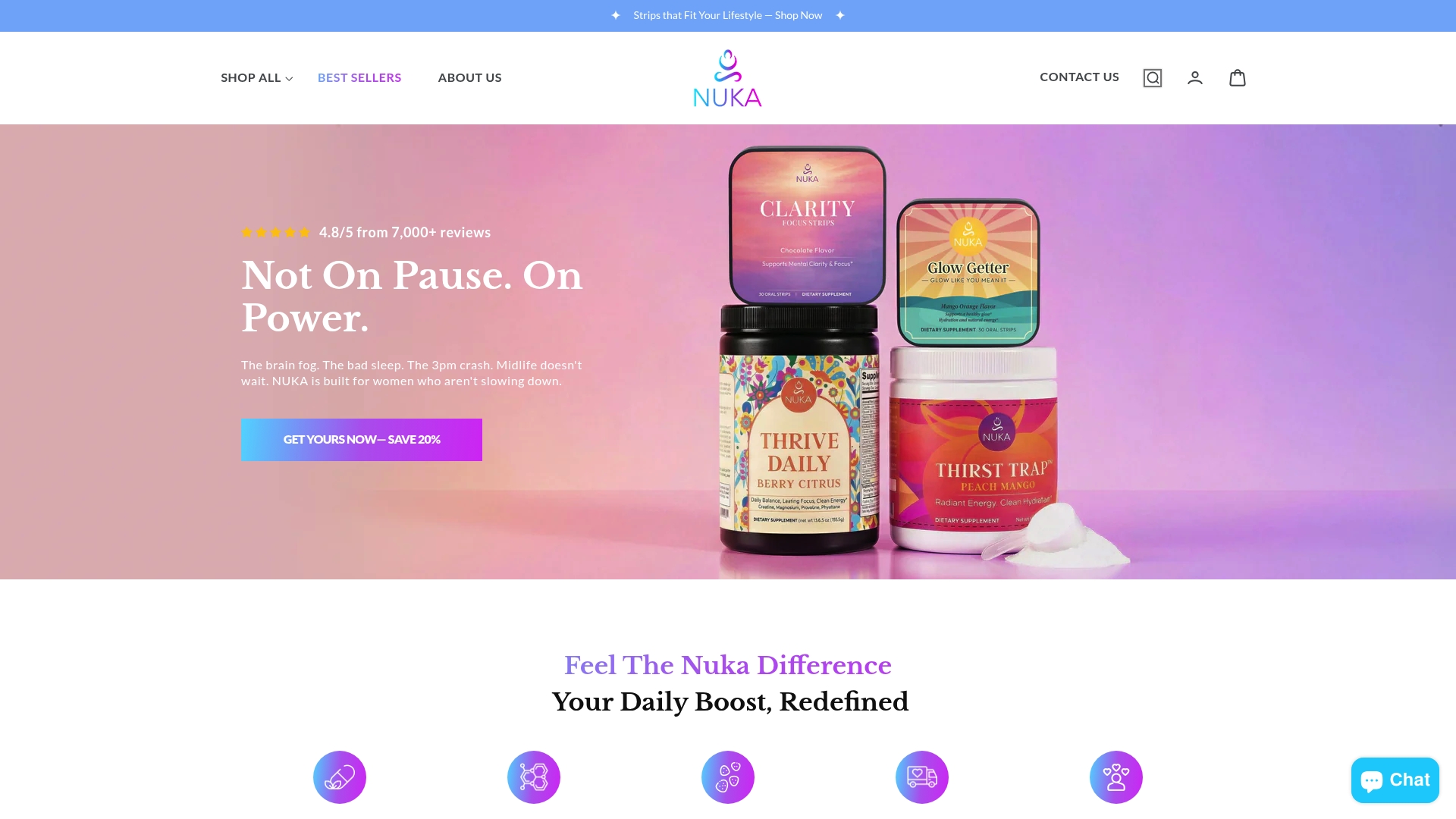
GLOW GETTER strips dissolve in seconds with no water needed, which matters when you’re mid-flight or standing in a rental car line with your hands full. Pack them flat in a carry-on pocket, take one at the same time each day regardless of time zone, and pair it with a hydration sachet once you land to counter cabin dryness. Our upcoming DEEP ZZZS™ sleep strips are designed to slot into the same routine for the first rough nights in a new bed.
For a standard seven-day trip, a small bundle covering daytime support and nighttime recovery takes up less space than a single bottle of pills and skips the “did I pack enough water” problem entirely. Build your own version by starting at the Nukalove product page and matching strips to your specific trip length and time zone shift.
Sources
For clinical grounding, the CDC’s travel and mental health guidance and Cleveland Clinic’s anxiety management advice cover what to discuss with a provider before departure. For lived-experience packing wisdom, the Boston Globe’s reporting on menopause travel and Revive Health Therapy’s mindfulness exercises round out the breathing and grounding side. For product-specific packing logistics, our carry-on guide for oral strips covers what actually clears security without a hassle.
This article is general information, not a substitute for advice from a qualified doctor. Consult a qualified healthcare professional about your own circumstances before acting on anything here.
- Mental Health and Travel | Travelers’ Health | CDC
- How to manage travel anxiety — Cleveland Clinic
- How I travel through perimenopause and hot flashes without giving up the joy of the trip — Fodor’s
- Peri-menopause and menopause travel coverage — Boston Globe
- PMC clinical article on menopause and mental health