

12 Hour Preflight Checklist Against Plane Bloat for Midlife Women
Hydrate with still water, skip the soda and alcohol, get up and move every 60 to 90 minutes, and keep simethicone or peppermint on hand for backup. Plane bloat comes from two things happening at once: gas trapped in your gut expands as cabin pressure drops, and your body holds onto extra water from sitting still and eating salty food. Handle both, and most of the discomfort never shows up.
TL;DR:
- Limiting fermentable foods like beans, onions, and cruciferous vegetables 12 hours before flying reduces gut gas expansion at high altitude.
- Drinking one glass of still water per hour during flight prevents dehydration without overloading the gut, while avoiding carbonated drinks, alcohol, and gum minimizes excess gas.
- Walking every 60 to 90 minutes and wearing breathable clothing and compression socks support circulation and reduce bloating during long flights.
- Rehydrating immediately after landing and taking a short walk helps restore gut motility and decreases bloating within 24 to 48 hours.
- Simethicone can offer quick relief for trapped gas, but severe symptoms like persistent pain or blood requires medical attention instead of self-treatment.
Table of Contents
- What to Eat and Pack Before You Fly
- What to Drink and Do Once You’re in the Air
- Snacks and Remedies That Actually Help
- Your First Few Hours After Landing
- When to Use OTC Remedies vs. When to Call a Doctor
- What Actually Works for Frequent Flyers
- Travel-Ready Support From Nukalove
- Sources
- FAQ
What to Eat and Pack Before You Fly
The window that matters most is the 12 hours before takeoff. Gastroenterologists who study “jet belly” point to highly fermentable foods, think beans, onions, cruciferous vegetables, certain artificial sweeteners, as the main fuel for the gas that expands once you’re in the air. Cut those out for half a day and there’s simply less substrate for your gut bacteria to turn into gas at 35,000 feet, according to gastroenterology guidance on limiting fermentable foods before flights.
Your pre-flight meal should be simple and low in fermentable fiber. Think rice, eggs, grilled chicken, or a banana, not a farewell burrito loaded with beans and hot sauce. Watch sodium too. A salty airport meal primes you for water retention before you’ve even boarded, a pattern flagged repeatedly in travel-health reporting on airline meals and bloating.
Pack smart and you’ve already won half the battle:
- An empty water bottle to fill after security, plus one electrolyte sachet
- Low-FODMAP snacks: rice cakes, a hard-boiled egg, a handful of plain almonds
- Peppermint or ginger tea bags (TSA-friendly, and useful the moment you land)
- A light, non-fermentable meal eaten 2 to 3 hours before boarding, not right before
Pro Tip: Set a phone reminder for “12 hours to departure” the night before a big trip. That single nudge is often the difference between remembering to skip the lentil soup and realizing too late at 30,000 feet.
What to Drink and Do Once You’re in the Air
Sip about one glass of still water every hour you’re airborne. That pace keeps you hydrated without overloading your bladder or your gut, and it’s the benchmark travel-health experts consistently recommend. Herbal teas like peppermint, ginger, or dandelion make good substitutes when the beverage cart comes around, since cabin air is already drier than most homes.
Skip four things specifically: carbonated drinks, alcohol, excess caffeine, and chewing gum. Carbonation adds gas directly to a system that’s already expanding from lower cabin pressure. Alcohol and caffeine both dehydrate you, which paradoxically makes your body cling to more water. Gum makes you swallow air with every chew.
Movement matters just as much as what’s in your cup. A simple rotation works for most seat configurations:
- Every 60 to 90 minutes, do 10 ankle pumps and 10 seated knee lifts per leg.
- Stand and stretch your calves in the aisle or galley area for a minute or two.
- On flights over four hours, take one full walk to the back of the plane and stretch your lower back against a bulkhead if space allows.
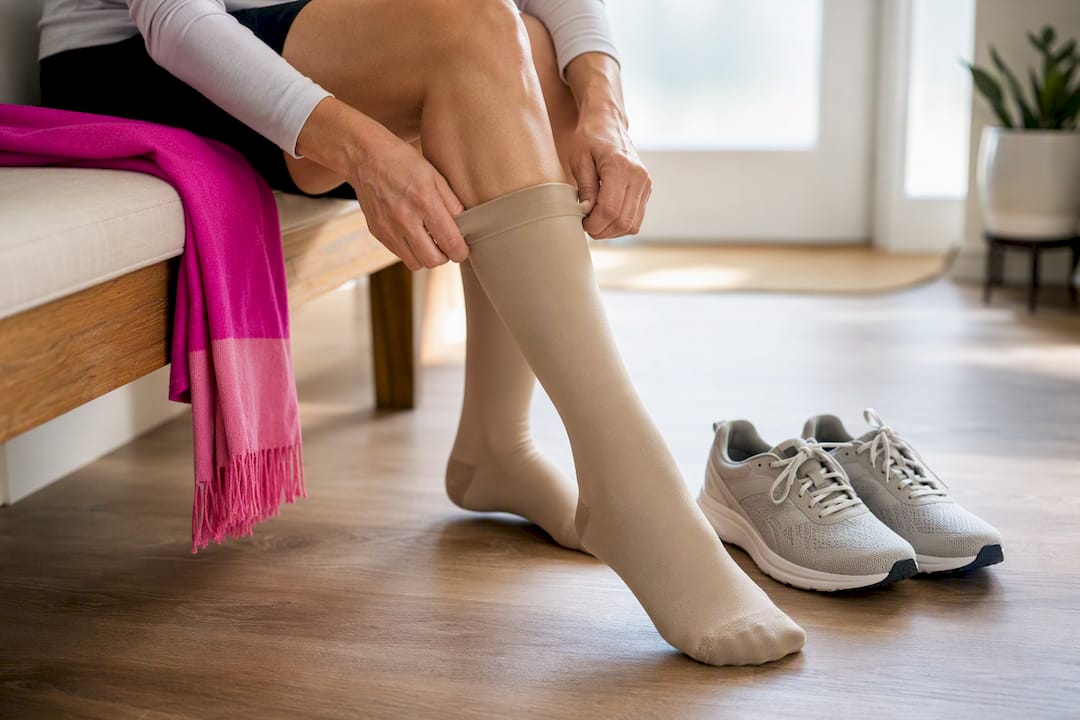
Clothing choices help more than people expect. Loose waistbands and breathable fabric let your abdomen do its job without added pressure, and compression socks support circulation on flights longer than three hours, a habit frequent flight crews mention often as one of the few things that consistently helps.
Pro Tip: If you’re prone to swelling on long-haul flights, pair compression socks with the ankle-pump routine above. Neither works as well alone.
Snacks and Remedies That Actually Help
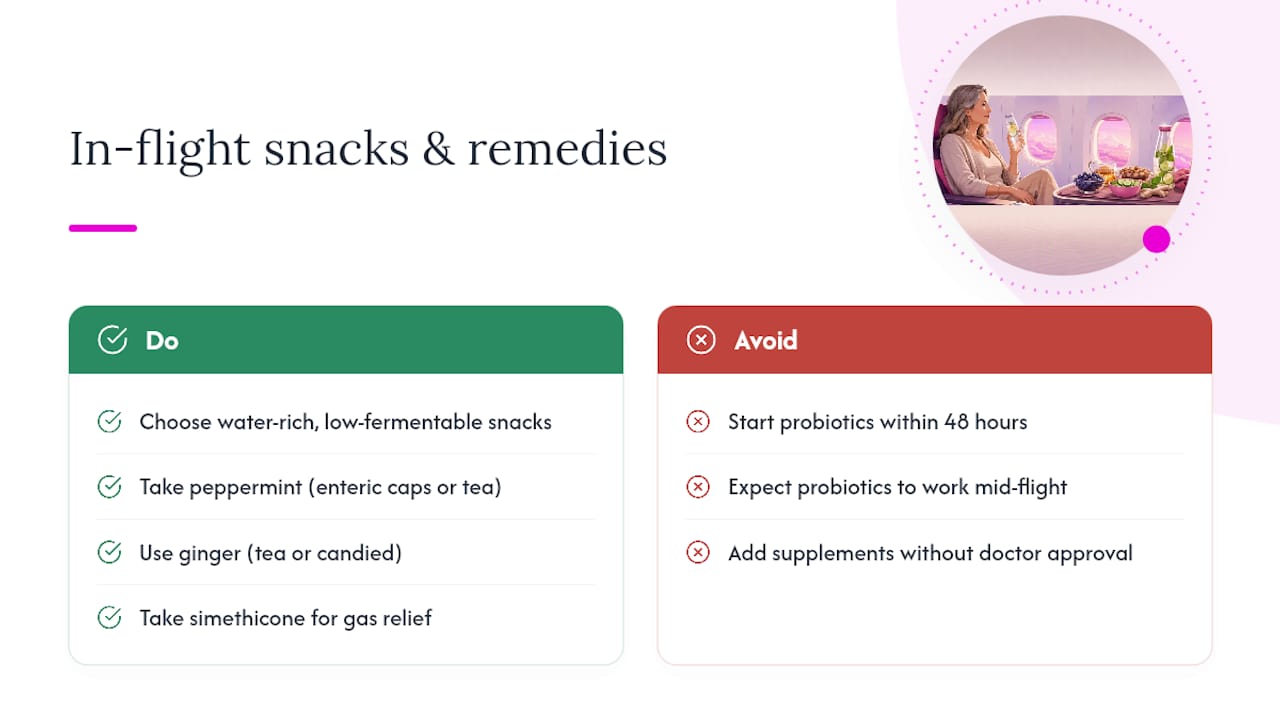
Reach for water-rich, low-fermentable foods once you’re settled: grapes, a cheese stick, plain rice cakes, or a hard-boiled egg. These digest easily and don’t add fuel to a gut that’s already dealing with expanding gas pockets.
For symptomatic relief, three options have real backing. Enteric-coated peppermint capsules or peppermint tea relax intestinal smooth muscle and can ease cramping. Ginger, in tea or candied form, settles queasiness that often travels alongside bloating and offers multiple ginger shot benefits to ease discomfort. Simethicone works differently: it breaks up gas bubbles so they pass more easily, a mechanism used by dietitians and gastroenterologists as a go-to symptomatic aid, according to supplement and remedy guidance from NCCIH.
Probiotics are a longer game. They can support gut balance over weeks of consistent use, but they won’t do anything for you mid-flight, and starting a new one less than 48 hours before travel is a bad idea if you have known sensitivities or a complex medical history.
Electrolytes and magnesium both support fluid balance, which matters when cabin air pulls moisture out of your body faster than you’d expect. If you have kidney issues or take medications that affect electrolyte levels, check with your doctor before adding a new supplement to your routine, even a travel-friendly one.
Your First Few Hours After Landing
Recovery follows a short, repeatable sequence:
- Rehydrate immediately with still water and an electrolyte sachet, not coffee or a cocktail at baggage claim.
- Take a 10 to 20 minute walk as soon as you reasonably can, through the airport, to your car, anywhere that gets your legs moving.
- Eat a light, low-FODMAP snack within one to three hours of landing rather than skipping straight to a heavy meal.
Walking does more for a sluggish gut than almost anything else available to you post-flight. It stimulates gut motility and helps redistribute the fluid your body held onto while sitting for hours. Most people feel noticeably less bloated within 24 to 48 hours if they stay active and hydrated; skip both and it can linger closer to three days.
When to Use OTC Remedies vs. When to Call a Doctor
Simethicone works by reducing the surface tension of gas bubbles in your gut, letting trapped air pass more easily instead of sitting there causing pressure. It’s reasonable to use situationally, following the package dosing, for an uncomfortable flight or the evening after one.
Watch for signals that go beyond ordinary travel bloat:
- Severe or continuous abdominal pain that doesn’t ease with movement or time
- Fever alongside digestive symptoms
- Persistent vomiting
- Blood in your stool
Any of those warrants medical attention rather than another cup of peppermint tea, a distinction Mayo Clinic’s travel health guidance draws clearly. If you manage a chronic GI condition or take multiple medications, run any new supplement past your clinician first, even one as mild as ginger or magnesium.
What Actually Works for Frequent Flyers
The behavioral stuff, hydration, movement, and cutting fermentable foods before you fly, does more heavy lifting than any single product ever will. That’s the honest starting point, and it’s why Nukalove built travel guidance around habits first.
Our packing list for clients hasn’t changed in years: electrolyte sachets, peppermint tea bags, comfortable shoes, compression socks, and a strip or two for a quick top-up when there’s no time for a full routine. None of it replaces water, movement, or a doctor’s advice. It just makes the good habits easier to keep on a travel day.
— NUKA
Travel-Ready Support From Nukalove
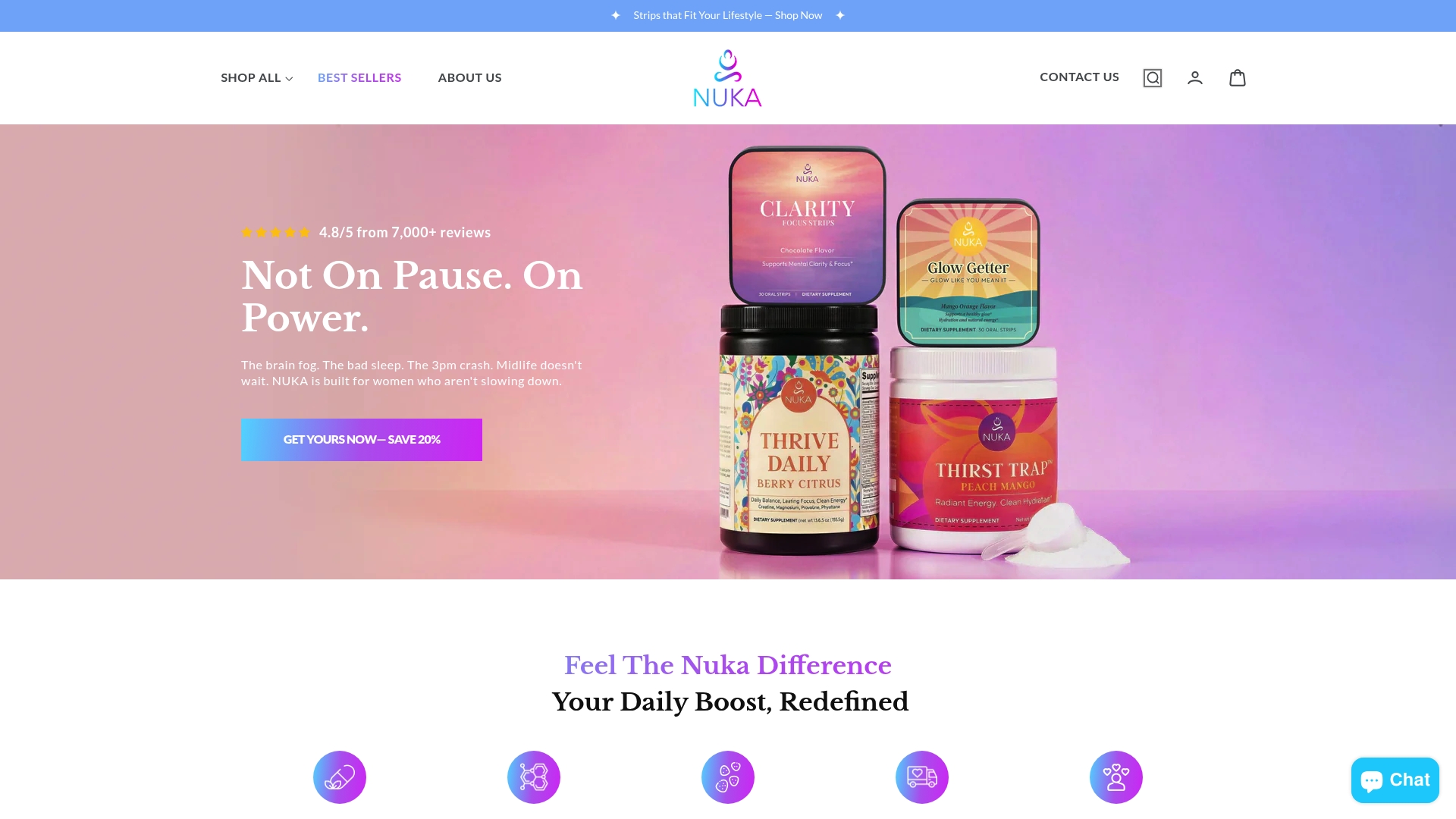
Some strips solve travel problems by providing hydration and skin support without packing bottles, powders, or anything that needs a glass of water and five spare minutes. GLOW GETTER dissolves on the tongue in seconds, so it fits into the same 60 to 90 minute movement break you’re already taking to fight bloat, no galley cup required.
None of these strips replace water, walking, or a conversation with your doctor about symptoms that concern you. They’re a complement, not a substitute, for the habits covered above. If sleep disruption tends to compound your travel discomfort, DEEP ZZZS™ is worth a look for the return leg. Browse the full lineup at Nukalove and pick the strip that matches your next itinerary before you pack.
Sources
- Five expert tips to prevent flight fatigue and bloating | The Independent
- Q&A: Keep ‘jet belly’ at bay by limiting highly fermentable foods before, during flights | Healio
- The Science Behind Bloating on Planes—and How to Avoid It | Condé Nast Traveler
- Travelers’ diarrhea - Symptoms and causes | Mayo Clinic
FAQ
How do you debloat your stomach after flying?
Rehydrate with still water and electrolytes, take a 10 to 20 minute walk to restart gut motility, and eat a light, low-FODMAP snack within a few hours of landing.
Why is my stomach so bloated after flying?
Lower cabin pressure causes trapped intestinal gas to expand, while sitting still and eating salty airline food lead to temporary water retention, a combination Condé Nast Traveler’s science explainer breaks down in detail.
How long does it take to debloat after flying?
Most people feel noticeably better within 24 to 48 hours if they stay hydrated and active; staying sedentary and dehydrated can stretch that closer to three days.
How long does plane belly typically last?
Plane belly usually peaks within a few hours of landing and fades within one to two days with movement and hydration, though it can linger longer without those steps.