

Drink 1 Cup After a Hot Flash: Hydration Rules for Menopause
Yes. Dehydration can amplify how intense and frequent hot flashes feel by disrupting the hypothalamic thermoregulation that already misfires during menopause. It is not a standalone cure, and staying hydrated will not switch off hot flashes caused by dropping estrogen. But replacing fluids you lose to sweating, and following simple daily hydration rules, often takes the edge off individual episodes.
TL;DR:
- Dehydration reduces blood volume, impairing heat transfer and sweating, which can intensify hot flashes and increase their duration.
- Waking up drenched from night sweats often leads to dehydration, making subsequent flashes more severe due to impaired cooling efficiency.
- Drinking about 35 ml per kilogram of body weight daily serves as a baseline, with additional fluids needed after flashes or during hot weather.
- Plain water is usually sufficient for hydration, but electrolyte solutions are beneficial after frequent or intense sweating episodes to restore mineral balance.
- Signs of dehydration, such as dark urine and dry mouth, should prompt immediate fluid intake, while confusion or fainting require urgent medical attention.
Table of Contents
- What Actually Causes Hot Flashes
- The Hydration-Hot Flash Connection: What’s Really Happening
- Signs Dehydration Might Be Making Things Worse
- How Much Water You Actually Need (and When)
- Electrolytes vs. Plain Water: How to Choose
- Daily Habits That Cut Down on Dehydration-Driven Flashes
- When to See a Doctor
- What Hydration Can and Can’t Fix
- A Travel-Friendly Way to Support Your Hydration Routine
- Sources
What Actually Causes Hot Flashes
Vasomotor symptoms are the clinical term for hot flashes and night sweats. They present as a sudden wave of heat, often starting in the chest or face, followed by sweating and sometimes chills. Most episodes last under five minutes, though some women get several a day and others get one every few weeks.
The root cause is estrogen decline. Estrogen normally helps stabilize the hypothalamus, the part of your brain that acts as your body’s thermostat. As estrogen drops during perimenopause and menopause, that thermostat narrows its comfort zone. Small shifts in core temperature that you’d never notice before now trigger a full sweating and flushing response.
Hydration doesn’t touch that hormonal trigger. What it does is influence how your body executes the cooling response once a flash starts, and that’s where dehydration and hot flashes intersect in a way worth understanding.
The Hydration-Hot Flash Connection: What’s Really Happening
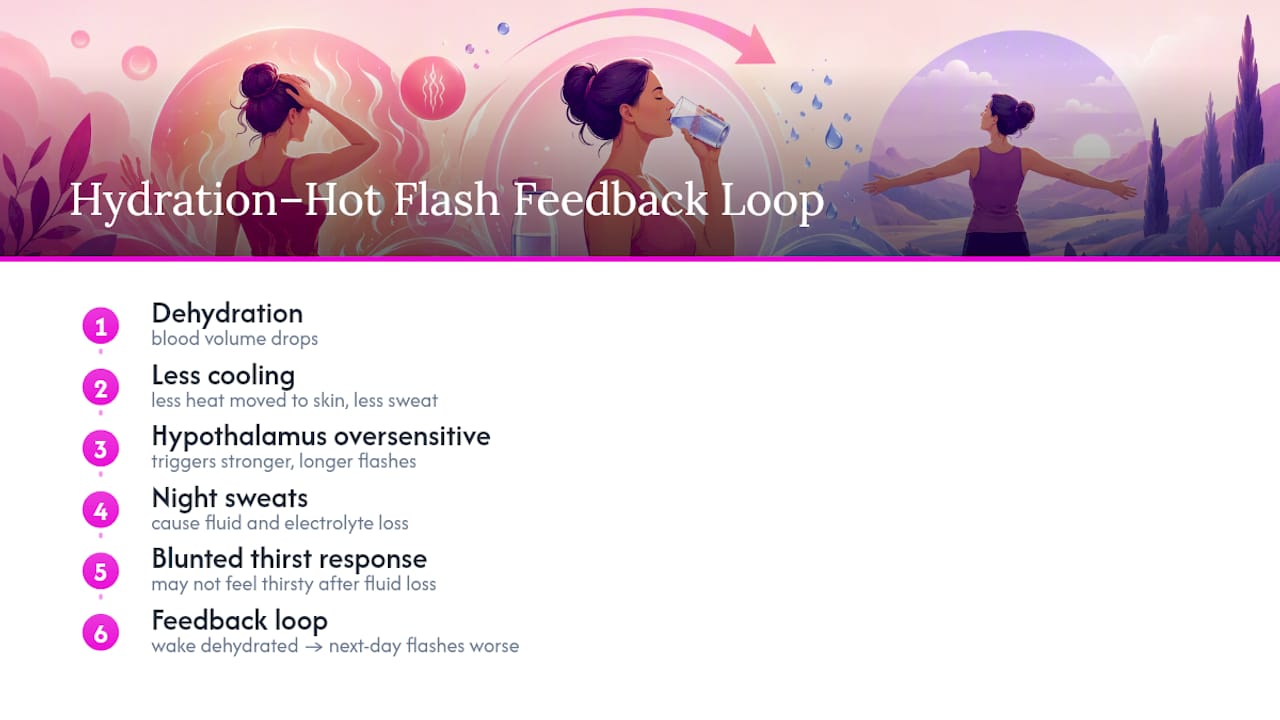
When you’re dehydrated, your blood volume drops. Lower blood volume means your body has less fluid available to move heat from your core to your skin and less to convert into sweat. So a hypothalamus that’s already oversensitive to temperature swings gets a body that’s less equipped to cool down efficiently. The result: flashes can feel more intense, last longer, or trigger more easily.
There’s a feedback loop hiding in plain sight, too. Night sweats and hot flashes themselves cause meaningful fluid loss, and menopause is associated with a blunted thirst response, so you may not feel thirsty even after losing real fluid volume overnight. That means you can wake up already dehydrated from the flashes you had while sleeping, which sets up the next day’s flashes to hit harder.
By the numbers: A single intense night-sweat episode can soak through sleepwear or sheets, and clinical guidance treats replacing both fluid and electrolytes after heavy sweating as necessary, not optional, because sweat carries out sodium and potassium along with water.
Removing dehydration from the equation doesn’t cure the underlying hormonal shift, but it does address one of the few genuinely modifiable factors in how rough each episode feels.
Signs Dehydration Might Be Making Things Worse
Dehydration and menopause produce overlapping symptoms, which makes it easy to blame everything on “just menopause” when your body is actually asking for water.
Watch for these signals:
- Dark yellow urine, or noticeably less frequent trips to the bathroom
- Dry mouth or a sticky feeling on your lips and tongue
- Dizziness or lightheadedness, especially standing up quickly
- Headaches that show up alongside fatigue
- Brain fog that feels heavier than your usual menopausal fuzziness
Fatigue and brain fog show up in both conditions, so they’re not reliable on their own. But dark urine and dry mouth are specific to dehydration. If you notice those alongside worsening flashes, sip cool water right away and get somewhere cooler. Confusion, a racing heart, or fainting are red flags that need medical attention, not a water bottle.
How Much Water You Actually Need (and When)
Generic advice to “drink more water” isn’t useful. Here’s a rule of thumb that clinicians actually use, adapted for hot flashes.
- Set your baseline. Mayo Clinic’s clinical reference point uses roughly 35 ml per kilogram of body weight as a starting daily estimate. A 70 kg (154 lb) woman lands around 2.4 liters a day before accounting for sweat losses from flashes.
- Replace after a flash. Drink about a cup of water within 30 minutes of a significant hot flash to offset what you just sweated out.
- Front-load after night sweats. If you wake up drenched, drink two to three cups of water within the first hour of your morning, since you’ve likely been losing fluid for hours without noticing.
- Add more for heat or exercise. Hot weather, workouts, or a particularly flash-heavy day call for extra fluid on top of your baseline, not instead of it.
Harvard Health’s practical guidance also supports sipping cool water right as a flash starts, which can blunt the discomfort for some women even if it doesn’t stop the flash itself.
One caution: more water isn’t automatically better. Overhydration can dilute sodium levels and cause its own problems, and if you take diuretics or manage heart or kidney disease, your fluid targets need individualizing with a clinician rather than a blanket formula.
Electrolytes vs. Plain Water: How to Choose
Plain water handles most day-to-day hydration just fine. Electrolytes earn their place when you’re losing fluid fast and often, because heavy sweating pulls out sodium, potassium, and magnesium along with water, and low electrolyte levels actually make your body hold onto less of the fluid you drink. Water without electrolytes after a big sweat session can leave you still feeling depleted even after you’ve had plenty to drink.
Practical options, in order of how often you’ll reach for them:
- Plain water for normal daily hydration and mild, infrequent flashes.
- Low-sugar electrolyte powders mixed into water after multiple flashes in one day or a rough night of sweats. Nuka Love’s electrolyte guidance for menopause breaks down which minerals matter most and why.
- Oral rehydration solutions for more clinical-grade replacement if you’re sweating through multiple night-sweat episodes regularly.
- Sports drinks work in a pinch but often carry more sugar than you need for the amount of fluid loss you’re replacing.
Pro Tip: Keep an electrolyte sachet in your bag or nightstand drawer. The moment you’re tempted to just “drink more water” after a rough flash, mix electrolytes in instead. It’s a five-second habit that fixes the retention problem plain water can’t.
If you’re on diuretics or have kidney or cardiac disease, talk to your doctor before adding routine electrolyte supplementation. Those conditions change how your body handles sodium and potassium, and self-dosing electrolytes on top of prescription medication isn’t something to guess at.
Daily Habits That Cut Down on Dehydration-Driven Flashes
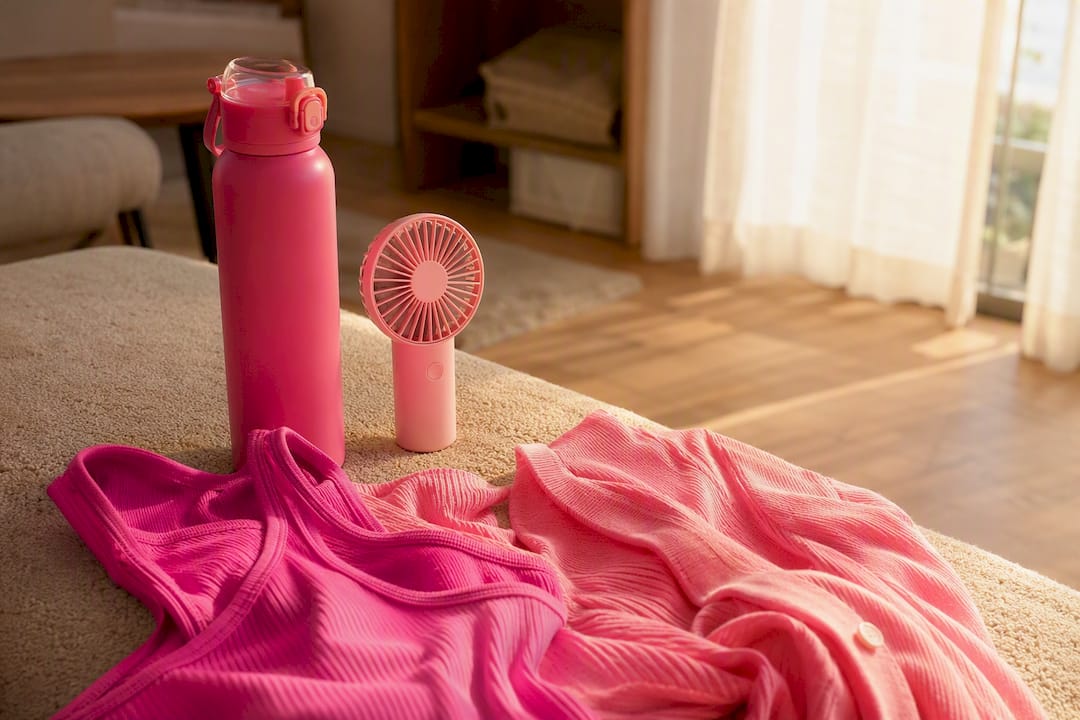
Small, boring habits do more here than any single trick. Carry a water bottle everywhere, keep a small fan at your desk or bedside, and dress in layers you can shed the second a flash starts.
Beverage choices matter more than people expect. Alcohol and caffeine both act as mild diuretics and are common flash triggers, so if you’re having coffee or wine, match it with extra water. Nuka Love’s breakdown of caffeine’s effect on menopause symptoms covers why that morning coffee might be quietly working against you. When a flash does start, reach for cool, not ice cold, plain water. It’s the simplest lever you have in the moment.
For travel, pack electrolyte sachets rather than relying on finding decent water on the road, and keep a routine of front-loading fluids the moment you wake up if night sweats hit while you were asleep. Some women also find gentle movement practices, like qigong routines for menopause, help regulate their body’s stress response alongside hydration. Nuka Love’s rundown of common hot flash triggers is worth a read if you’re still narrowing down what sets yours off beyond fluid loss.
Pro Tip: Track your water intake and flash frequency for one week in a notes app. Patterns show up fast, like flashes clustering on days you skipped lunchtime water or had two cups of coffee instead of one.
When to See a Doctor
Sip water and cool down for a typical flash. But get medical attention if you feel confused, your heart is racing persistently, you’re fainting, or you haven’t urinated in many hours despite drinking fluids. Those go beyond what hydration alone will fix.
It’s also worth booking an appointment if hot flashes are frequent, severe, or disrupting your sleep and daily life regardless of how hydrated you are. Hormone therapy remains the most effective medical option for moderate to severe vasomotor symptoms, and FDA-approved nonhormonal medications exist for women who can’t or don’t want to use hormones. Bring a symptom log, your typical fluid intake, and a list of current medications so your clinician can rule out interactions and personalize a plan. Nuka Love’s guide to hot flash relief options walks through what those medical and lifestyle paths look like side by side.
What Hydration Can and Can’t Fix
Here’s what gets missed in most hot-flash advice: dehydration isn’t a footnote, it’s one of the only levers you can pull yourself, on demand, without a prescription. Everything else about menopause, the hormone swings, the hypothalamic recalibration, is happening whether you intervene or not. Fluid status is different. You control it hour by hour.
That said, I’d push back on the framing that hydration is a “management strategy” on par with hormone therapy or medication. It isn’t. It’s closer to keeping your car’s tires properly inflated: it won’t fix a failing transmission, but driving on underinflated tires makes every existing problem worse. Treat hydration as the baseline you get right so that when you do need medical treatment, you’re not fighting two problems at once.
The women I’d worry about most are the ones who feel fine and skip water because thirst isn’t kicking in, not realizing menopause itself dulls that signal. If you only drink when thirsty, you’re already behind.
— NUKA
A Travel-Friendly Way to Support Your Hydration Routine
Packing electrolyte sachets and remembering morning fluid front-loads is easier to plan than to actually do when you’re traveling, mid-workday, or just exhausted from a rough night of sweats. That’s the gap Nuka Love’s oral strip format is built to close: no water needed to take it, no mixing, no bulky tubs taking up suitcase space.
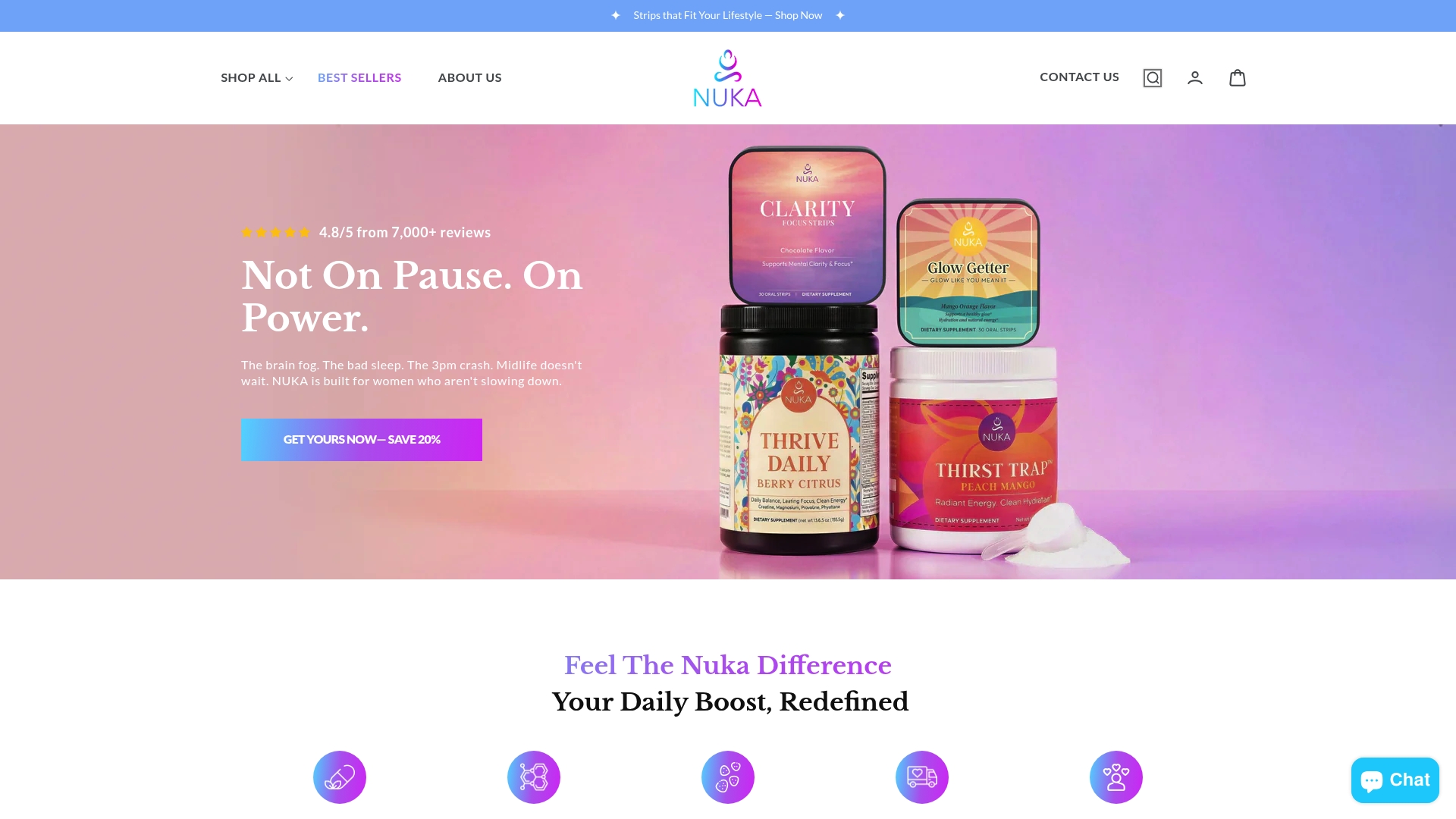
The Glow Getter oral strips slip into a bag or pocket and dissolve in seconds, making them a practical adjunct alongside the water and electrolyte habits covered here. They’re not a replacement for medical treatment or a cure for hot flashes. Think of them as one more tool that fits into a hydration-forward routine without adding friction. If night sweats are wrecking your sleep more than your daytime flashes, take a look at the Deep ZZZs oral sleep strips as a complementary option. Browse the full lineup at Nuka Love to find what fits your routine.
This article is general information, not a substitute for advice from a qualified doctor. Consult a qualified healthcare professional about your own circumstances before acting on anything here.
Sources
- Hot flashes - StatPearls (NCBI Bookshelf)
- Hot flashes: A to Z - Harvard Health
- How much water should I drink? - Mayo Clinic
- Fluid and electrolyte balance - MedlinePlus