

Sublingual Vitamins: Benefits, Absorption, and Real Evidence
Sublingual vitamins genuinely help certain people absorb specific nutrients more effectively, particularly vitamin B12 and vitamin D, and the clinical evidence backs this up for those with malabsorption issues or difficulty swallowing pills. For healthy adults without absorption problems, the advantage over a standard oral supplement is smaller but still real in terms of speed and convenience.
Quick takeaways:
- Sublingual B12 and oral B12 raise serum cobalamin comparably in people with mild deficiency, as supported by multiple clinical studies and a meta-analysis.
- Sublingual delivery bypasses much of the digestive process, which matters most for people with intrinsic factor deficiency, post-surgical anatomy, or chronic low stomach acid.
- Vitamin D sprays perform on par with capsules for raising 25(OH)D levels, with many users preferring the spray format.
- Severe deficiency with neurological symptoms requires clinician-directed care rather than OTC supplementation alone.
The evidence section below walks through the key studies in detail.
Key Takeaways
Sublingual vitamins offer a clinically supported delivery route for B12 and vitamin D, with the strongest advantage for people who have absorption challenges or prefer formats that require no water.
| Point | Details |
|---|---|
| B12 sublingual evidence | A 500 µg RCT and a meta-analysis both show sublingual B12 raises serum cobalamin comparably to oral and IM routes. |
| Vitamin D sprays | A six-week RCT found sublingual D3 spray equivalent to capsules for raising 25(OH)D, with many participants preferring the spray. |
| Who benefits most | People with malabsorption, intrinsic factor deficiency, post-surgical anatomy, or dysphagia gain the most from bypassing the GI route. |
| Severe deficiency | Neurological symptoms or very low lab values require clinician-directed therapy; sublingual OTC supplements are not sufficient alone. |
| Nukalove oral strips | Nukalove’s dissolvable strips deliver sublingual nutrients in a travel-ready format designed for women who supplement consistently on the go. |
Table of Contents
- How do sublingual vitamins work in your body?
- Which vitamins are commonly formulated for sublingual use?
- What does the clinical evidence actually show?
- Who is most likely to benefit from sublingual vitamins?
- Pros, cons, and real limitations of sublingual vitamins
- How to take sublingual vitamins safely and effectively
- What forms do sublingual vitamins come in?
- Oral strips as a practical sublingual option
- When should you get tested instead of self-supplementing?
- Why format and consistency matter more than most people realize
- Nukalove oral strips: a convenient option worth knowing about
- Primary sources and further reading
- Sources
How do sublingual vitamins work in your body?
Sublingual delivery places a nutrient directly on the tissue under your tongue. That tissue, the oral mucosa, is thin, richly supplied with capillaries, and permeable enough to absorb certain molecules directly into the bloodstream through the sublingual veins. From there, nutrients enter systemic circulation without first traveling through the stomach, intestines, and portal vein to the liver.
That last part is the key distinction. When you swallow a pill, it dissolves in your stomach, gets absorbed through the intestinal wall, and passes through the liver before reaching the rest of your body. The liver metabolizes a portion of many compounds on this first pass, reducing the amount that actually circulates. Sublingual absorption can sidestep this, though the degree of bypass depends heavily on the molecule.
A few factors determine how well this works in practice:
- Mucosal permeability: Small, lipophilic (fat-soluble) molecules cross the oral mucosa more readily than large or water-soluble ones.
- Molecular size and solubility: Vitamin B12 is a large molecule, but its cyanocobalamin form dissolves well and absorbs through passive diffusion and local tissue uptake.
- Saliva and dissolution time: Saliva can dilute and partially swallow the dose before absorption completes, which is why holding the supplement under the tongue for the full recommended time matters.
- Formulation quality: Excipients, taste-masking agents, and dissolution rate all affect how much of the active nutrient actually contacts the mucosa long enough to absorb, as pharmaceutical reviews of sublingual tablets confirm.
The pathway is real and physiologically sound. The practical question is whether it produces a measurable difference in blood levels for a given nutrient, which is where the clinical data comes in.
Which vitamins are commonly formulated for sublingual use?
B12 and certain vitamin D formulations have the most clinical support for sublingual delivery. Most minerals and fat-soluble vitamins (A, E, K) are better absorbed with food through the digestive route, so sublingual formulations for those nutrients offer little practical advantage.
Here is how the most common sublingual nutrients break down:
- Vitamin B12 (cyanocobalamin and methylcobalamin): The strongest case for sublingual delivery. B12 absorption through the gut depends on intrinsic factor, a protein produced in the stomach. Anyone with reduced intrinsic factor, low stomach acid, or post-surgical anatomy loses a significant portion of an oral dose. Sublingual B12 bypasses this bottleneck. The NIH Office of Dietary Supplements notes that B12 deficiency is particularly common in older adults and those on long-term metformin or proton pump inhibitors.
- Vitamin D (sublingual sprays): D3 in spray form raises serum 25(OH)D as effectively as capsules in clinical trials. The spray format also suits people who have trouble swallowing softgels.
- Select B-complex members (B6, folate): Some B vitamins are included in sublingual formulations, though the evidence base is thinner than for B12 specifically.
- Minerals and fat-soluble vitamins: Calcium, magnesium, and vitamins A, E, and K are not well-suited to sublingual delivery. Their molecular properties and absorption mechanisms favor the GI route, ideally with dietary fat.
Callout on evidence strength: B12 and vitamin D have the most robust clinical data for sublingual delivery. The evidence section below covers the key trials directly.
Formulation format matters here too. A sublingual B12 tablet that dissolves slowly may not deliver the same mucosal contact time as a fast-dissolving strip or a spray. Sprays distribute the dose across a wider mucosal surface area, while strips dissolve rapidly and adhere briefly to the tissue. Lozenges and slow-dissolve tablets depend more on patient compliance with hold time.
What does the clinical evidence actually show?
The evidence is encouraging but not uniformly definitive.
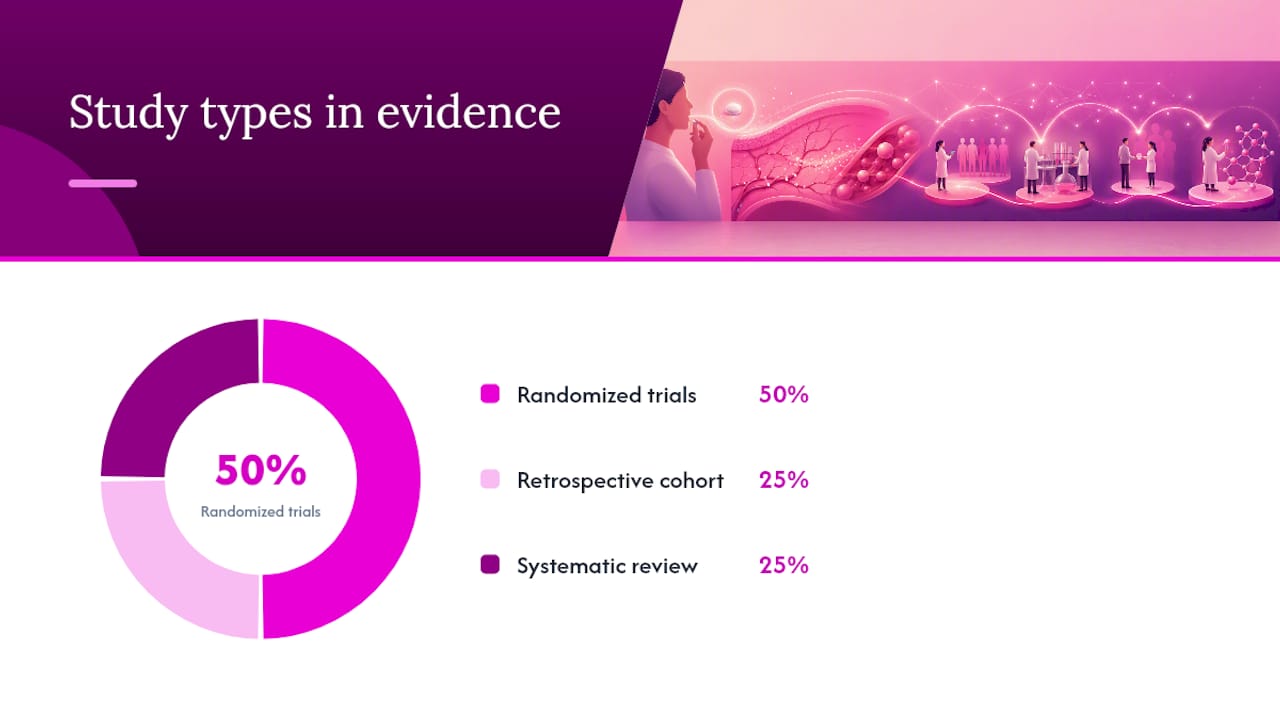
| Study | Population | Dose / Formulation | Main Outcome | Key Limitation |
|---|---|---|---|---|
| Randomized trial, PMC1884303 | Adults with early B12 deficiency | Cyanocobalamin, 500 micrograms, sublingual vs oral | Serum B12 rose significantly after supplementation with no significant difference between sublingual and oral routes | Short duration (4–8 weeks), mild deficiency only |
| Retrospective cohort, PubMed 30632091 | 4,281 patients in routine care | Sublingual tablet vs IM injection | Mean serum B12 increase was comparable between sublingual and intramuscular routes, with no clear superiority shown | Retrospective design; dosing and selection heterogeneity |
| Systematic review and meta-analysis, EuropePMC | Mixed B12-deficient populations | Oral, sublingual, and IM routes | Pooled mean cobalamin increase showed no significant difference between sublingual and oral administration | High heterogeneity (I² > 80%) in many comparisons |
| Vitamin D spray RCT, White Rose | Vitamin D-insufficient adults | 3,000 IU/day D3, capsule vs sublingual spray, 6 weeks | Equivalent elevation in serum 25(OH)D at approximately 2 nmol/L per day; participant preference favored spray | Short duration; only single dose level tested |
The retrospective cohort showing sublingual B12 outperforming intramuscular injections is striking, but retrospective designs can overstate effect sizes because of selection bias and dosing variability across clinical settings. The randomized trial and the meta-analysis tell a more conservative story: sublingual and oral routes are roughly equivalent when the dose is adequate.
A Frontiers in Pharmacology review makes an important point about the evidence base overall: most studies focus on mild deficiency and short-term biochemical markers like serum B12 or homocysteine. Longer-term functional outcomes, neurological recovery, and quality-of-life endpoints are rarely measured. That gap matters when making clinical decisions.
The practical takeaway: sublingual delivery works, but the evidence does not yet support claiming it is clearly superior to a well-dosed oral supplement for people with intact absorption.
Who is most likely to benefit from sublingual vitamins?
Sublingual delivery is most useful for people with malabsorption, intrinsic factor problems, swallowing difficulties, or inconsistent gastric acidity. For everyone else, it is a convenient option with modest but real advantages in onset speed and formulation flexibility.
Groups most likely to see a meaningful benefit:
- Older adults (50+): Gastric acid production declines with age, reducing the release of B12 from food and impairing intrinsic factor function. Sublingual B12 bypasses this step entirely.
- People with pernicious anemia or intrinsic factor deficiency: These individuals cannot absorb B12 through the standard GI pathway at all. Sublingual delivery provides an alternative route, though severe cases still require clinician oversight.
- Post-gastric surgery patients: Gastrectomy and bariatric procedures alter the anatomy needed for B12 absorption. Sublingual delivery changes effective dose delivery in a clinically meaningful way for these patients.
- Long-term metformin or proton pump inhibitor users: Both drug classes are associated with reduced B12 absorption. The NIH ODS B12 fact sheet flags this as a recognized clinical concern.
- Strict vegans: Plant-based diets provide essentially no B12, and consistent supplementation is critical. Sublingual formats can improve adherence for people who dislike swallowing pills.
- People with dysphagia: Anyone who has difficulty swallowing tablets or capsules can use sublingual sprays or dissolving strips without the swallowing step.
- People with inconsistent gastric acidity: Stress, illness, and certain medications all affect stomach acid levels, which in turn affect oral B12 absorption. Sublingual delivery reduces that variability.
One point the Frontiers review emphasizes: severe B12 deficiency with neurological signs, such as numbness, balance problems, or cognitive changes, generally requires intramuscular therapy initially. Sublingual supplementation is appropriate for maintenance and mild-to-moderate deficiency, not for acute neurological presentations.
Compliance matters too. A supplement that is easy to take consistently beats a theoretically superior one that gets skipped. For women managing busy travel schedules or menopause-related fatigue, a format that requires no water and fits in a wallet can meaningfully improve daily adherence.

Pros, cons, and real limitations of sublingual vitamins
Sublingual vitamins offer genuine advantages for the right person and the right nutrient, but they are not universally superior to oral supplements and come with practical trade-offs.
Pros:
- Bypass of first-pass hepatic metabolism for suitable molecules
- Faster appearance in the bloodstream compared to swallowed pills
- Effective for people with GI malabsorption or intrinsic factor deficiency
- No water needed; practical for travel and on-the-go use
- Useful for people with dysphagia or pill aversion
Cons:
- Taste can be unpleasant, particularly for B12 in some formulations
- Higher cost per dose compared to standard oral tablets
- Absorption varies by formulation quality; not all products are equivalent
- Not appropriate for all nutrients (minerals, fat-soluble vitamins work better orally)
- Saliva can dilute the dose if the supplement is swallowed too quickly
- Dosing accuracy varies across sprays and strips
Red flags to watch for:
- Products with no third-party testing or quality certification (look for NSF International, USP, or Informed Sport seals)
- Vague dosing claims without specified amounts per serving
- Formulations with excessive artificial additives or fillers that may interfere with mucosal absorption
- Any product claiming to treat or cure a deficiency condition without directing users to clinical testing
Always check for third-party quality verification before purchasing a sublingual supplement. The formulation determines real-world performance as much as the delivery route does.
How to take sublingual vitamins safely and effectively
Place the supplement under your tongue, hold it there without swallowing, and let it dissolve completely before eating, drinking, or rinsing your mouth.
- Prepare your mouth: Avoid eating, drinking, or brushing your teeth for at least 10 minutes before taking a sublingual supplement. Food residue and beverages change the pH and moisture level of the oral mucosa, which can reduce absorption.
- Place correctly: Put the tablet, strip, or spray dose directly under the tongue, as close to the sublingual veins as possible. For sprays, aim at the tissue under the tongue rather than the cheek or roof of the mouth.
- Hold the full time: Most sublingual tablets and strips need 1–2 minutes to dissolve fully. Strips typically dissolve faster. Do not swallow during this period. MedlinePlus guidance on sublingual administration emphasizes keeping the dose in place until fully absorbed.
- Avoid swallowing immediately: After the supplement dissolves, wait at least 2 minutes before drinking water. Rinsing too soon washes residual nutrient off the mucosa before absorption completes.
- Manage taste: If the taste is strong, a small sip of water immediately after the hold period is fine. Choosing a well-formulated product with taste-masking excipients makes the routine easier to sustain.
- Frequency and timing: Follow the label dose. Most B12 sublingual supplements are taken once daily. Vitamin D sprays are typically once daily with or without food, since the spray bypasses the fat-dependent absorption step that capsules require.
- Travel and storage: Strips and sprays are compact and do not require refrigeration in most cases. Check label storage instructions. For travel, strips are particularly practical since they require no water and take up minimal space. The best travel supplement formats guide covers this in more detail.
- Check interactions: B12 supplementation is generally safe, but high-dose folate can mask B12 deficiency symptoms. If you take multiple B vitamins, confirm the combined doses with a healthcare provider.
Pro Tip: Rinse your mouth with plain water 30 seconds before placing a sublingual supplement. This clears food debris and slightly moistens the mucosa, which can improve dissolution contact and absorption consistency.
What forms do sublingual vitamins come in?
Format matters for convenience and formulation, but not every format suits every nutrient or every person.
Tablets and lozenges are the most common sublingual form for B12. They dissolve slowly, giving the mucosa extended contact time. The trade-off is that they require patience and consistent hold time, and some people find the taste difficult to manage for the full dissolution period.
Sprays distribute the dose across a wider mucosal surface area and are particularly well-suited to vitamin D. The six-week vitamin D trial comparing capsules to sublingual spray found equivalent efficacy with a participant preference for the spray, which suggests real-world adherence advantages.
Oral strips dissolve rapidly, adhere briefly to the mucosal surface, and require no water. They are the most travel-friendly format and work well for people with dysphagia. Formulation quality, particularly taste-masking and dissolution profile, is the primary variable that separates effective strips from ineffective ones.
Liquid drops placed under the tongue offer flexible dosing but require careful measurement and are less convenient for travel.
| Dimension | Tablets / Lozenges | Sprays | Oral Strips | Liquid Drops |
|---|---|---|---|---|
| Bioavailability / efficacy | Well-studied for B12; comparable to oral at adequate doses | Equivalent to capsules for vitamin D (RCT data) | Rapid dissolution; mucosal contact comparable to tablets | Variable; dose accuracy depends on measurement |
| Speed of onset | Moderate; depends on dissolution time | Fast; wide mucosal coverage | Fast; rapid dissolution | Moderate to fast |
| Suitability for malabsorption | Yes; bypasses GI route | Yes; bypasses GI route | Yes; bypasses GI route | Yes; bypasses GI route |
| Ease of use / travel | Requires hold time; bulkier | Compact; no water needed | Most compact; no water needed | Requires dropper; less portable |
| Cost | Generally lowest | Moderate | Moderate to higher | Variable |
When to use each format: Sprays are the practical choice for vitamin D if swallowing softgels is inconvenient. Strips are the strongest option for travel, daily adherence, and anyone who dislikes the texture of dissolving tablets. Tablets and lozenges work well for home use when hold time is not a barrier.
Oral strips as a practical sublingual option
Oral strips can deliver sublingual nutrients in a travel-friendly, easy-to-use format that aligns with the evidence for faster mucosal absorption for certain nutrients, particularly B12 and select B vitamins.
The practical advantages of strips are real:
- No water required: Strips dissolve on contact with saliva, making them usable anywhere, on a plane, in a meeting, during a commute.
- Discreet and compact: A strip takes up less space than a pill bottle and produces no noise or packaging waste at the point of use.
- Rapid dissolution: Most strips dissolve within 30–60 seconds, reducing the hold-time compliance issue that affects tablets.
- Taste-masking: Well-formulated strips incorporate flavor agents and excipients that make the experience pleasant enough to sustain daily use, which matters because consistent intake drives long-term nutrient status more than any single-dose absorption advantage.
The clinical limits are worth stating plainly. Strips support maintenance supplementation and are appropriate for the nutrients with established sublingual evidence, primarily B12 and vitamin D. They are not a substitute for clinician-directed therapy in confirmed deficiency with clinical symptoms. Anyone with a diagnosed deficiency should have their treatment plan guided by a healthcare provider, with lab monitoring to confirm response.
Practical use cases where strips fit well: travel supplementation, taking supplements without access to water, managing pill fatigue, and supporting consistent intake for women in perimenopause or menopause who are managing multiple wellness priorities. For women in this life stage, the best perimenopause supplements guide covers the broader supplement picture alongside format considerations.
When should you get tested instead of self-supplementing?
Self-supplementing makes sense for maintenance and mild insufficiency. When symptoms or lab concerns suggest a real deficiency, clinical evaluation comes first.
Red flags that warrant a provider visit:
- Numbness, tingling, or burning in the hands or feet
- Balance or coordination problems
- Unexplained fatigue that does not improve with rest or supplementation
- Memory problems or cognitive changes
- Macrocytic anemia on a blood panel
- Very low serum B12 (below 200 pg/mL) or very low 25(OH)D (below 20 ng/mL)
Labs to request:
- Serum B12: The standard first test, though it can miss functional deficiency at borderline levels.
- Methylmalonic acid (MMA): Elevated MMA is a more sensitive marker of functional B12 deficiency than serum B12 alone, per the NIH ODS clinical guidance.
- Homocysteine: Elevated homocysteine can indicate B12 or folate deficiency; useful alongside MMA.
- 25(OH)D: The standard test for vitamin D status.
Clinical workflow: Talk to your primary care provider, request the relevant labs, and let the results guide the approach. For confirmed severe B12 deficiency with neurological signs, intramuscular B12 is typically the initial therapy. Sublingual supplementation may be appropriate for maintenance once levels stabilize, but that transition should happen under clinical guidance.
This article provides general health information and is not a substitute for professional medical advice. Consult a qualified healthcare provider for diagnosis, testing, and treatment of any deficiency.
Why format and consistency matter more than most people realize
The conversation around sublingual vitamins tends to focus on absorption percentages and route comparisons, which is useful but misses something more fundamental: the supplement you actually take every day beats the theoretically superior one sitting in a drawer.
The clinical data on sublingual B12 is genuinely encouraging. A large real-world cohort of over 4,000 patients showed sublingual tablets outperforming intramuscular injections in mean serum B12 increase. A meta-analysis confirmed that sublingual, oral, and IM routes all raise cobalamin significantly, with no statistically significant difference between them. For vitamin D, a six-week RCT showed sprays and capsules performing identically. None of this is dramatic, but it is solid.
What the studies cannot capture is the adherence gap. A woman traveling three weeks a month who cannot reliably carry a pill bottle, keep it cool, and take it with food is not going to maintain consistent vitamin D or B12 levels regardless of which route is theoretically superior. A strip that fits in a wallet and dissolves in 45 seconds removes that friction entirely.
Nukalove was built around exactly this insight. The oral strip format is not a gimmick; it is a direct response to the real-world barriers that prevent consistent supplementation, particularly for women navigating menopause, travel, and busy schedules. Format is a clinical variable, even when the studies do not frame it that way.
Nukalove oral strips: a convenient option worth knowing about
Nukalove’s wellness oral strips are a publisher product, not a medical treatment, and are not intended to diagnose or treat any deficiency condition.
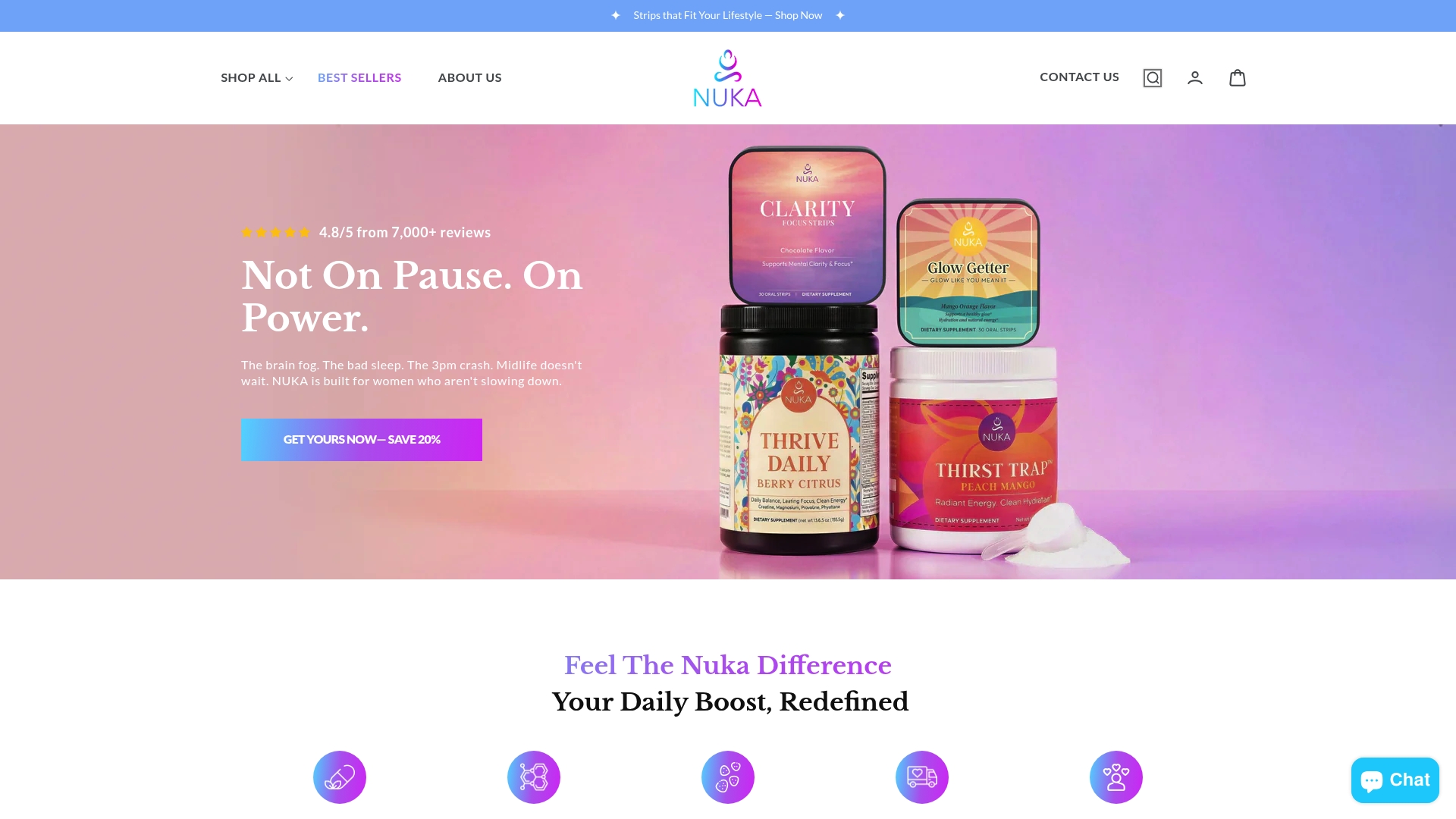
For women who want the convenience of sublingual delivery without carrying bottles or needing water, Nukalove’s oral strips dissolve in under a minute and fit in a pocket or travel bag. The strip format aligns with the evidence for mucosal absorption of appropriate nutrients, and the compact design was built specifically for women who supplement on the go. Women-owned and operated, Nukalove focuses on the real daily friction points: travel, consistency, and formats that actually get used.
Browse the Nukalove wellness collection to see current strip formulations. For any confirmed deficiency or clinical symptoms, consult a healthcare provider before relying on OTC supplementation alone.
Primary sources and further reading
Key clinical sources cited in this article:
- Randomized trial: sublingual vs oral B12, 500 µg cyanocobalamin — RCT data showing equivalent serum B12 correction across routes over 4–8 weeks in early deficiency.
- Systematic review and meta-analysis: B12 routes compared — Pooled analysis of oral, sublingual, and IM B12; no significant route difference but high heterogeneity (I² > 80%).
- Retrospective cohort, n≈4,281: sublingual vs IM B12 — Large real-world dataset showing sublingual tablets produced a larger mean serum B12 increase than IM injections in routine care.
- Vitamin D3 spray vs capsule RCT, 6 weeks — Equivalent 25(OH)D elevation for sublingual spray and capsule at 3,000 IU/day; participant preference favored spray.
- NIH Office of Dietary Supplements: Vitamin B12 fact sheet — Authoritative clinical background on B12 physiology, deficiency causes, recommended labs, and replacement therapy considerations.
- Frontiers in Pharmacology: sublingual B12 review — Narrative review covering route comparisons, evidence limitations, and clinical guidance for severe deficiency with neurological signs.